Buddha

All posts tagged Buddha

The 8 Awakenings

Published 02/08/2013 by inspiringyourspirit

28768_422271154559193_430953812_n


Many people coming to test the waters of Buddhism for the first time often wonder where to start. There are literally hundreds of sutras with each school of Buddhism focusing on specific sutras that are at their foundation.


It is clear that Buddhism is about the issue of suffering and how to overcome it. Suffering takes on many forms from severe pain and illness and death to the petty annoyances that plague us on almost a daily basis. Buddhism teaches us to live a supremely happy and value centred life with the means to end the cycle of birth and death which is suffering.


The sutra of the Eight Awakenings is a very short sutra. In fact many Chinese monks used to learn this one by heart not only because of its brevity but also because it contained within it the essential of Buddhism.


I often call it the Mediators’ Sutra as it is a foundation sutra for all meditation work. It is well worth contemplating these Eight Awakenings carefully examining them in the light of your own life. I have included them here in their entirety.


Buddhist Disciples!  At all times, day and night, sincerely recite and bear in mind these eight truths that cause great people to awaken.


The First Awakening:

The world is impermanent. Countries are perilous and fragile. The body is a source of pain, ultimately empty. The five skandhas are not the true self. Life and Death is nothing but a series of transformations—hallucinatory, unreal, uncontrollable. The intellect is a wellspring of turpitude, the body a breeding ground of offenses. Investigate and contemplate these truths. Gradually break free of death and rebirth.


The Second Awakening:

Too much desire brings pain. Death and rebirth are wearisome ordeals, originating from our thoughts of greed and lust. By lessening desires we can realize absolute truth and enjoy peace, freedom, and health in body and mind.


The Third Awakening:

Our minds are never satisfied or content with just enough. The more we obtain, the more we want. Thus we create offenses and perform evil deeds. Bodhisattvas don’t wish to make these mistakes. Instead, they choose to be content. They nurture the Way, living a quiet life in humble surroundings —their sole occupation, cultivating wisdom.


The Fourth Awakening:

Idleness and self-indulgence are the downfall of people. With unflagging vigor, great people break through their afflictions and baseness. They vanquish and defeat the four kinds of demons, and escape from the prison of the five skandhas.


The Fifth Awakening:

Stupidity and ignorance are the cause of death and rebirth. Bodhisattvas apply themselves and deeply appreciate study and erudition, constantly striving to expand their wisdom and refine their eloquence. Nothing brings them greater joy than teaching and transforming living beings.


The Sixth Awakening:

Suffering in poverty breeds deep resentment. Wealth unfairly distributed creates ill-will and conflict among people. Thus, Bodhisattvas practice giving. They treat friend and foe alike. They do not harbor grudges or despise amoral people.


The Seventh Awakening:

The five desires are a source of offenses and grief. Truly great people, laity included, are not blighted by worldly pleasures. Instead, they aspire to don the three-piece precept robe and the blessing bowl of monastic life. Their ultimate ambition is to leave the home life and to cultivate the Path with impeccable purity. Their virtuous qualities are lofty and sublime; their attitude towards all creatures, kind and compassionate.


The Eighth Awakening:

Like a blazing inferno, birth and death are plagued with suffering and affliction. Therefore, great people resolve to cultivate the Great Vehicle, to rescue all beings, to endure hardship on behalf of others, and to lead everyone to ultimate happiness.


These are the Eight Truths that all Buddhas, Bodhisattvas and great people awaken to. Once awakened, they even more energetically continue to cultivate the Path. Steeping themselves in kindness and compassion, they grow in wisdom. They sail the Dharma ship across to Nirvana’s shore, and then return on the sea of birth and death to rescue living beings. They use these Eight Truths to show the proper course for living beings, causing them to recognize the anguish of birth and death. They inspire all to forsake the five desires, and to cultivate their minds in the manner of Sages.


If Buddhist disciples recite this Sutra on the Eight Awakenings, and constantly ponder its meaning, they will certainly eradicate boundless offenses, advance towards Bodhi, and will quickly realize Proper Enlightenment. They will always be free of birth and death, and will abide in eternal bliss.


Namaste

Mark
Leshan 6

Published 20/05/2013 by inspiringyourspirit

Carved in Stone 11 Chengdu

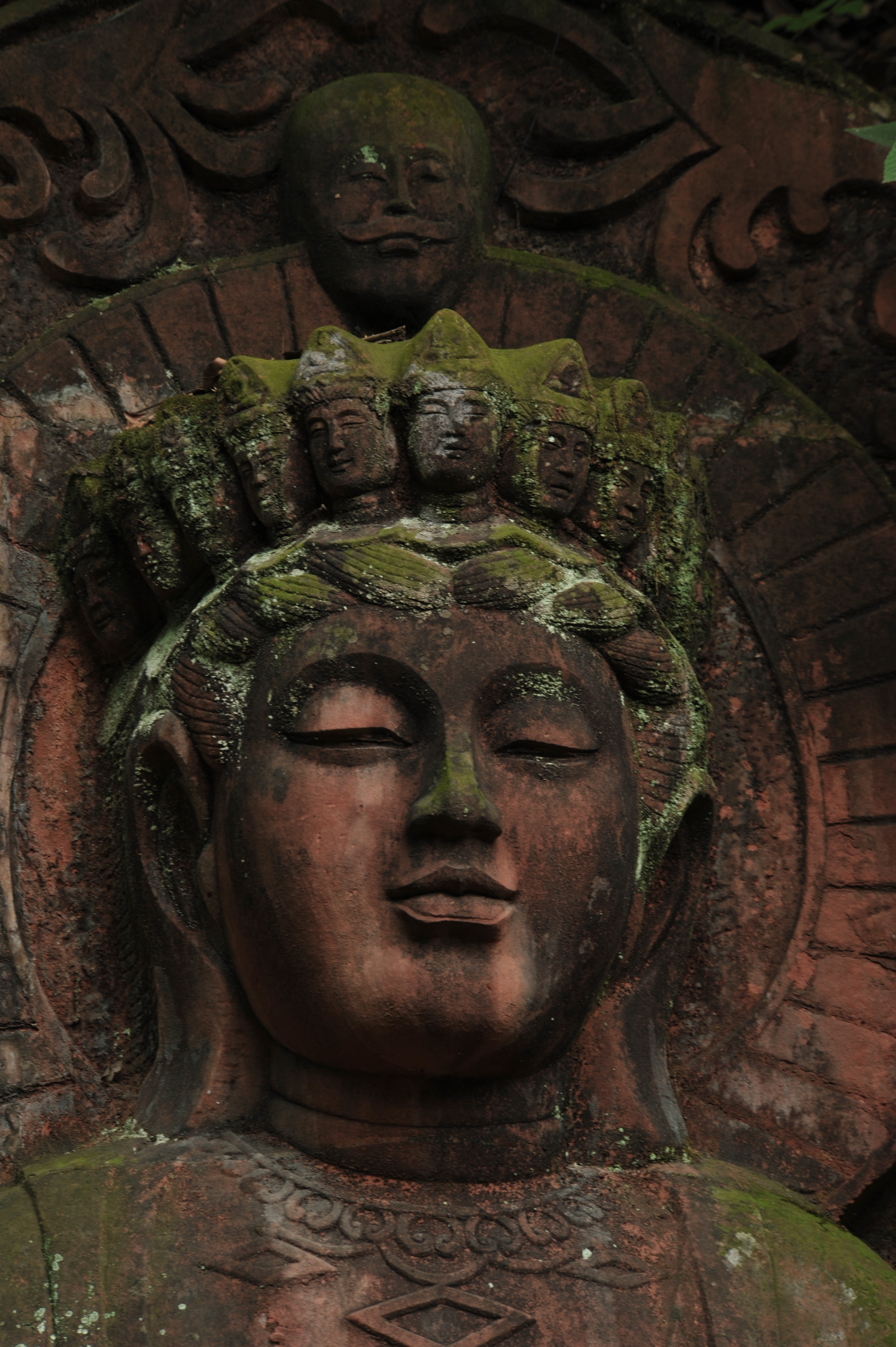
moss covered

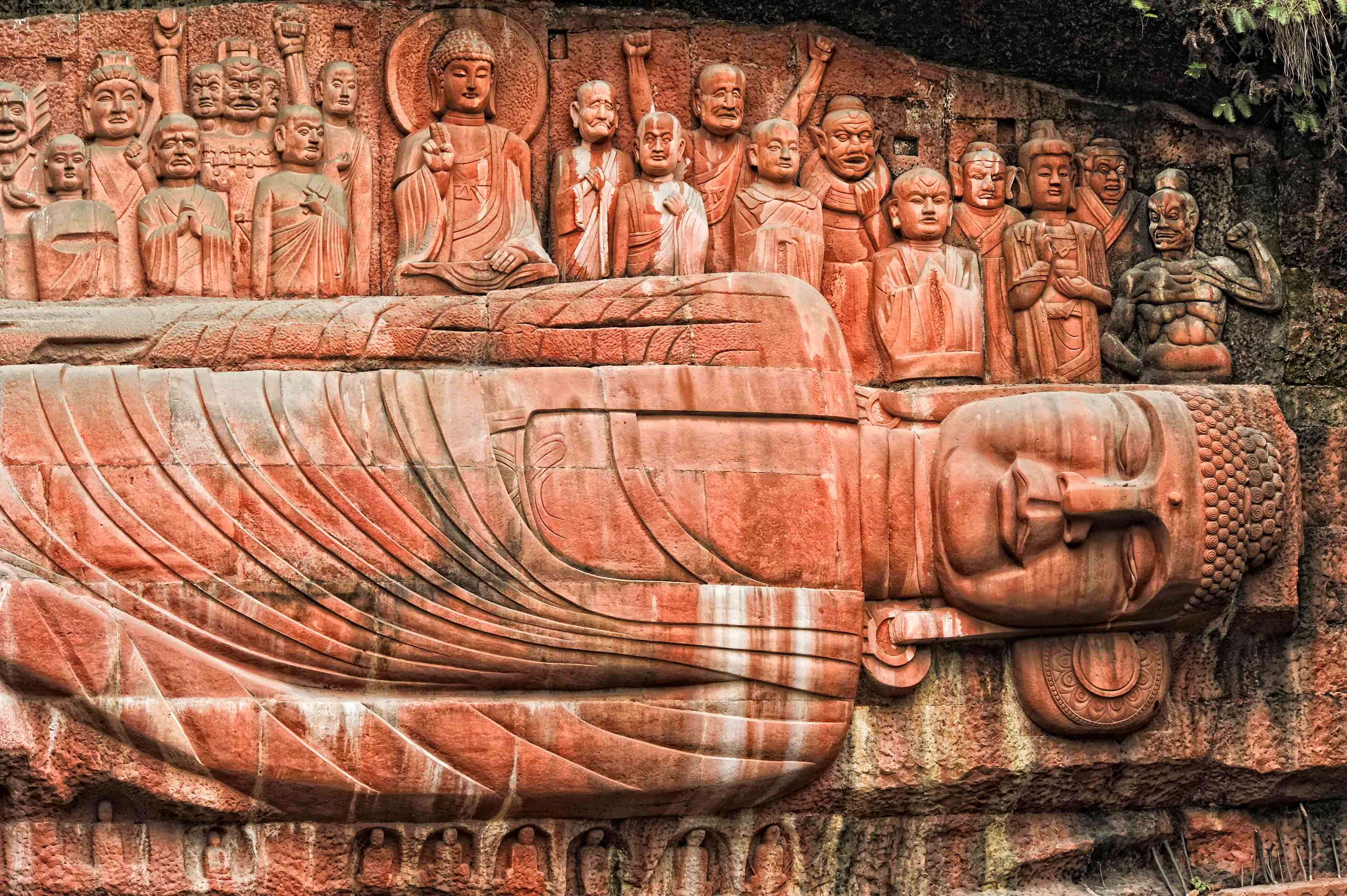
sleeping bubbha

照片 094

Hi everyone,

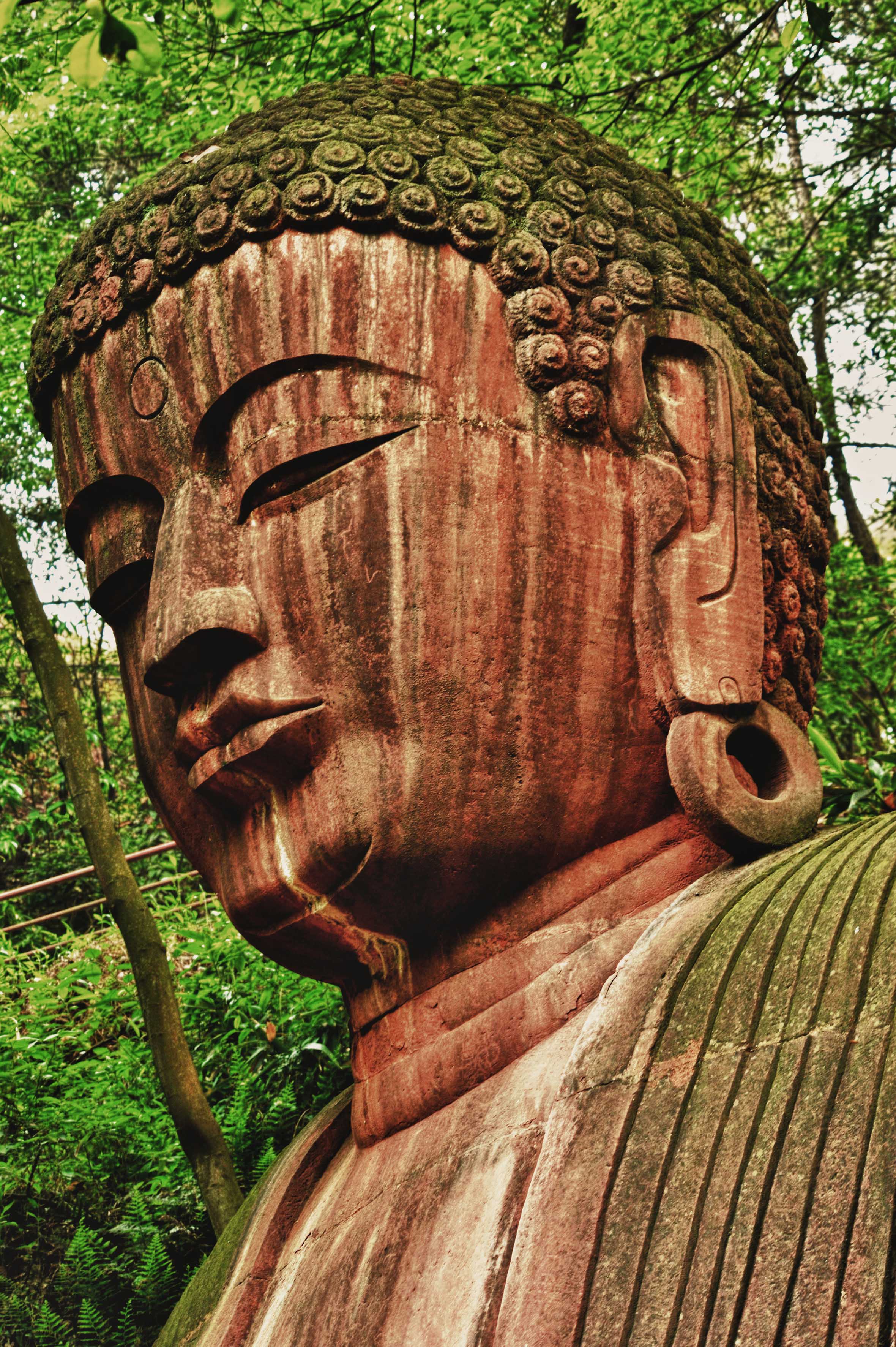
Here are some more images of the beautiful statues and wall carvings during my walk around the Leshan Temple gardens. Leshan is in Sichuan Province China close to Chengdu where the horrific earthquakes have taken place in 2008 and most recently in 2013. The worst earthquake happened in Wenchuan on Monday May 12th 2008 killing 69,195 people and a further 18,392 still missing presumed dead, so a total of 87,587 souls were lost to Mother Earth on that day. The earthquake was also felt in nearby countries and as far away as both Beijing and Shanghai—1,500 km (930 mi) and 1,700 km (1,060 mi) away—where office buildings swayed with the tremor. I too felt these tremors in Shanghai 😦 Strong aftershocks, some exceeding magnitude 6, continued to hit the area even months after the main quake, causing new casualties and damage.

I hope you enjoy my continued walk around these beautiful gardens and you feel some energy and serenity from the images?

Namaste
Mark

Leshan 3

Published 10/05/2013 by inspiringyourspirit

Meditation. One of the thousands of statues in the gardens surrounding the temple at Leshan.

Meditation

Beautiful faces depicting strength, power, achievement, meditation, serenity, peace and enlightenment.

carved

One of the temple warriors a protector looking strong and ready for action.

guard

Leshan 2

Published 08/05/2013 by inspiringyourspirit

Buddas2 Stunningly beautiful carvings are everywhere as you walk through the vast gardens which surround the temples and Dafo Buddha. intrecate detail A place to sit, to close your eyes, listen to the birds singing in the trees, to feel the wind on your face, relax and be mindful 🙂 Namaste Mark

“Nothing To Attain . . . “

Published 14/04/2013 by inspiringyourspirit

This excellent post is from a blogging friend of mine Rising Hawk http://risinghawkspeaks.wordpress.com

606px-Bodhisatta_Gautama_with_bowl


Bodhisattva Siddhartha Gautama determines that if he’s really going to attain enlightenment, the bowl will float upstream. And so it does… He subsquently attains enlightenment that very night. (Photo credit: Wikipedia)

Why do I do what I do?

Why do I spend my time writing, blogging, risking being labeled as crazy, developing, devising, and suggesting methods to “attain” something which is already present?

I often ask myself this question. The entire premise seems ridiculous when viewed as I just described it. I don’t get paid, I’m not famous, and I have no scheduled appearances on any of Oprah’s programs, or tours with Wayne Dyer. And, “What is he talking about,” you may ask.

It’s one word. The term most often kicked around is “enlightenment.”

This word conjures up images of half-naked sages in mountain caves, or wise ones in flowing robes, and a whole litany of other associated notions. Just for the record, the outward appearance and the actual state itself are not related – at all.

If you come across a half-naked sage throwing dust on his head, or a man or woman in a saffron-colored robe with a bald head, or a person in some other form of “priestly” attire, or a very spiritual title, you are looking at an advertisement.

I do not mean that to be taken in the negative connotation of capitalist commercialism, (though that may sometimes be the case). What I mean is that these people are outwardly presenting the fact that they have a story to tell – specifically, about how they “discovered” what was never missing, how it changed their experience of life in a positive way, and maybe how what they learned could help you, too.

Personally, I find myself less and less interested in the idea of “enlightenment” when it comes to sharing and teaching. I AM enlightened…and so are you. The very moment that we take the position of wishing to attain the state, we “lose” it: You get caught in the trap of looking for something that isn’t missing. But there is a challenge. Although you are enlightened, that fact may very well be hidden from you by that master of illusion – your brain.

This is what ALL of the teachings about “enlightenment,” or finding true and lasting deep peace, or being the embodiment of compassion and so forth, are designed to address. We need a method of “getting around” our brain and selfish egos – and they play AMAZING defense.

You see, if you aren’t worried about anything, and have no expectations, no fear of death or rejection, and move through life without a care – totally at peace with the ebb and flow of existence – well, your ego does not like that at all.

I can recall when I first realized a glimpse of this state. The very first, (and immediate), words that arose in my mind were, “I have to re-think everything about my life now!” And that was quickly followed by a panicked, “You can’t do this!”

What is your brain going to do if you aren’t worrying? What will your mind do if you aren’t thinking everything to death? How can you relate to anyone or anything if the precious “identity” that you have worked so hard to build is no longer valid? What happens when you “die” to self, (as Jesus, Buddha, and practically every other spiritual master has taught us we must do in order to see God)?  I have the answer to those questions: NOTHING changes except your perspective. In that instant, all of your interactions are filled with…peace…and Divine love…and compassion.

So, there are times that I write about methods that can assist you in getting around the brain’s stubborn and relentless defense. I certainly do not do so for fame, or for recognition, (good thing, or I would be sorely disappointed)! I do it in an effort to end the mental suffering and anguish that so many put themselves through every day. And your realization of that dynamic peace will spread like wildfire into every nook and cranny of your existence; even more wonderfully, into the existence of those around you.

Understand, there is nothing to attain – but that “nothing” is hidden from many. Reflect upon this when you have a chance – it may bear you much precious fruit.

Keep Soaring,

Rising Hawk

Jade Buddha Temple

Published 14/02/2013 by inspiringyourspirit

stock-footage-golden-buddha-jade-buddha-temple-shanghai-china-zoom-in

Nimen Hao 你们好 Hi Everyone 🙂

May and I are off to the Jade Buddha Temple in Shanghai today, today is the 5th day of January in the Chinese Nongli Calendar so the fifth day of the new year is the God of Wealth’s birthday.

In northern China, people eat jiǎozi (simplified Chinese: 饺子; traditional Chinese: 餃子), or dumplings, on the morning of pòwǔ (破五). In Taiwan, businesses traditionally re-open on the next day (the sixth day), accompanied by firecrackers. It is also common in China that on the 5th day people will shoot off firecrackers to get Guan Yu’s attention, thus ensuring his favor and good fortune for the new year., it’s also February 14th Valentines day in the Gregorian Calendar (Western Calendar) so we have plenty to pray for 🙂


images-1images-3

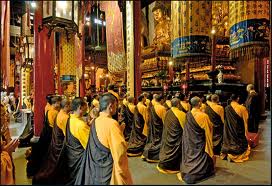
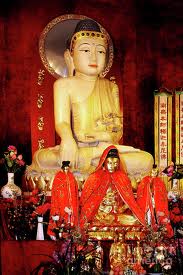
The Jade Buddha Temple (Chinese: 玉佛禅寺; pinyin: Yùfó Chán Sì, literally Jade Buddha Chan Temple) is a Buddhist temple in Shanghai, China. As with many modern Chinese Buddhist temples, the current temple draws from both the Pure Land and Chan traditions of Mahayana Buddhism. It was founded in 1882 with two jade Buddha statues imported to Shanghai from Burma by sea. These were a sitting Buddha (1.95 metres tall, 3 tonnes)

images-2

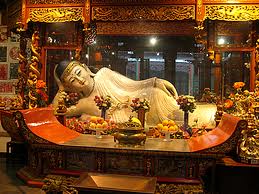
and a smaller reclining Buddha representing Buddha’s death.

images

The temple now also contains a much larger reclining Buddha made of marble, donated from Singapore.

I will pray for Peace, Happiness, Compassion, Good Health, Friendship and Love.

Namaste

Mark