
Meditation is great for you, it’s easy to do so give it a try 🙂
Namaste
Mark
Meditation is great for you, it’s easy to do so give it a try 🙂
Namaste
Mark

When the intelligent and animal souls are held together
in one embrace, they can be kept from separating.
When one gives undivided attention to the vital breath,
and brings it to the utmost degree of pliancy, he can
become as a tender babe.
When he has cleansed away the most mysterious sights of
his imagination, he can become without a flaw.
In loving the people and ruling the state, cannot he proceed
without any purpose of action?
In the opening and shutting of his gates of heaven, cannot he
do so as a female bird?
While his intelligence reaches in every direction, cannot he
appear to be without knowledge?
The Tao produces all things and nourishes them;
it produces them and does not claim them as its own;
it does all, and yet does not boast of it; it presides over all,
and yet does not control them.
This is what is called the mysterious quality of the Tao.
Lao Tzu
Namaste
Mark
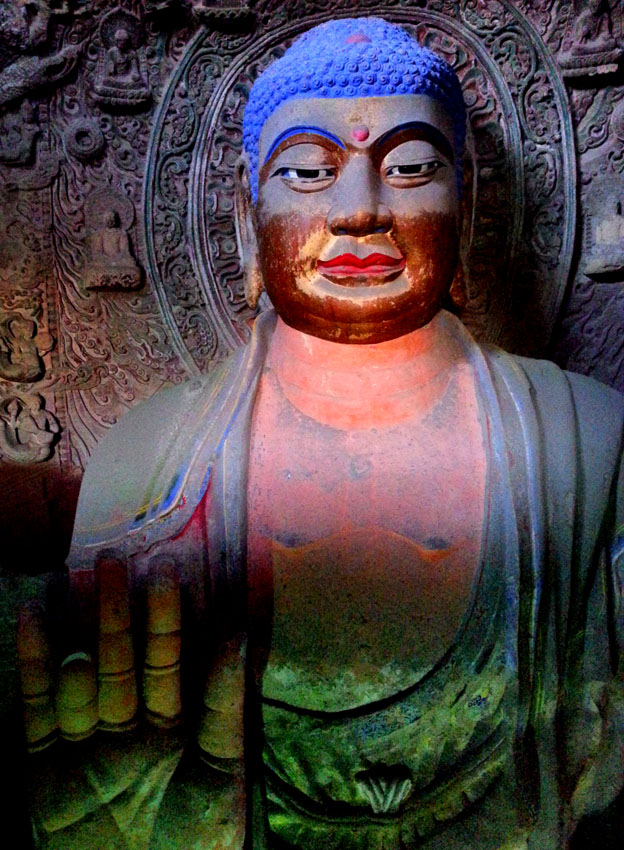
Beleive nothing, no matter where you read it,
or who said it, no matter if I have said it,
unless it agrees with your own reason and
you own common sense.
Buddha
Do not beleive what
your teacher tells
you merely out of
respect for the teacher.
Buddha
Words have the
power to both
destroy and heal.
When words are both
true and kind, they
can change the
world.
Buddha

Daily, without toil
Mother Earth offers us her bountiful harvest.
Life springs from every nook and cranny,
Feeds and animates all
Regardless of religion or reputation.
All we have
All we are
From All That is.
A Gift.
One without wonder
Will not see it
While the eyes of the grateful
Will reflect it.
Namaste
Mark
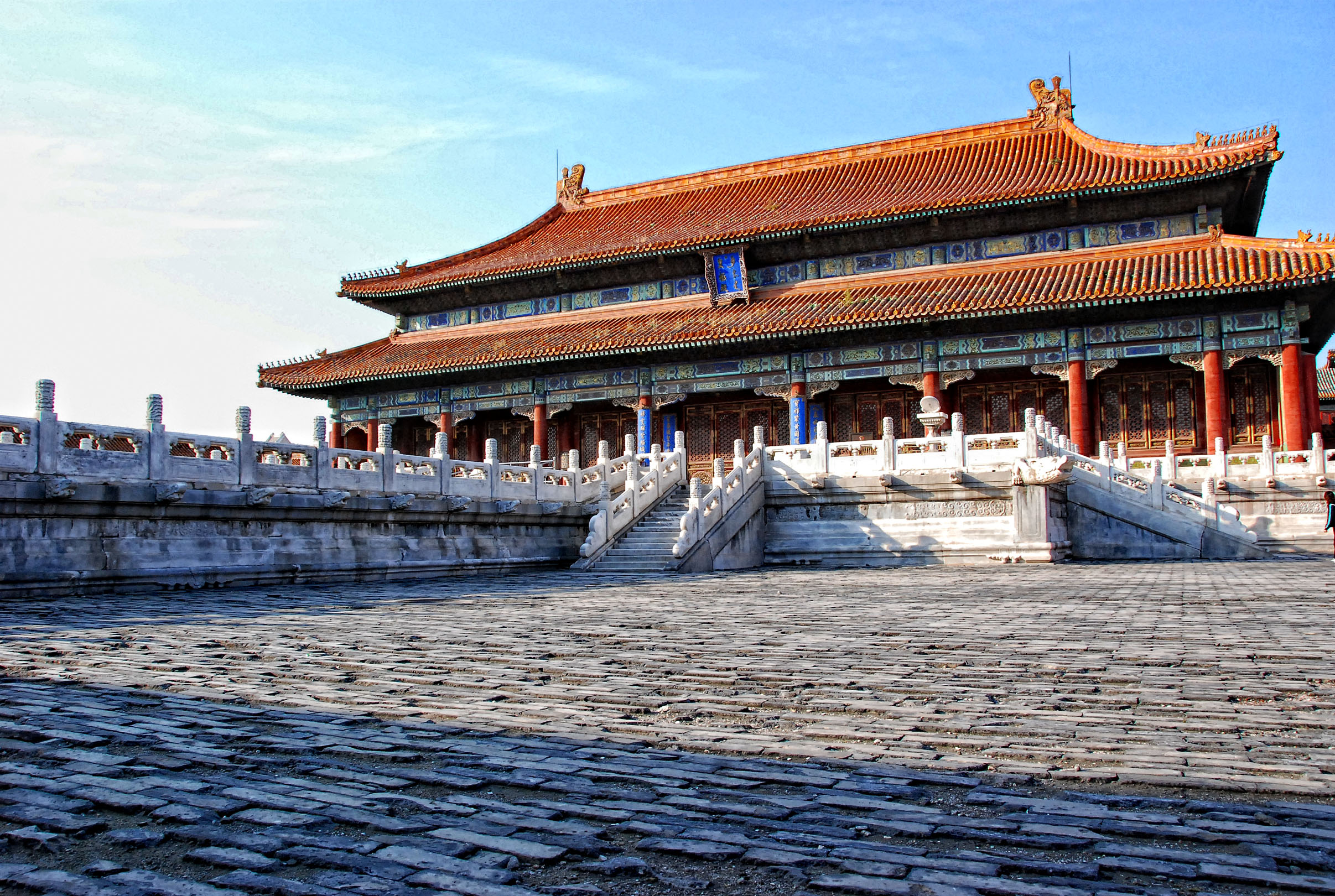
Once upon a time in Ancient China, the Emperor told his ministers that he wished to visit a temple to offer his prayers to the Buddha.
One of the ministers, who was particularly adept at flattery, said, “Your Majesty does not need to visit the temple.”
“Is that so?” The Emperor was surprised at being contradicted. “Why not?”
The minister bowed deeply..”The essence of the Buddha is the compassionate heart. Your Majesty is constantly worried about the common people out of pure compassion. Therefore, Your Majesty is already a living Buddha and does not need to visit the temple.”
“Interesting.” Said the Emperor. “That reminds me of a story. Let me share it with you. It goes like this.
“There was a devout Buddhist who had only one wish for life, and that was to see the Guan Yin Bodhisattva. He travelled to many places and studied many sutras, looking for a way to find her.
“After years of effort, he finally succeeded. At a holy place far from home, the Bodhisttva appeared before him in a blaze of heavenly glory. He fell to his knees in awe.
“Guan Yin asked him. “Why have you come such a long way to look for me?”
”The man said. “Merciful Guan Yin, I only wish to ask you a question.”
“Very well,’ Guan Yin said. ‘Go ahead and ask.’
“When I am in trouble, I pray to you and ask you for help. Do you also pray when you feel troubled?’
“Yes, Guan Yin replied.
“To whom do you pray?’
“I pray to the Guan Yin Bodhisattva.’
“But…you are the Guan Yin Bodhisttava! Why do you pray to yourself?’
“Because it is better to ask yourself for help than to ask someone else,’ said Guan Yin with a smile. Then, she disappeared in a blaze of heavenly glory.
“What I have learned from this story,” said the Emperor to his ministers. “is that the Buddha lives in our heart. When we go to the temple we pray, we are in fact praying to ourselves and asking ourselves for help. That is why I shall override your objection and proceed to the temple today.”
The Emperor was very wise in not letting the ministers feed his ego. Because ancient Emperors wielded absolute power, they tended to be surrounded by sycophants. Many Emperors could be swayed by skillful and lavish prais, but this particular Emperor had enough self-awareness to guard against it. He did not let his ego gain control. Such Emperors were few and far in between.
The Emperor touched on a universal truth. The Buddha is a human being who becomes enlightened. Therefore, the potential for Buddahood exists in all human hearts. If it was true for the minister to point to the Buddha in the Emperor, then the same was also true for the minister and everyone else. We will all become Buddha’s in the future- it isn’t a matter of if, but when.
Namaste
Mark

Right Thought
Brothers, practice Right Thought.
Right Thought consists of thought in which there is neither confusion nor distraction, neither anger or hate, neither desire nor lust. ( Vinayapitaka, Vibhanga Sutta )
Brothers, Right Thought consists of thought in which there is universal love. ( Suttapitaka, Majjhima-Nikaya, Piyajatika Sutta )
But what is Right Thought in concrete terms?
Obviously, a thought in which there is no suffering.
And what constitutes suffering, in our thought?
As the Buddha said: confusion, distraction, anger, hate, desire and lust.
We need to eliminate them.
But how?
Brothers, confusion and distraction, anger and hate, desire and lust can be overcome by practicing the Four Contemplations.
To overcome the confusion and distraction, practice the contemplation of breathing: it will clear your mind and increase the power of your concentration.
To overcome anger and hate, practice the contemplation of compassion: it will throw light on the causes of the anger and hate present in your mind and in the minds of those who have aroused them in you.
To overcome desire, practice the contemplation of impermanence: it will throw light on the beginning and end of all things.
To overcome lust, practice the contemplation of death: it will throw light on the decay of things. ( Vinayapitaka, Vibhanga Sutta )
Confusion, distraction, anger, hate, desire and lust obviously constitute negative thought.
But it is not enough to eliminate negative thought.
We must also construct positive thought.
What are positive thoughts?
Loving kindness, compassion, shared joy and non-attachment are wonderful, profound mental states.
By practicing them, you will become a source of vitality and happiness for all creatures. (Suttapitaka, Majjhima-Nikaya, Cularahulovada Sutta)
In a word Positive thought.
Right Thought therefore consists of the systematic elimination of negative thought and the systematic construction of positive thought.
Right Thought consists of the elimination of Negative thought and the construction of positive thought.

He who devotes himself to learning seeks from day to day to increase his knowledge;
he who devotes himself to the Tao seeks from day to day to diminish his doing.
He diminishes it and again diminishes it, till he arrives at doing nothing on purpose.
Having arrived at this point of non-action, there is nothing which he does not do.
He who gets as his own all under heaven does so by giving himself no trouble with that end.
If one takes trouble with that end, he is not equal to getting as his own all under heaven.
Lao Tzu

Open your eyes to the true beauty that Mother Nature has to offer! See the richness of color from the Azure Blue Pacific Ocean to the whiteness of the clouds and the lush greens from the palms of the coconut tree, what’s not to love? I can feel the warm breeze on my face, smell the intoxicatingly sweet scents from the Coconuts and Fairmont Orchids and taste the salt in the air from the ocean spray as the droplets are carried far and wide in the wind.
Hawaii, a beautiful place, a spiritual place..Paradise on Earth!
Let’s work together as one and protect this beauty for all generations to come…Please don’t let it fade away!
Namaste
Mark

The ancients first began accumulating wisdom when they came upon the idea that one could be the observer. They would watch the way things worked without prejudgment. They did this not only with nature, but also with human interactions.
The more they watched, the more they recognized patterns in everything. In Nature, they began to understand the cycles of life. Among people, they saw actions and reactions, relationships and conflicts. They began to record their insights about these patterns, and their writings were collected in ancient classics like the I Ching.
One interesting benefit of being the observer is the clarity that comes to play. When you look at an event with impartial detachment, you can see far more than the people who are in the thick of it. They have a limited view of what is in front of them instead of an expanded view that takes everything around them into account. Detached observation is what gives sages the clarity to solve seemingly impossible problems; they watch and understand before deciding on a course of action.
Practice being the observer. Watch yourself go through your activities today as if you were watching a movie. If you are driving and someone cuts you off, take a step back mentally and watch how you react, and notice how you deal with road rage much more easily in this frame of mind.
Derek Lin
Namaste
Mark
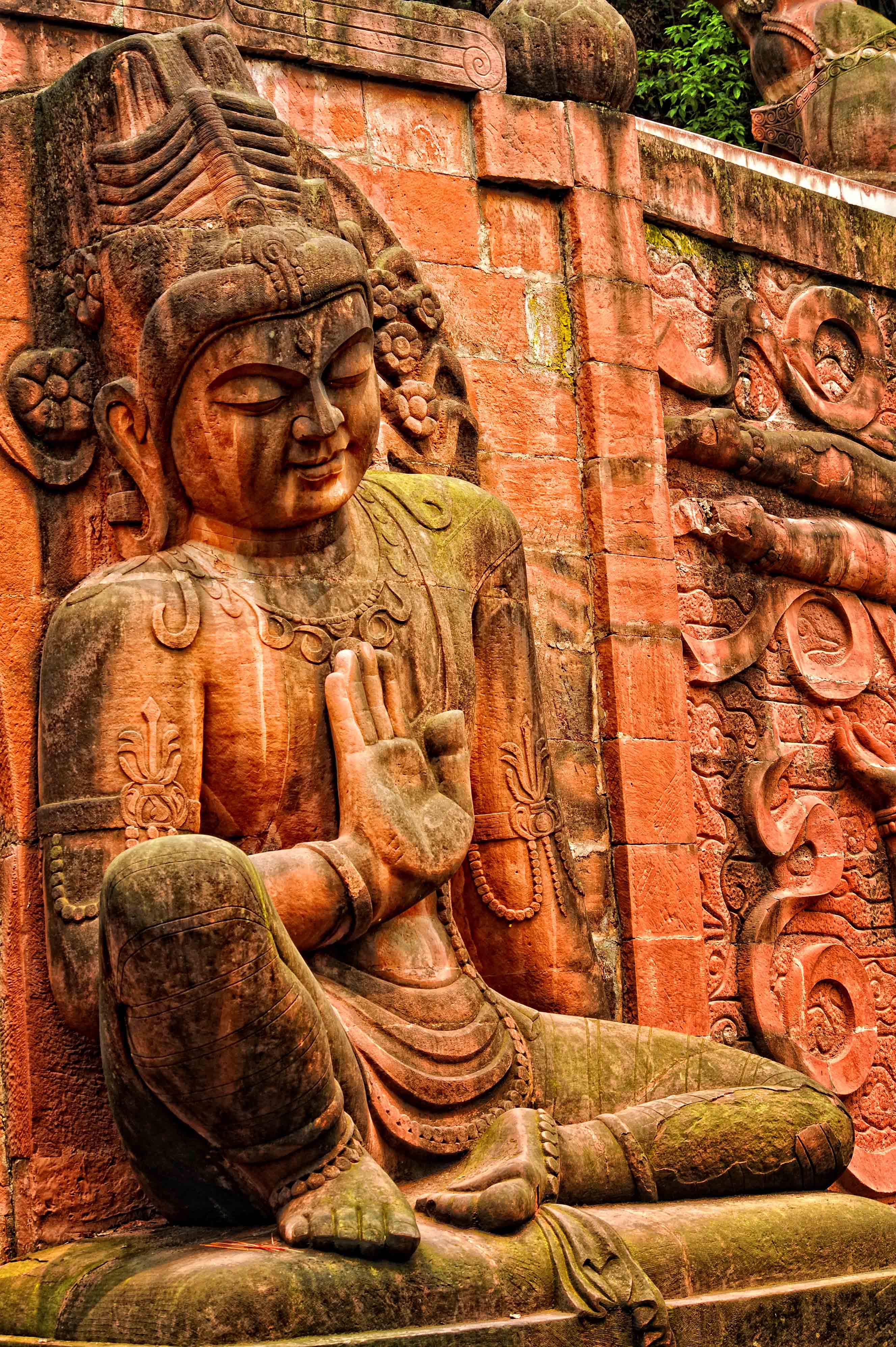
The all-encompassing Tao includes all of us, the good as well as the bad. It is easy for most of us to embrace the good, but how can we embrace the bad when we want to distance ourselves from them?
Some may suggest that this is a distinction between good and bad in the Tao, but this is not quite correct. The actual teachings are quite specific about this, and instruct us to approach the two sides differently.
Chapter 27 of the Tao Te Ching tells us to regard the good people as models to emulate. It also tells us that those who lack the wisdom to handle life skillfully are demonstrations of what to avoid. There is always something we can learn from them, so they are our resources. In that sense, they are no less valuable than the good people who are our teachers.
Identify the resources in your life and consider specific ways they serve as counterexamples. Do they treat others poorly? Are they inconsistent in what they say and do? Do they have trouble facing the frustrations in life? For every area where they lack skills and wisdom, think about how you would handle the same thing with greater composure and effectiveness.
Derek Lin
Namaste
Mark

The Five Elements
The five elements of the ancient Chinese are metal, wood, water, fire and earth. These elements interact with one another i8n specific and fascinating ways. For instance, when we burn logs, we can see that wood produces fire. When the fire burns out and only ash remains, we say that fire produces earth. When we think about a mining operation, we say that earth produces metal. When water condenses on a metallic surface, we say that metal gives rise to water. Finally, when we onserve trees requiring water to grow, we say that water gives rise to wood. This completes tyhe cycle.
In Chinese culture, people apply the five elements to everything from acupuncture, medicine and feng shui to human reactions. They illustrate the cyclical nature of the world and our dealings with one another. They also give us a glimpse into the workings of karmic connections.Why is it that some people benefit you but not others? Why is it that a friend of a friend may be someone you do not particularly like? The five elements can give you insights into various life situations.

Five Chinese Elements – Diurnal Cycle (Photo credit: Wikipedia)
Think about your nature. Which element best describes your primary mode of being? Are you down-to- earth? Do you have a fiery temper? Are you nurturing like water? Do you possess a steely resolve? Are you in tune with nature like wood? Think about the people who have always been good to you, and match their nature to the element that is beneficial to yours. Let the five elements help you find the harmonious optimum in your relationships.
Derek Lin
Namaste
Mark

 Endless Light and Love