Mindfulness a stab at a definition

Published 22/02/2013 by inspiringyourspirit

images

Wow, I receive a very profound question from one of our fellow bloggers bert0001  in regard to one of my recent posts ‘Mindfulness’, as follows :-

“I have a profound question here. I wrote a post last week about the difference between awareness and metacognition. And here I see mindfulness. I know that this has been around for 25 years in the Western Hemisphere and that it is a watered down version coming from buddhism. But in a way, this video makes me pleasantly agitated. There is no answer here. It is like publicity for sigarets. And if I walk around the internet, I see 700 different interpretations of mindfulness, awareness, metacognition and so on.
Many people, if not most think that meditation is sitting cross legged, listening to Enya in the vicinity of a candle and some incense.
So let me come back to the question. Could you give a concise and correct definition of mindfulness, in respect with my brain and mind, so that people know when they are mindfull and when they are mindless. (like me right now )”

Well, as I replied to bert0001, this is certainly a very profound question and one in which I’m sure is debated and contested on a daily basis all around the world especially between Scientists of the Mind and Traditional Religions and Buddhism followers across the globe. So in order for me to try and reply to bert0001’s question as best as possible I have attached two items to this post, the first one is an article by Thanissaro Bhikkhu re a definition of Mindfulness from a Buddhist perspective and the second a YouTube video by Professor Mark Williams from Oxford University Science who provides in my mind an excellent presentation on Mindfulness from a Mindfulness Cognitive Therapy perspective which clearly links both the science of the mind and the ancient Buddhist forms and practice of meditation techniques to help aid both clinical patients suffering from Depression, ADHD, Anxiety Health Issues, Child Birth etc; and also for everyday use by general members of the public who wish to re-connect with themselves on a daily basis due to the stresses and pressures of everyday life.

I do hope these items help you all with your understanding of Mindfulness and how its use can help us all in our daily lives 🙂
Namaste
Mark

Mindfulness Defined

by

Thanissaro Bhikkhu

© 2008–2013

What does it mean to be mindful of the breath? Something very simple: to keep the breath in mind. Keep remembering the breath each time you breathe in, each time you breathe out. The British scholar who coined the term “mindfulness” to translate the Pali word sati was probably influenced by the Anglican prayer to be ever mindful of the needs of others—in other words, to always keep their needs in mind. But even though the word “mindful” was probably drawn from a Christian context, the Buddha himself defined sati as the ability to remember, illustrating its function in meditation practice with the four satipatthanas, or establishings of mindfulness.

“And what is the faculty of sati? There is the case where a monk, a disciple of the noble ones, is mindful, highly meticulous, remembering & able to call to mind even things that were done & said long ago. (And here begins the satipatthana formula:) He remains focused on the body in & of itself — ardent, alert, & mindful — putting aside greed & distress with reference to the world. He remains focused on feelings in & of themselves… the mind in & of itself… mental qualities in & of themselves — ardent, alert, & mindful — putting aside greed & distress with reference to the world.”

SN 48.10

The full discussion of the satipatthanas (DN 22) starts with instructions to be ever mindful of the breath. Directions such as “bring bare attention to the breath,” or “accept the breath,” or whatever else modern teachers tell us that mindfulness is supposed to do, are actually functions for other qualities in the mind. They’re not automatically a part of sati, but you should bring them along wherever they’re appropriate.

One quality that’s always appropriate in establishing mindfulness is being watchful or alert. The Pali word for alertness, sampajañña, is another term that’s often misunderstood. It doesn’t mean being choicelessly aware of the present, or comprehending the present. Examples in the Canon shows that sampajañña means being aware of what you’re doing in the movements of the body, the movements in the mind. After all, if you’re going to gain insight into how you’re causing suffering, your primary focus always has to be on what you’re actually doing. This is why mindfulness and alertness should always be paired as you meditate.

In the Satipatthana Sutta, they’re combined with a third quality, ardency. Ardency means being intent on what you’re doing, trying your best to do it skillfully. This doesn’t mean that you have to keep straining and sweating all the time, just that you’re continuous in developing skillful habits and abandoning unskillful ones. Remember, in the eight factors of the path to freedom, right mindfulness grows out of right effort. Right effort is the effort to be skillful. Mindfulness helps that effort along by reminding you to stick with it, so that you don’t let it drop.

All three of these qualities get their focus from what the Buddha called yoniso manasikara, appropriate attention. Notice: That’s appropriate attention, not bare attention. The Buddha discovered that the way you attend to things is determined by what you see as important: the questions you bring to the practice, the problems you want the practice to solve. No act of attention is ever bare. If there were no problems in life you could open yourself up choicelessly to whatever came along. But the fact is there is a big problem smack dab in the middle of everything you do: the suffering that comes from acting in ignorance. This is why the Buddha doesn’t tell you to view each moment with a beginner’s eyes. You’ve got to keep the issue of suffering and its end always in mind.

Otherwise inappropriate attention will get in the way, focusing on questions like “Who am I?” “Do I have a self?”—questions that deal in terms of being and identity. Those questions, the Buddha said, lead you into a thicket of views and leave you stuck on the thorns. The questions that lead to freedom focus on comprehending suffering, letting go of the cause of suffering, and developing the path to the end of suffering. Your desire for answers to these questions is what makes you alert to your actions—your thoughts, words, and deeds—and ardent to perform them skillfully.

Mindfulness is what keeps the perspective of appropriate attention in mind. Modern psychological research has shown that attention comes in discrete moments. You can be attentive to something for only a very short period of time and then you have to remind yourself, moment after moment, to return to it if you want to keep on being attentive. In other words, continuous attention—the type that can observe things over time—has to be stitched together from short intervals. This is what mindfulness is for. It keeps the object of your attention and the purpose of your attention in mind.

Popular books on meditation, though, offer a lot of other definitions for mindfulness, a lot of other duties it’s supposed to fulfill—so many that the poor word gets totally stretched out of shape. In some cases, it even gets defined as Awakening, as in the phrase, “A moment of mindfulness is a moment of Awakening”—something the Buddha would never say, because mindfulness is conditioned and nirvana is not.

These are not just minor matters for nitpicking scholars to argue over. If you don’t see the differences among the qualities you’re bringing to your meditation, they glom together, making it hard for real insight to arise. If you decide that one of the factors on the path to Awakening is Awakening itself, it’s like reaching the middle of a road and then falling asleep right there. You never get to the end of the road, and in the meantime you’re bound to get run over by aging, illness, and death. So you need to get your directions straight, and that requires, among other things, knowing precisely what mindfulness is and what it’s not.

I’ve heard mindfulness defined as “affectionate attention” or “compassionate attention,” but affection and compassion aren’t the same as mindfulness. They’re separate things. If you bring them to your meditation, be clear about the fact that they’re acting in addition to mindfulness, because skill in meditation requires seeing when qualities like compassion are helpful and when they’re not. As the Buddha says, there are times when affection is a cause for suffering, so you have to watch out.

Sometimes mindfulness is defined as appreciating the moment for all the little pleasures it can offer: the taste of a raisin, the feel of a cup of tea in your hands. In the Buddha’s vocabulary, this appreciation is called contentment. Contentment is useful when you’re experiencing physical hardship, but it’s not always useful in the area of the mind. In fact the Buddha once said that the secret to his Awakening was that he didn’t allow himself to rest content with whatever attainment he had reached. He kept reaching for something higher until there was nowhere higher to reach. So contentment has to know its time and place. Mindfulness, if it’s not glommed together with contentment, can help keep that fact in mind.

Some teachers define mindfulness as “non-reactivity” or “radical acceptance.” If you look for these words in the Buddha’s vocabulary, the closest you’ll find are equanimity and patience. Equanimity means learning to put aside your preferences so that you can watch what’s actually there. Patience is the ability not to get worked up over the things you don’t like, to stick with difficult situations even when they don’t resolve as quickly as you want them to. But in establishing mindfulness you stay with unpleasant things not just to accept them but to watch and understand them. Once you’ve clearly seen that a particular quality like aversion or lust is harmful for the mind, you can’t stay patient or equanimous about it. You have to make whatever effort is needed to get rid of it and to nourish skillful qualities in its place by bringing in other factors of the path: right resolve and right effort.

Mindfulness, after all, is part of a larger path mapped out by appropriate attention. You have to keep remembering to bring the larger map to bear on everything you do. For instance, right now you’re trying to keep the breath in mind because you see that concentration, as a factor of the path, is something you need to develop, and mindfulness of the breath is a good way to do it. The breath is also a good standpoint from which you can directly observe what’s happening in the mind, to see which qualities of mind are giving good results and which ones aren’t.

Meditation involves lots of mental qualities, and you have to be clear about what they are, where they’re separate, and what each one of them can do. That way, when things are out of balance, you can identify what’s missing and can foster whatever is needed to make up the lack. If you’re feeling flustered and irritated, try to bring in a little gentleness and contentment. When you’re lazy, rev up your sense of the dangers of being unskillful and complacent. It’s not just a matter of piling on more and more mindfulness. You’ve got to add other qualities as well. First you’re mindful enough to stitch things together, to keep the basic issues of your meditation in mind and to observe things over time. Then you try to notice—that’s alertness—to see what else to stir into the pot.

It’s like cooking. When you don’t like the taste of the soup you’re fixing, you don’t just add more and more salt. Sometimes you add onion, sometimes garlic, sometimes oregano—whatever you sense is needed. Just keep in mind the fact that you’ve got a whole spice shelf to work with.

And remember that your cooking has a purpose. In the map of the path, right mindfulness isn’t the end point. It’s supposed to lead to right concentration.

We’re often told that mindfulness and concentration are two separate forms of meditation, but the Buddha never made a clear division between the two. In his teachings, mindfulness shades into concentration; concentration forms the basis for even better mindfulness. The four establishings of mindfulness are also the themes of concentration. The highest level of concentration is where mindfulness becomes pure. As Ajaan Lee, a Thai Forest master, once noted, mindfulness combined with ardency turns into the concentration factor called vitakka or “directed thought,” where you keep your thoughts consistently focused on one thing. Alertness combined with ardency turns into another concentration factor: vicara, or “evaluation.” You evaluate what’s going on with the breath. Is it comfortable? If it is, stick with it. If it’s not, what can you do to make it more comfortable? Try making it a little bit longer, a little bit shorter, deeper, more shallow, faster, slower. See what happens. When you’ve found a way of breathing that nourishes a sense of fullness and refreshment, you can spread that fullness throughout the body. Learn how to relate to the breath in a way that nourishes a good energy flow throughout the body. When things feel refreshing like this, you can easily settle down.

You may have picked up the idea that you should never fiddle with the breath, that you should just take it as it comes. Yet meditation isn’t just a passive process of being nonjudgmentally present with whatever’s there and not changing it at all. Mindfulness keeps stitching things together over time, but it also keeps in mind the idea that there’s a path to develop, and getting the mind to settle down is a skillful part of that path.

This is why evaluation—judging the best way to maximize the pleasure of the breath—is essential to the practice. In other words, you don’t abandon your powers of judgment as you develop mindfulness. You simply train them to be less judgmental and more judicious, so that they yield tangible results.

When the breath gets really full and refreshing throughout the body, you can drop the evaluation and simply be one with the breath. This sense of oneness is also sometimes called mindfulness, in a literal sense: mind-fullness, a sense of oneness pervading the entire range of your awareness. You’re at one with whatever you focus on, at one with whatever you do. There’s no separate “you” at all. This is the type of mindfulness that’s easy to confuse with Awakening because it can seem so liberating, but in the Buddha’s vocabulary it’s neither mindfulness nor Awakening. It’s cetaso ekodibhava, unification of awareness—a factor of concentration, present in every level from the second jhana up through the infinitude of consciousness. So it’s not even the ultimate in concentration, much less Awakening.

Which means that there’s still more to do. This is where mindfulness, alertness, and ardency keep digging away. Mindfulness reminds you that no matter how wonderful this sense of oneness, you still haven’t solved the problem of suffering. Alertness tries to focus on what the mind is still doing in that state of oneness—what subterranean choices you’re making to keep that sense of oneness going, what subtle levels of stress those choices are causing—while ardency tries to find a way to drop even those subtle choices so as to be rid of that stress.

So even this sense of oneness is a means to a higher end. You bring the mind to a solid state of oneness so as to drop your normal ways of dividing up experience into me vs. not-me, but you don’t stop there. You then take that oneness and keep subjecting it to all the factors of right mindfulness. That’s when really valuable things begin to separate out on their own. Ajaan Lee uses the image of ore in a rock. Staying with the sense of oneness is like being content simply with the knowledge that there’s tin, silver, and gold in your rock: If that’s all you do, you’ll never get any use from them. But if you heat the rock to the melting points for the different metals, they’ll separate out on their own.

Liberating insight comes from testing, experimenting. This is how we learn about the world to begin with. If we weren’t active creatures, we’d have no understanding of the world at all. Things would pass by, pass by, and we wouldn’t know how they were connected because we’d have no way of influencing them to see which effects came from changing which causes. It’s because we act in the world that we understand the world.

The same holds true with the mind. You can’t just sit around hoping that a single mental quality—mindfulness, acceptance, contentment, oneness—is going to do all the work. If you want to learn about the potentials of the mind, you have to be willing to play—with sensations in the body, with qualities in the mind. That’s when you come to understand cause and effect.

And that requires all your powers of intelligence—and this doesn’t mean just book intelligence. It means your ability to notice what you’re doing, to read the results of what you’ve done, and to figure out ingenious ways of doing things that cause less and less suffering and stress: street smarts for the noble path. Mindfulness allows you to see these connections because it keeps reminding you always to stay with these issues, to stay with the causes until you see their effects. But mindfulness alone can’t do all the work. You can’t fix the soup simply by dumping more pepper into it. You add other ingredients, as they’re needed.

This is why it’s best not to load the word mindfulness with too many meanings or to assign it too many functions. Otherwise, you can’t clearly discern when a quality like contentment is useful and when it’s not, when you need to bring things to oneness and when you need to take things apart.

So keep the spices on your shelf clearly labeled, and learn through practice which spice is good for which purpose. Only then can you develop your full potential as a cook.

Provenance: ©2008 Thanissaro Bhikkhu. Transcribed from a file provided by the author. This Access to Insight edition is ©2008–2013.

Terms of use: You may copy, reformat, reprint, republish, and redistribute this work in any medium whatsoever, provided that: (1) you only make such copies, etc. available free of charge; (2) you clearly indicate that any derivatives of this work (including translations) are derived from this source document; and (3) you include the full text of this license in any copies or derivatives of this work. Otherwise, all rights reserved. For additional information about this license, see the FAQ.

How to cite this document (one suggested style): “Mindfulness Defined”, by Thanissaro Bhikkhu. Access to Insight, 1 December 2012,
Mindfulness

Published 21/02/2013 by inspiringyourspirit

A very simple introduction to Mindfulness, easy to follow showing the benefits of its practice and being in the NOW.

Enjoy 🙂
Namaste
Mark

The Now

Published 20/02/2013 by inspiringyourspirit

64570_155991791222325_811641159_n


In which tense are you living in now?

It’s ultimately your choice, so do ‘YOU’ need to make a change to ‘YOUR’ life?

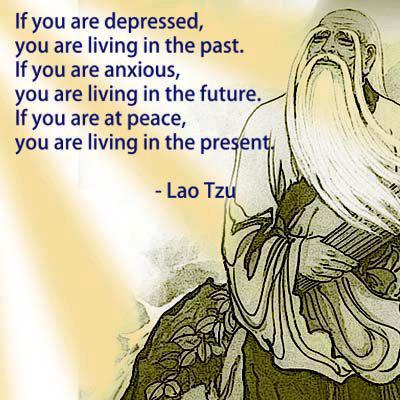
Lao Tzu is a particular favorite of mine and I have studied his writings but he is only one of many great sages that can offer you great advice and help you bring your thoughts into the NOW.

The Now is where you need to be, you need to be happy and content with who you are and where your life is taking you, if not then you need to make a change.

I wish you happiness, love and peace.

Namaste

Mark


It all starts with being amazed about your life…

Published 18/02/2013 by inspiringyourspirit

It all starts with being amazed about your life…. Click here or click the image below 🙂

Today has been a particularly difficult day, obstacles and difficulties have been bombarding me all day long, darkness and energy draining people have been challenging me continually and then I took two minutes our of the madness to read this blog by one of my dear blogging friends Cassandra Wiechert. The words she has written apply to me and my day 100% and they could not have come at a more perfect time, the words brought clarity to me, to my day and re-focused me to my own spiritual pathway and my light and energy is now stronger than ever before, so a BIG Thank-You to Cassandra

Namaste with Love
Mark

Dumping Waste at Sea…….

Published 17/02/2013 by inspiringyourspirit

Please watch this short video and also send it on to all your friends and blogging contacts….

This video is about an island in the  Pacific Ocean around 2000 km from any other coast line. 

Nobody lives there, only birds and yet ……………

You will not believe your eyes!!!!!!!

This film should be seen by the entire world, please don’t throw anything into the sea. and urge your governments to stop dumping waste at sea…Unbelievable, just look at the consequences!!!!!

WE need to do something about this because our governments are certainly doing nothing other than talking!!!!

Namaste with Love for every creature on this Planet.

Mark

An Allegory from the Astrologer Martin Shulman

Published 16/02/2013 by inspiringyourspirit

“Birth is not the beginning, Death is not the end.” ~Chuang – Tsu

Twelve-Signs-Op-The-Zodiac

…And it was morning as God stood before his twelve children and into each of them planted the seed of human life. One by one each child stepped forward to receive their appointed gift.
” To you Aries I give my seed first that you might have the honor of planting it. That for every seed you plant one million more will multiply in your hand. You will not have time to see the seed grow for everything you plant creates more that must be planted. You will be the first to penetrate the soil of men’s minds with My Idea. But it is not your job to nourish the idea nor to question it. Your life is action and the only action I ascribe to you is to begin making men aware of my creation. For your good work I will give you the virtue of Self Esteem.”
Quietly Aries stepped back into place.
“To you Taurus I give the power to build the seed into substance. Your job is a great one requiring patience for you must finish all that has been started or the seeds will be wasted to the wind. You are not to question nor change your mind in the middle nor to depend on others for what I ask you to do. For this I give you the gift of Strength. Use it wisely.”
And Taurus stepped back in place.
“To you Gemini I give the questions without answers so that you may bring to all an understanding of what man sees around him. You will never know why men speak or listen, but in your quest for the answer you will find my gift of Knowledge.”
And Gemini stepped back in place.
“To you Cancer I ascribe the task of teaching men about emotion. My Idea is for you to cause them laughter and tears so that all they see and think develops fullness from inside. For this I give you the gift of Family, that your fullness may multiply.”
And Cancer stepped back in place.


“To you Leo I give the job of displaying My Creation in all its brilliance to the world. But you must be careful of pride and always remember that it is My creation, not yours. For if you forget this men will scorn you. There is much joy in the job I give to you if you but do it well. For this you are to have the gift of Honor.”
And Leo stepped back in place.
“To you Virgo I ask for an examination of all man has done with My Creation. You are to scrutinize his ways sharply and remind him of his errors so that through you My Creation may be perfected. For doing this I give you the gift of Purity of Thought.” And Virgo stepped back in place.
“To you Libra I give the mission of service, that man may be mindful of his duties to others. That he may learn cooperation as well as the ability to reflect the other side of his actions. I will put you everywhere there is discord, and for your efforts I will give you the gift of Love.”
And Libra stepped back in place.
“To you Scorpio I give a very difficult task. You will have the ability to know the minds of men, but I do not permit you to speak about what you learn. Many times you will be pained by what you see, and in your pain you will turn away from Me and forget that it is not I but the perversion of My Idea that is causing your pain. You will see so much of man that you will come to know him as animal and wrestle so much with his animal instincts in yourself that you will lose your way; but when you finally come back to Me, Scorpio, I have for you the supreme gift of Purpose.”
And Scorpio stepped back in place.
“Sagittarius, I ask you to make men laugh for ad mist their misunderstanding of My Idea they become bitter. Through laughter you are to give man hope, and through hope turn his eyes back to Me. You will touch many lives if but only for a moment, and you will know the restlessness in every life you touch. To you Sagittarius I give the gift of Infinite Abundance, that you may spread wide enough to reach into every corner of darkness and bring it to light.”
And Sagittarius stepped back in place.


“Of you Capricorn I ask the toil of your brow, that you might teach men to work. Your task is not an easy one for you will feel all of man’s labors on your shoulders; but for the yoke of your burdens I put the responsibility of man in your hands.”
And Capricorn stepped back in place.
“To you Aquarius I give the concept of future that man might see other possibilities. You will have the pain of loneliness for I do not allow you to personalize My Love. But for turning man’s eyes to new possibilities I give you the gift of Freedom, that in your liberty you may continue to serve mankind whenever he needs you.”
And Aquarius stepped back in place.
“To you Pisces I give the most difficult task of all. I ask you to collect all of man’s sorrow and return it to me. Your tears are to be ultimately My tears. The sorrow you will absorb is the effect of man’s misunderstanding My Idea, but you are to give him compassion that he may try again. For this the most difficult task of all I give the greatest gift of all. You will be the only one of My twelve children to understand Me. But this gift of understanding is for you, Pisces for when you try to spread it to man he will not listen.”
And Pisces stepped back in place.
…Then God said “You each have a part of My Idea.
You must not mistake the part given to you for all of My Idea, nor may you desire to trade parts with each other.
For each of you is perfect, but you will not know that until all twelve of you are ONE. For then the whole of My Idea will be revealed to each of you.”
And the children left, each determined to do his job best that he might receive his gift. But none fully understand his task or his gift, and when they returned puzzled God said, “You each believe that other gifts are better. Therefore I will allow you to trade.” And for the moment each child was elated as he considered all the possibilities of his new mission.
But God smiled as he said “You will return to Me many times asking to be relieved of your mission, and each time I will grant you your wish. You will go through countless incarnations before you complete the original mission I have prescribed for you.
I give you countless time in which to do it, but only when it is done can you be with Me.”
“The reality of my life cannot die for I am indestructible consciousness.” ~Paramahansa Yogananda
The light in its truest form is a connection with God. Our hearts long to take part in the light and to be children of light. From the very beginning, God created us to be children of light. He created us to live as the family of Light.

Namaste
Mark

Inner Peace

Published 15/02/2013 by inspiringyourspirit

154815_155705744584263_468793974_n

Unless and until we have peace deep within us, we can never hope to have peace in the world. You and I create the world by the vibrations that we offer to it. If we can invoke peace and then offer it to somebody else, we will see how peace expands from one to two persons, and gradually to the world at large. Peace will come about in the world from the perfection of individuals. If you have peace, I have peace, he has peace, and she has peace, then automatically universal peace will dawn.

Namaste
Mark

Jade Buddha Temple

Published 14/02/2013 by inspiringyourspirit

stock-footage-golden-buddha-jade-buddha-temple-shanghai-china-zoom-in

Nimen Hao 你们好 Hi Everyone 🙂

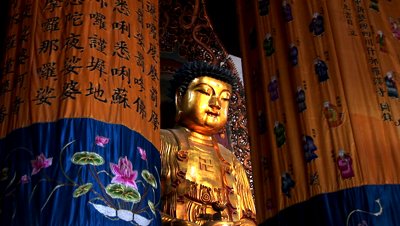
May and I are off to the Jade Buddha Temple in Shanghai today, today is the 5th day of January in the Chinese Nongli Calendar so the fifth day of the new year is the God of Wealth’s birthday.

In northern China, people eat jiǎozi (simplified Chinese: 饺子; traditional Chinese: 餃子), or dumplings, on the morning of pòwǔ (破五). In Taiwan, businesses traditionally re-open on the next day (the sixth day), accompanied by firecrackers. It is also common in China that on the 5th day people will shoot off firecrackers to get Guan Yu’s attention, thus ensuring his favor and good fortune for the new year., it’s also February 14th Valentines day in the Gregorian Calendar (Western Calendar) so we have plenty to pray for 🙂


images-1images-3

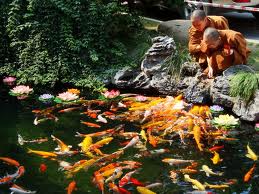
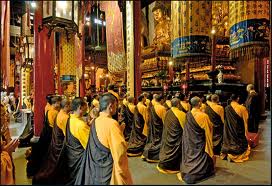
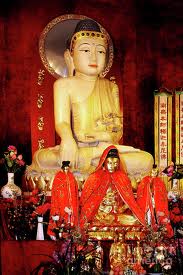
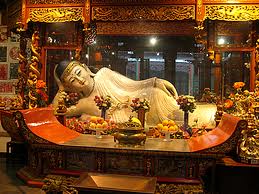
The Jade Buddha Temple (Chinese: 玉佛禅寺; pinyin: Yùfó Chán Sì, literally Jade Buddha Chan Temple) is a Buddhist temple in Shanghai, China. As with many modern Chinese Buddhist temples, the current temple draws from both the Pure Land and Chan traditions of Mahayana Buddhism. It was founded in 1882 with two jade Buddha statues imported to Shanghai from Burma by sea. These were a sitting Buddha (1.95 metres tall, 3 tonnes)

images-2

and a smaller reclining Buddha representing Buddha’s death.

images

The temple now also contains a much larger reclining Buddha made of marble, donated from Singapore.

I will pray for Peace, Happiness, Compassion, Good Health, Friendship and Love.

Namaste

Mark

Ahhh, A Deep Breath

Published 13/02/2013 by inspiringyourspirit


Please read this beautifully written article on Deep Belly Breathing by Nicole.

Click on the link below and Enjoy 🙂

Namaste

Mark

Ahhh, A Deep Breath.

Published 12/02/2013 by inspiringyourspirit

Random or Planned acts of kindness. Either way is great and certainly a step forward to making this world a better place for each and every one of us to live 🙂

What will you do this week, do you have any plans to share your kindness to this world?

Have you carried out any Random acts of kindness during the past few days?

Let’s try to bring some LOVE back into this world 🙂

Namaste

Mark

goingoutwordsandinwords's avatargoing outwords & inwords

randomkindness

This week, February 11-17th, is Random Acts of Kindness Week.  And while of course we don’t need a reason or a special week to perform small random acts of kindness and would certainly benefit from practicing regularly throughout the year,  having a few days set aside with this intention can be a wonderful community motivation towards taking better care of one another and widening our sometimes, maybe usually, self-involved state of mind.

When we take care of others we are also taking care of ourselves and when we take care of ourselves we are also taking care of others.  This is the heart of the teaching on interbeing.  We are all connected.  To say that we are separate from someone is not entirely correct and along those same lines to say that we are the same is also equally incorrect.  We are both the same and different in many beautiful…

View original post 595 more words

Published 11/02/2013 by inspiringyourspirit

I Love, I Love, I Love 🙂

lucas2012infos's avatarLucas 2012 Infos

Uploaded on 8 February 2013 by Gisele Frederich

View original post

Wudang Mountain-Cradle of Taoism E4

Published 11/02/2013 by inspiringyourspirit

Happy Chinese Lunar New Year

Published 09/02/2013 by inspiringyourspirit

Happy Chinese Lunar New Year to you all from Sunny and Snowy Shanghai.

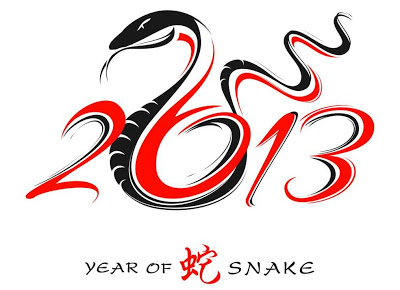
Thank you for your following, your support, your comments, your kind words of appreciation and most of all your friendship throughout 2012. We are now entering into the year of the Snake so I wish you all a very Happy New Year fulled with Happiness, Great Health, Good Fortune and Success.

Xin Nian Kuai Le, Gong Xi Fa Cai 新年快乐, 恭喜发财

Regards
Mark

2013 snake year-1

Wudang Mountain Cradle of Taoism E03

Published 09/02/2013 by inspiringyourspirit

Wudang Mountains – Cradle of Taoism Part 2

Published 08/02/2013 by inspiringyourspirit

Part 2 of Wudang Mountain. Cradle of Taoism

Please enjoy
Namaste
Mark

Wudang Mountains a place close to my heart

Published 07/02/2013 by inspiringyourspirit

Wudang Mountains-The Cradle of Taoism, a place in China close to my heart.

I do hope you will enjoy this short video and the one I will post tomorrow 🙂

Namaste
Mark

The legend of the serpent and the firefly

Published 06/02/2013 by inspiringyourspirit

serpent-and-firefly_Traditional-Tales_Humanity-Healing


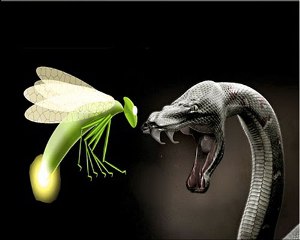
Once upon a time there was a serpent that was persecuting a firefly. The poor firefly fled from the ferocious predator, using all the energy created by fear to speed him along.


The serpent, however, never considered giving up his pursuit, so he chased the poor firefly and made him run away, and again chased him and made him run away  the second and the third day.
The ordeal continued, until the end of the third day.
Without the strength to continue, the firefly stopped and asked the Serpent, “May I ask you three questions?”
The Serpent said with a haughty tone, “I’m not used to answering anyone, but since I am going to devour you, you can ask me anything”.
1) “Am I part of your food chain?”
“No” answered the Serpent
2) “Did I hurt you or provoke you in any way?” asked the firefly.
“No” repeated the serpent.
3) “So, why do you want to devour me?”
“Well”, said the Serpent, “because I can’t stand to see your shining light.”

……….
In your life, there will always be “serpents” that will come about and try to steal your light and your dreams;….. you will have two options:
1) You can stop shinning your light, so no serpent will be after you any longer

or

2) You can let your light shine even brighter and learn how to deal with people like that.

The Choice is yours…Which will you choose?


Namaste

Mark

IT’S HURT……BUT WHY?

Published 05/02/2013 by inspiringyourspirit

A beautiful article about Negative Emotions, Hurt and Detachment by a dear blogging friend of mine from India Supriya.

Supriya’s blog can be found here http://hopeoflight.wordpress.com/about/

I hope you enjoy it as much as I?

Namaste

Mark


Hello readers, many times in life we feel deeply hurt. Internal hurt is more painful than external hurt as no one able to see that the heart is crying and it will be more difficult if you are a sensitive person.
This question haunted me from a long time why something or someone hurt us so much? Why we feel pain in our heart? How can we able to cure this pain?
I asked people I tried to find its answer in book & everywhere. And the most common answer I get is “LOVE HURTS” as it said, “ Those who love us knows exactly where to hit to break the heart.” But frankly speaking, I didn’t find this answer helpful.
I always believe there must be some cure for this pain or hurt like we have medicines for body wounds.
So my today’s story is in search of that cure which heals our heart that feels hurt.

“HAPPY READING”

broken-heart

Life is miserable for Diya. She feels everyone holding a hammer in their hand and as soon as they get the chance they hit hard on her heart. Whom she considers her love ones also do this.. She desperately needs some help to over come from this otherwise she gets mad. She didn’t want any temporary solution of this problem as she did in the past. This time she wants the actual answer to her question “ It hurts…. But why? And what’s the solution. She tried everything she could but not able to find any satisfied answer.

One day while she was going to meet one of her friend she saw a pamphlet “ Tell me your question” and in the end there was an email-id. Diya thought its not a harm to try this one also. So she mailed to that Id and after a few days she got a reply.
“Come & meet me at the below mentioned address.”

She thought maybe it’s a kind of joke? But then she thought if she wants to find the answer she have to go and see what it’s all about. She went to the place.
It’s a park near the university where she met a lady near the age of 55 or so. The lady greeted her with a smile and introduced her as a professor who likes to do social work in her free time.

Diya feels little hesitated to tell her problem to a stranger.
The lady insures her that whatever she will share it just between two of them.
Diya said, “ Ok…. I want to know why I feel so much hurt in my heart…. And what can I do to cure it.”
The lady asked, “ When you feel hurt most?”
Diya said, “Many times”
The lady asked, “ What hurt you most?”
Diya said, “ So many things… like at my work my boss never appreciate my work and always try to humiliate me in front of others. My colleagues pass comment on me. My friends also hurt me many times when they lie to me. My husband & my kids also sometimes become the reason of my hurt that I love the most. You know to a mother seeing their children suffers is the most painful thing. My elder son met an accident last year and still he is not able to walk properly. Could you image how much it’s hurt me?”

The lady nodded.
“ But now enough is enough I am not able to tolerate this pain more.”
The lady listen her calmly and after a few minutes she just said two words.
“ Practice Detachment”

“ What … what do you mean by that? What you want me to do to renounce my family and career for your kind information I am a family woman not any saint.” Diya said in disbelief.
The lady said, “ Calm down I am just trying to help you, don’t take me in wrong way.”
Diya said, “ Ok”
Let first understand why anything or anyone hurt us
Diya nodded
The lady gave her a book and said, “ Hold it tight.”
Diya does it as said.
The lady hit the book hardly with a stick.
Diya dropped the book and shout, “ What are you trying to do? You almost hit me.’
The lady said, “ I am sorry but I am trying to hit the book not you.”
“ How foolish is that. I am holding the book if you hit it I also get hurt.” Diya said annoyingly.
The lady said, “ TRUE…. That’s my point. Its call attachment whenever we attach our self with something or someone we get hurt. Remember what Buddhists say..

“Don’t cling to things, because everything is impermanent”

Diya asked, “Can you explain it a little more I am not able to absorb it fully.”
The lady nodded

Now I explain it taking those points which you told me in the beginning.
Suppose, you made a good report and when you go to show it to your boss you hope that your boss like it and you get promoted for your good work. But when your boss sees your work he gets angry and completely reject your report.
Now say how you will feel??
Diya replied, “ It’s hurt me?”

“Yes, you feel hurt because what you hoped didn’t happen.” Said the lady.
Diya asked, “ Do you mean I should not hope for good.”
The lady said, “I didn’t say that my point is hoping for good is not bad. The thing that hurt us is when we attach our self to the outcome and when the outcome doesn’t come the way we expected we feel hurt.”

“We are responsible for the effort not the outcomes.”

The second thing which hurt us is when someone ( especially those whom we consider our dear ones or friends) lie to us or said bad words to us. The thing that we should remember that time is…..

“Words only hurt when you allow yourself to believe them”

‘But how could that possible I know that they are doing wrong’ Diya protest.
‘True again but we are not talking here about right and wrong. Remember we have no control over others. People are free to say what they want. A lie or bad word said once but we keep them in our hearts & mind, and hurt our self by repeating the record again and again. Let them go and remember letting go doesn’t mean that you don’t care about someone anymore. It’s just realizing that the only person you really have control over is yourself.”

“Pain will leave you, when you let go”

Now the crucial point, we feel hurt most when our love one suffers.
For this you have to image two situations.
In first situation you and your son are walking. Your right hand ties with your son’s left hand. Suddenly your son fall down and hurt him.
‘What will happen to you and what can you do in this situation?’ the lady asked
Diya replied, “ I will also fall with him as we both are tied together and it might happen that I also get hurt myself too.”
‘Correct’

In the second situation when you and your son are walking but this time you and him are not tied together.
‘Now say what will happen to you and what will you do when you see your son get hurt?’
‘I pick him up and try to heal him’
‘Correct again’

In the first situation when our love ones going through pain we also go in pain as we are attached or say tie with them. That time when one needs someone strong to pick him or her up we choose to suffer with him or her. Its call attachment.

Diya asked in confusion, ‘ Wait… do you mean I should be emotion less and develop an attitude of I don’t care.’
Lady said, ‘No, absolutely not. We are human beings with emotions, we get connected with each other through these emotions not due to any biological reason. Due to emotions & feelings we are able to give love & show kindness toward everyone (it doesn’t matter we know them or not & its also not matter if its for human beings, animals or any non-living thing).

Emotions and feeling are like waves on a sea. See them, feel them and let them pass. Don’t allow yourself to cling to them otherwise those waves throw you out.

The second situation is an example of detachment. Detachment doesn’t mean you don’t let the experience penetrate you. On the contrary, you let it penetrate you fully. That’s how you able to leave it.
Being detached, you turn yourself in a person one who can love more deeply and care with compassion. Without detachment we always feel the fear. We are too busy being afraid. We are afraid of the pain. We are afraid of the grief. We are afraid of the vulnerability that loving entails.
Most of the time we live our life with that thought this or that thing hurt me in the past so it might be hurt me in the future.

Wash yourself with emotions. It won’t hurt you. It will help you to understand everything more clearly and deeply. When we are able to recognize the emotion and detach our self from it then only we able to be more compassionate, caring & loving.

Diya nodded and said, “ I need to reflect what I just heard. It’s a new thing for me.”
The lady said, ‘ Hmm… You should and whenever you need a talk & clear your thoughts you are most welcome.”
Diya said, ‘ I will but before I leave I have a last question. Do you able to completely detach?’
Lady said, ‘I know pain, hurt, sadness, and loneliness little better. I lost my husband and only daughter in a terror attack.’ Her eyes get moist.
‘But I am still a student who practicing detachment on a regular basis. I start my day with the affirmation that Mahatma Gandhi once said, “ No one can hurt me without my permission”’

Moving from Attachment to Detachment with Love

Published 05/02/2013 by inspiringyourspirit

1550_10151240073931647_175648707_n


An article by Baba Shuddhaanandaa Brahmachari


Recently I was asked this question: How does one best practice both detachment and active compassion? Like with one’s friends and children? How do you know when to give guidance or advice and when to let them go, to make their own mistakes?

All human souls in this world are bound by the fetters of attachment. Your strongest emotional bonds are with the ones who have come closest to your heart in your relationships and those with whom you have lived for a longer time. Physical distance at times only enhances the pang of separation.
For example, parents are naturally attached to their children and most of the time they are either prayerful or worried about their children and their future. No mother or father can rise above this whether they live close to the child or at a distance. Parents always have the most unconditional love for their children. But it is sometimes hard to differentiate between unhealthy attachment and unconditional love.
Do you know what attachment is? Do you know what love is?
Attachment is unconsciousness. The ego acts like an octopus, clinging to anything it believes is needed for its survival and pleasure. Attachment is the manifestation of the ego, your false self, as it tries to confine life to its own concepts and desires. When you love someone with conditions and expectations, your love is limited, rooted in attachment, which is the root of all miseries. Love is not meant to bring miseries; it is meant to expand our life to infinite joy.
Ego gives birth to attachment. Attachment gives birth to clinging, which inevitably gives birth to pain and suffering. Love is the naturalness of your Spirit, eternally within you, living in the flow of Universe. Ego obstructs that flow with its created attachments.
Ego is the separator. It divides and separates us from the other. This is the root ignorance, our sense of separation. As a result we are separated from our own Being, our true Self, our family and friends, and also the rest of the Universe.
It is only when the realization dawns that ego is causing all the fears and frustrations that you also come to know that it is your attachments to various persons and what you think is best for them that causes lots of your frustrations. All pains in life are due to deep attachment, which again is born out of the ignorance of the true nature of love.
Love, at its essence, transforms the egoist instinct of attachment into a detached state of spiritual flowering.
Love, love, only love can open the gates to the world of divine light where lies the release of the mind from all its entanglements and attachments. The more your mind levitates toward the Higher Truth of Light and Love, the more you get detached as a natural consequence of this elevated wisdom.
Detachment is not something that you do heartlessly to achieve some Utopian object but it is the simple manifestation of your love for the Higher reality. When you love the Higher, the lower leaves you.
The path is through meditation, contemplation, actions without attachments to the results and finally unconditional surrender to the Doer of all doings. The path is Love, pure love for the whole universe.
Detachment is not indifference. Detachment is a state of mind where you transcend the need of your ego to put conditions on what you think others should believe, feel and do. You do your best for others with love, but with the sense of detachment, surrendering the results to the divine.
Compassion is not an act of doing. When your heart feels the pains of others, the sufferance of the others as if it’s happening to you or to your most near and dear, the love that flows and the actions that follow translate your deepest feelings into an active contribution toward changing that situation. Hence this love that flows could be called active compassion because as a result you naturally do what needs to be done to help others, knowing that it is not you, the doer, but the divine working through you.
Before we are ready to guide or help our family and friends from a truly loving, detached state of mind, we need to collect ourselves; we need to find our own center first. We need to find our own self in a state of integrity. Most often what we find in society is people trying to advise others but making very little impact. It is because the person, who is advising, trying to guide the other, is himself in a state of chaos inside and not centered.
To help others we need to first help ourselves.
Regular practice of meditation, impartial self-analysis, and continual vigilance over one’s own mind, mindfulness, and surrender to the ultimate will of the divine are the practice that needs to be practiced first. This brings about the inner divine spark which has its own pure energy that is the essence which makes the difference in the lives of others.
You will see that as you become more and more spiritually centered, you are able to understand what to say or do, when to say it or do it, and how to say it or do it, to anyone, regarding any situation, that the other faces. Your guidance will no longer be treated as an imposition or unwanted advice but as a loving gift from your open heart.
Thus it always boils down to the single point that we need to uplift ourselves before we are ready to help our loved one, to help others. And when you are ready, you help without helping, you are compassionate without being compassionate, you love without loving, and you do without doing because you are moving from attachment to detachment with Love.

Namaste
Mark

Support and Healing

Published 04/02/2013 by inspiringyourspirit

Water Ripples and Greenery

Sometimes when we are called to help and support family, friends and colleagues far away, we do it by touching those closer around us. Our intention, love, compassion, vibrations and healing energy creates ripples that are expansive and far reaching and we can be certain that the outcome will be felt and the world will be touched in beautiful ways.

Namaste

Mark