Tai Chi

All posts tagged Tai Chi

Naikan

Published 12/08/2013 by inspiringyourspirit

mindfulness-1


Imagine yourself enclosed by a small space within traditional Japanese screens. In complete silence and isolation you examine in minute detail your entire life, especially important relationships like mother, father and siblings within the boundaries of the three strategic Naikan questions. Gradually over seven days of silence and deep introspection interrupted only by the Naikan therapist entering your space, bowing giving you food and drink and asking the three questions to the portion of your life you have been examining, piece by steady piece the meditator dismantles the ego that have hovered like dark clouds blocking the blue sky. Like awakening from a dream the meditator opens his/her eyes to the light of day. This is Naikan.

Naikan( From the Japanese Nai = Inner Kan= looking) is a therapy developed in Japan by Yoshimoto Ishin (1916 -1988). It was adapted from a Jodo Shinshu Buddhist practice of a meditation of deep introspection and self examination. Although the basic structure remains the same it has been further developed to be used in modern therapeutic settings.

There is emerging a palpable curiosity towards the Eastern and Buddhist psychology. With the emergence of the now evidenced based “Mindfulness” therapies (Acceptance and Commitment Therapy, Mindfulness Based Cognitive Therapies etc) Naikan stands to be re-examined with energetic curiosity.

I must add a note of caution here. It is easy to confine the Mindfulness based therapies, of which Naikan belongs, to the therapist’s clinic. This would be a huge mistake. Naikan is essentially a way of life for everyone who wishes to live a more fulfilling and happy life.

Naikan is essentially a method of deep introspection. It is a way of examining one’s life from a different angle by asking strategic questions and arriving at a deep appreciation of life the way it is. The big mistake most people make with Mindfulness based processes is to expect the process to eliminate life’s problems. This is not the aim. After all, none of us are immune from life’s struggles or to put it in plain language: “shit happens”. What Naikan does is to help us look at life’s sufferings from a different angle – one of deep gratitude. It does this by radically placing us in front of our self-centeredness. When we do this a new energy begins to flow and we become better equipped to face life’s issues.


Naikan does this by asking three strategic questions:


 What have I received from person (or event) x?

 What have I given to person (or event) x?

 What troubles and difficulties have I caused to person (or event) x?


In Naikan we examine our entire life in minute detail from the time we were born to the present moment. We focus primarily or relationships rather than events as we are formed by our early childhood relationships and relationships in general. It is a Naikan principle that our mental health is based almost entirely upon how we relate with one another and our environment.


In Classical Naikan the client spends an intense seven day period in meditation on one’s entire life guided at regular intervals by the Naikan therapist. There are shorter versions of this process to suit the client’s schedule. It is often said that one of the “down sides” of Naikan is its intense seven day meditation. However, we must ask ourselves, what is seven days in what often has been a lifetime of struggle with certain issues?

Ideally Naikan is done with a “Naikan Guide” or therapist. However it can also be performed by oneself on a regular basis.

Gratitude in Naikan

The concept of “gratitude” plays a crucial part in Naikan. In Chinese the word for gratitude is “gan ji gan en”. The English word “gratitude” does not do justice to the Chinese words which convey a different concept. In our daily speech we can say we are “thankful” for something but still inwardly hold resentment or grudges. I can say “thank you” to someone for something even if that someone has annoyed me greatly. I do it out of politeness. The Gratitude in Naikan goes far beyond the concept of thankfulness. It is a realization of the “gift” of life and a sense of deep contentment with the way things “are”. . . an acceptance of the “is-ness” in all things. When we have this sense of deep gratitude we are free. Many say after Naikan they experience a feeling like a ton of bricks lifted off their shoulders. This is a happiness which goes beyond what “happens” to us.

Personal Responsibility

Naikan is a therapy and process that places responsibility squarely upon the individual challenged with their issues. Throughout the Naikan process the therapist will not give “advice” but guide the client to take responsibility for their own healing. In this process there is tremendous empowerment.


Much more

There is much more to Naikan than these few words can give justice to. Like all Mindfulness studies – they need to be experienced rather than didactically analyzed.

Please Listen.

Published 10/08/2013 by inspiringyourspirit


 541433_10151442217757870_1507626453_n
Because of my all embracing hearing my name Kuan Yin is known everywhere.  Since I myself do not meditate on sound but on the meditator.  I cause all suffering beings to look into the sound of their voices to obtain liberation. Surangama Sutra

Two of the greatest tragedies which face us on a global proportion as we turn into this next millennium are poverty and human mass slaughter.

The poverty of which I speak is not the material poverty which we are so used to hearing about. It is another kind of poverty, far, far worse and more destructive to the fabric of society than economic poverty. This is the poverty of isolation and loneliness.

It is a kind of poverty which is extremely insidious and continues to increase and underscore our family life and social order. The symptoms of this social sickness are many – broken relationships and divorce, crime, emotional and physical violence, war between communities, mental illness, and addictions; it is a poverty which strips millions of self-esteem. A person is left dry of any value or worth and is rendered powerless.

The tragedy is that although we live in densely populated cities and chat over countless cups of tea and coffee, the sense of isolation is ever increasing within our communities, within our work places, within our schools and even within our churches.

The second great tragedy is that we have witnessed more human carnage this last century in war and murder than in any other time of world history. This is due in part to the greater destructive potential of modern weapons. In early days of world history one spear may have killed one person in war. Now one missile has the capability of destroying a whole nation.

It thoroughly astounds me that with all our sophisticated technology the world has not advanced very far at all in terms of peace and the sanctity of human life. We are able to send a space probe to the outermost limits of our universe, but we are thoroughly unable (or unwilling) to work toward a peaceful society.

I would boldly suggest that the reason for this is that we are building societies with the predisposition to instant self-gratification. We seek personal power and material possessions and we want it right now. War is a multi million-dollar business and it grants personal empowerment – for the winners that is. Peace on the other hand requires community effort and its fruits though plentiful, even financially, are not seen immediately. You can’t make a quick buck on peace.

Our love affair with technology has enhanced our need for instant self-gratification. The Internet enables us to connect instantly with others at the opposite end of the globe. We can have cyber-relationships, even cyber-sex. The iPod has fast become the ‘mePod’ as millions of people absorb themselves within their invisible cone of silence. Here is the real danger. We are drawn into the illusion of being part of a ‘global community’. This is nothing more than a fraud. Hugh Mackay, Australian Psychologist and social commentator observes in his book Why Don’t People Listen? :”When the emphasis is on information transfer rather than relationships, the life of the (global) village becomes meaningless: shared data is no substitute for the sense of shared identity and mutual obligation which come from shared experience.” People are beginning now to isolate themselves from real community. The result will be an ever-increasing sense of isolation.

Listening is a communication experience which has within it the power to break the grip of isolation and to plant and nurture a new community. Listening shared from the level of the human heart. No other communication technology is able to do this.

Several years ago I began to notice the importance of Empathy and  how deep listening (listening with the intent to understand) can affect individuals and be the catalyst for positive change both personally and as a community. As a society we have forgotten how to listen. This has been gravely injurious to our corporate journey as a society as well as to our personal growth and well-being. We have lost our prophetic foundations, as when we don’t listen we miss vital information. Listening and vision go hand in hand. When we don’t listen we don’t see the problem ahead – we fail to see the big picture sand we move blindly into the future.

I have observed what ‘real’ Listening can do. I have seen it heal people, turn enemies into friends, I have seen it change people – dramatically, and I have seen it close sales deals worth millions of dollars where no other ‘strategy’ had worked. It is powerful beyond all measure.

In speaking to many people about their recovery from difficult circumstances or emotional illness, I have heard people talk about that thing which really made the difference to them – the turning point, if you like – was that some one took the time to really listen to them. This intrigued me as this phrase kept coming up time and time again: “really listened”. What was it in this act of “really listening’ which was able to turn a person’s life around?

But we don’t have time any more. We have systems to attend to, reports to write, deadlines to meet, meetings to go to. Furthermore, the things we listen to is mainly information shuffling as this is what our technology has taught us to do. Emails are quick and precise. Text messaging is even briefer couched in texting language for rapid application. We are fast becoming shallow beings forgetting how to plummet the depth of our souls. Information has become our God.

I will never forget the words of a potential client when I was young and green who once said to me “I don’t care what you know. I just want to know that you care. You listened to me. That is enough and that is all.”

Namaste
Mark

Wise words of Buddhism

Published 09/08/2013 by inspiringyourspirit

qn0404 qn0405 qn0406 qn0407 qn0408qn0410 qn0409 qn0403


Namaste

Mark

Award Week

Published 09/08/2013 by inspiringyourspirit

bestmomentaward


Hi everyone,

Well I guess it must be my lucky week  🙂

After my post re two blogging award nominations from Hari and Michelle that i posted yesterday, today I received another one from my dear friend Mike, AKA Q-Bird http://quarksire.wordpress.com/about/ this one is the Best Moment Award.

I am once again humbled by Mike’s nomination and so appreciative of his support of my blog, however I will accept this nomination in the true spirit in which Q-Bird gave it to me, but gracefully decline to adhere to the nomination process due to the time it takes to complete.

Please stop by Q-Bird’s blog, it’s fun 🙂

Namaste

Mark


New Award Nominations

Published 08/08/2013 by inspiringyourspirit

logo-the-versatile-blogger versatileblogger11

My dear blogging friends,

I have received two blogging nominations for awards this week from two of my fellow bloggers and friends Hari at http://hariqhuang.wordpress.com and Michelle at http://lifeasagarden.wordpress.com . Please check out their blogs because they are both so full of inspiring, wonderful information and energy 🙂

I am as usual very humbled by their kind thoughts and nominations and so appreciative of their support of my blog, however I will accept their nominations in the true spirit they were bestowed on me but gracefully decline to adhere to the nomination process due to the time it takes to complete.

Thank you dear friends, from the bottom of my heart.

Namaste

Mark

Awakened

Published 03/08/2013 by inspiringyourspirit

720551


If only I could make a living out of Buddhism, or do I already?

When the Buddha walked the earth many asked him if he were a god. “No”, he replied. “Are you a spirit?” “No”, he replied. “I am Awakened.” Being awakened is the opposite of being asleep. When we are asleep we are in the world of dream and nightmare. One is strange and the other is frightening. Neither of which are real. That is the life that most live on a daily basis. It is a strange world because it rarely conforms to our hopes and desires. Frightening because we are living in fear of violence and losing what “happiness” we think we have. This is a very unsatisfactory way of living and creates huge problems for society. Depression is now one of the world’s major illnesses.

When we are awake we are alive. We are able to see life as a gift. Everyone likes a gift. I have watched many children at Christmas time receive gifts from their parents or relatives with huge smiles on their faces and lots of laughter and joy. Even when we try to be subdued with a:”Oh, really, you shouldn’t have done that” we nonetheless receive the gift with a smile on our face.

Rarely do we see life as a gift. We most often see it as a struggle and as a threat. We fight it – sometimes literally with great violence. We do not see it as a gift because we are asleep. When we are awake we are alive. When we live out our life as a gift to be given we are truly alive and living life to the fullest. That is how life is meant to be lived.

So many people are trying to make a living desiring to earn more and more in the fear that life will not have enough for them. They do not know the secret to true abundance. Abundance comes from our gift. This is the gift of life which is within each and everyone of us. When we find it we become livened and awake. When we find it the universe opens itself us to us.

The gift is within each of us. There is no need to criticize others for your unhappiness or lack of abundance when you already have it within you. It is only ignorance and ego that prevents you from discovering it as it hides under layers of masks.

Our Buddhist practice teaches us how to remove the masks of illusion. It teaches us to take responsibility for our own lives with a new set of skills for skillful living. Many think Buddhism is a religion. It is not. It is a life education that helps us up-skill to live effectively. When we sincerely apply the teaching methods we begin to see results in our life. This Cause and Effect. So why not change career path and make a new living?

The Buddha gave us a valuable teaching to dismantle the masks, wake up out of our sleep and live life. We can indeed make a wonderful living out of Buddhism.

Namaste my friends
Mark

The 8 Awakenings

Published 02/08/2013 by inspiringyourspirit

28768_422271154559193_430953812_n


Many people coming to test the waters of Buddhism for the first time often wonder where to start. There are literally hundreds of sutras with each school of Buddhism focusing on specific sutras that are at their foundation.


It is clear that Buddhism is about the issue of suffering and how to overcome it. Suffering takes on many forms from severe pain and illness and death to the petty annoyances that plague us on almost a daily basis. Buddhism teaches us to live a supremely happy and value centred life with the means to end the cycle of birth and death which is suffering.


The sutra of the Eight Awakenings is a very short sutra. In fact many Chinese monks used to learn this one by heart not only because of its brevity but also because it contained within it the essential of Buddhism.


I often call it the Mediators’ Sutra as it is a foundation sutra for all meditation work. It is well worth contemplating these Eight Awakenings carefully examining them in the light of your own life. I have included them here in their entirety.


Buddhist Disciples!  At all times, day and night, sincerely recite and bear in mind these eight truths that cause great people to awaken.


The First Awakening:

The world is impermanent. Countries are perilous and fragile. The body is a source of pain, ultimately empty. The five skandhas are not the true self. Life and Death is nothing but a series of transformations—hallucinatory, unreal, uncontrollable. The intellect is a wellspring of turpitude, the body a breeding ground of offenses. Investigate and contemplate these truths. Gradually break free of death and rebirth.


The Second Awakening:

Too much desire brings pain. Death and rebirth are wearisome ordeals, originating from our thoughts of greed and lust. By lessening desires we can realize absolute truth and enjoy peace, freedom, and health in body and mind.


The Third Awakening:

Our minds are never satisfied or content with just enough. The more we obtain, the more we want. Thus we create offenses and perform evil deeds. Bodhisattvas don’t wish to make these mistakes. Instead, they choose to be content. They nurture the Way, living a quiet life in humble surroundings —their sole occupation, cultivating wisdom.


The Fourth Awakening:

Idleness and self-indulgence are the downfall of people. With unflagging vigor, great people break through their afflictions and baseness. They vanquish and defeat the four kinds of demons, and escape from the prison of the five skandhas.


The Fifth Awakening:

Stupidity and ignorance are the cause of death and rebirth. Bodhisattvas apply themselves and deeply appreciate study and erudition, constantly striving to expand their wisdom and refine their eloquence. Nothing brings them greater joy than teaching and transforming living beings.


The Sixth Awakening:

Suffering in poverty breeds deep resentment. Wealth unfairly distributed creates ill-will and conflict among people. Thus, Bodhisattvas practice giving. They treat friend and foe alike. They do not harbor grudges or despise amoral people.


The Seventh Awakening:

The five desires are a source of offenses and grief. Truly great people, laity included, are not blighted by worldly pleasures. Instead, they aspire to don the three-piece precept robe and the blessing bowl of monastic life. Their ultimate ambition is to leave the home life and to cultivate the Path with impeccable purity. Their virtuous qualities are lofty and sublime; their attitude towards all creatures, kind and compassionate.


The Eighth Awakening:

Like a blazing inferno, birth and death are plagued with suffering and affliction. Therefore, great people resolve to cultivate the Great Vehicle, to rescue all beings, to endure hardship on behalf of others, and to lead everyone to ultimate happiness.


These are the Eight Truths that all Buddhas, Bodhisattvas and great people awaken to. Once awakened, they even more energetically continue to cultivate the Path. Steeping themselves in kindness and compassion, they grow in wisdom. They sail the Dharma ship across to Nirvana’s shore, and then return on the sea of birth and death to rescue living beings. They use these Eight Truths to show the proper course for living beings, causing them to recognize the anguish of birth and death. They inspire all to forsake the five desires, and to cultivate their minds in the manner of Sages.


If Buddhist disciples recite this Sutra on the Eight Awakenings, and constantly ponder its meaning, they will certainly eradicate boundless offenses, advance towards Bodhi, and will quickly realize Proper Enlightenment. They will always be free of birth and death, and will abide in eternal bliss.


Namaste

Mark

Is your Meditation for Nothing?

Published 30/07/2013 by inspiringyourspirit

1044208_484554141637053_475729008_n

Your Meditation is Nothing

If you can’t stand beside a friendless man
your meditation is nothing.
If you can’t listen to pain and terror then
your meditation is nothing.
If you can’t befriend the insane and share from their bowl
your meditation is nothing.
If you cannot take the gun gently from the hand of the murderer
and embrace him in his horror then your meditation is nothing.
If you cannot see the beauty and life in the one without limbs then
your meditation is nothing.
If you cannot sit beside the aged in their loneliness then
your meditation is nothing.
If you can’t embrace your own pain and shout “Yes!” to Life then
your meditation is nothing.

If you can surrender all that you are, all that you have,
if you can embrace life without wanting it or wanting to change it,
if you can hear the sounds of pain and joy and know they come from the same source,
if you can sit in the fire, rain, snow, sun and in surrender open your heart
to the purity of love then your meditation is the supreme gift of the Manu Pearl, the light of the Pure Land.

If you can meditate the Nothing knowing your meditation is nothing then
all serenity and bliss radiates like perfume from the Lotus.
Nothing and all are one in Joy.

Namaste
Mark

Chronic Back Pain and Me

Published 15/07/2013 by inspiringyourspirit

Chronic back pain and me.

low_back_pain_ART

Do you, like me suffer from chronic back pain? Maybe its from a old sporting injury, work related injury from lifting incorrectly or from just sitting too long at your desk and using a computer?
Back pain is annoying, its painful, it comes at the perfect time to stop us enjoying our life’s and it can be very time consuming and expensive to manage and to treat. So, it’s about time we did something about it!
I’m probably one of the worst offenders, I spend far too much time each day; sitting at my desk and using my computer, which for the majority of the time is sitting at the wrong level (ergonomically) for me to sit in a healthy posture. I tend to look down at my screen instead of up, my fingers rarely leave the keyboard and as my typing skills are not as per the perfect typist (I.e using three or four fingers at most, instead of all 10) which leads to strains in my fingers and of course can lead to the potential of Carpal Tunnel in my wrists.
What is low back pain?
“Low back pain” which can be acute or chronic, is literally pain or discomfort of the lower lumbar region of the back. Acute back pain usually follows some kind of injury, often related to everyday activities such as housework, gardening, a sports-related injury or an automobile accident. Back pain that lasts for more than three months is classified as chronic.
What are the symptoms?
Symptoms are often described as muscle aches but can include shooting or stabbing pain, limited flexibility and range of motion, or an inability to stand straight.
What are the causes?
Most cases of low back pain are due to strain on the bones, muscles, and ligaments of the spine. In some cases, however, low back pain can be due to such serious conditions as cancer or structural problems of the spine, which can cause nerve damage. Occasionally, lower back pain is due to a “slipped disk” (also called a herniated disk), in which one of the disks of cartilage that separates the vertebrae in the spine bulges out of place and presses on nerves. Often, a disk “slips” as a result of twisting while lifting, but the cause may not be identifiable.
Simple preventive steps can help eliminate recurring back pain resulting from improper body mechanics or from other causes of back problems that don’t stem from injuries.

Exercises that tone the back and maintaining proper posture are especially helpful. In addition, anyone with a tendency to develop back pain should learn to lift objects properly:

• Bend your knees and squat to pick up an object
• Keep your back straight
• Hold the object close to your body
• Avoid twisting

Choosing ergonomic furniture and tools at home and at work can also help avoid strains on the back.
What is the conventional treatment?
Most acute back pain will resolve on its own within two weeks without medical intervention. Whether lower back pain is acute or chronic, most cases are initially treated with over-the-counter pain relievers to reduce discomfort and with anti-inflammatory drugs to reduce inflammation. Sometimes, prescription drugs may be recommended for pain relief and to allow quality sleep. Cold and hot compresses may help reduce pain and inflammation and allow greater mobility, although they have not been scientifically proven to quickly resolve low back injury. Bed rest is recommended for only 1-2 days at most, and patients are advised to resume their normal activities as soon as possible. Massage therapy can be very useful in cases of acute muscle spasm causing back pain and problems with flexibility. Exercise may be the best way to speed recovery and strengthen back and abdominal muscles. Physical therapy may be recommended for more severe strains. In the most serious cases that don’t respond to other forms of treatment, and that involve compromised structures in the spine, surgery may be recommended to relieve pain caused by back problems or serious musculoskeletal injuries.
• Practice a relaxation technique daily: Options include mindfulness meditation (proven to ease chronic back pain), breath work, progressive muscle relaxation and hypnotherapy.

• Try Yoga, Tai Chi or Qigong, the stretches and slow movements can reduce muscle tension, strengthen the back and promote flexibility.

• Electrical stimulation: Transcutaneous electrical nerve stimulation (TENS) delivers low level electrical pulses to the lower back (you can get a portable device for home use). Percutaneous electrical nerve stimulation (PENS) works the same way but delivers the pulses via needles inserted into the back rather than electrodes used with TENS.

• Exercise: Both aerobic and strength training exercises can help. Aerobic exercise includes walking, swimming or cycling, all of which can help strengthen the back. Aerobic exercise also burns calories and helps you lose any excess weight that may contribute to your back problem. In addition, perform strength training exercises at least twice a week to tone and firm the abdominal, leg and buttock muscles that help to support the back. Seek out proper instruction before embarking on a strength training program; using either free weights or weight machines improperly can defeat the purpose. Make sure you do some stretching or yoga for flexibility.

• Chiropractic care may be of benefit in the treatment of back and neck pain. Many chiropractors use a kind of manipulation called “dynamic thrust”: a low speed, high force movement often accompanied by a popping or cracking sound. Others use a low-force, high-speed method, known as the Activator method (incorporating a tension spring and plunger tool) that may be a better choice for older patients who could be injured by dynamic thrust.

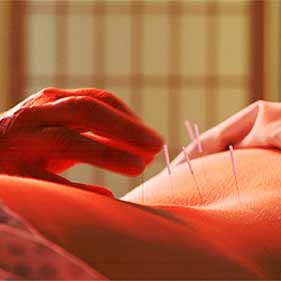
• Acupuncture. Studies indicate that acupuncture can help to relieve several kinds of pain, including low back pain.

acupuncture

I have personally been going through many weeks of intensive treatments for my chronic back pain, I have had scans and MRI’s, X-Rays and all the normal forms of medical diagnostics, and the consensus is I have a disk that likes to pop out from time to time, I guess to keep me mindful that it is still there and still important as a member of by spine ☺ When this disk pops out it usually manages to trap a nerve while its out of alignment from my other disk’s, this then causes shooting pains down my back and leg, often stopping my completely, immobilizing me and causing me severe pain.
I try not to agitate it, I take things as easy as possible, I don’t lift heavy objects, I always bend my knees and squat properly to lift anything even the lightest and easiest of objects, I exercise as often as my back allows, Qigong and Yoga are my personal favorite forms of exercise and I meditate and use my own forms of personal healing including self-hypnosis and visualization techniques.
I also have deep nerve massages twice per week followed by acupuncture with TENS then Cupping.

cupping

Cupping therapy is an ancient Chinese form of alternative medicine in which a local suction is created on the skin; practitioners believe this mobilizes blood flow in order to promote healing. Suction is created using heat (fire) or mechanical devices (hand or electrical pumps). There is reason to believe the practice dates from as early as 3000 B.C.; the earliest record of cupping is in the Ebers Papyru, one of the oldest medical textbooks in the world, describes in 1550 B.C. Egyptians used cupping. Archaeologists have found evidence in China of cupping dating back to 1000 B.C. In ancient Greece, Hippocrates (c. 400 B.C.) used cupping for internal disease and structural problems. This method in multiple forms spread into medicine throughout Asian and European civilizations.

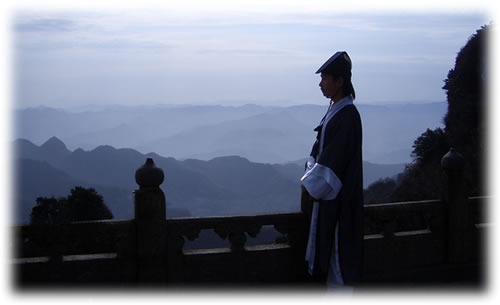
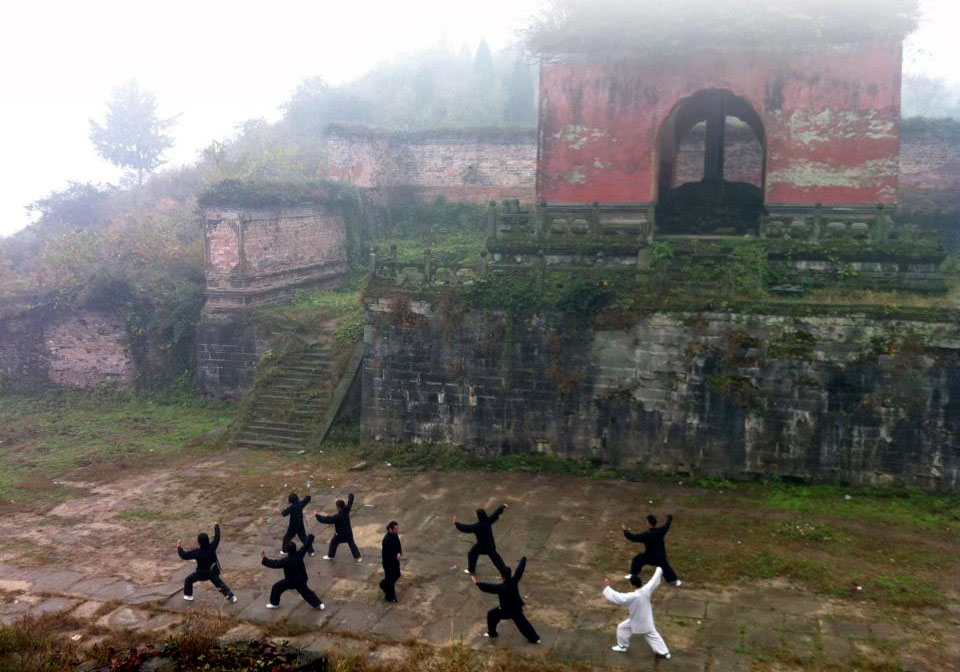
Yesterday afternoon, I met with a Qigong Master, we met in a local park and I meditated while he manipulated my Qi (energy) to my lower back, I focused my internal Qi with his and the combination of the two energy forces worked in harmony together to reduce my pain to the point where it disappeared completely, I was totally relaxed, there was no tension in my body, I was stress free and my own body took control over the healing process, after my session in the park, I was able to walk freely and in fact walked home which is about four miles from the park ☺

wudang3
I guess, alternative therapies and treatments are certainly a part of my life and they could also offer you some relief from your pain too.
Take care.
Namaste
Mark

Fame or Life

Published 13/07/2013 by inspiringyourspirit

lao_tzu-past_future_present


Fame or Life,

Which do you hold more dear?

Or Life or Wealth,

To which would you adhere?

Keep Life and Loose

those other things; keep them

and loose your Life?

Which brings sorrow

and pain

more near?

Thus we may see,

who cleaves to fame

Rejects what is

more great; who

loves large

stores gives up

the richer state.

Who is content

needs fear no

shame. Who

knows to stop

Incurs no blame.

From danger

free long live

shall he.


Lao Tzu

Namaste

Mark


We Are All Connected

Published 30/06/2013 by inspiringyourspirit

8511_467276480031486_339358419_n

Can you hold out your hand in friendship to someone or something today? Can you extend your arms openly to someone or something today?

We are all connected, we owe our fellow beings on this earth respect for whom and what they are and for what they bring to our world.

We are all connected, so share some happiness and love today, hold out your hands and extend your arms in peace, love and compassion.

Be one with everyone and everything today.

Namaste

Mark

Qigong-Longevity and Immortality

Published 27/06/2013 by inspiringyourspirit

Time Reversal

One of the most fascinating things to me in Qigong has been the Chinese fascination with longevity and immortality. Immortality is not living forever in the body you have today, it is to be aware of your eternal nature – before you die.

immortality

Interestingly, Laozi addresses this in the context of light in his poem #52, “using your own radiance return to the source of all light, this is the practice of entering eternity.”
In Qi cultivation this process is initiated at the practical level of health and healing. However, in the more advanced methods that are explored in the Heaven Phases, healing, longevity and immortality are gained by returning to one’s primordial or pre-birth nature and by merging with the timeless field of universal Qi. Many Qigong practices are focused on reversing time and returning to your pre-birth when there was no stress, no complexity, nothing to know, nothing to plan, nothing to remember.
Very recently, scientists have determined that our usual perception of time is not entirely correct. The arrow of time does not just travel forward in accordance with the clock and the sun, it also travels the opposite direction. I found this out while presenting at the Esalen-Noetic Science conference noted earlier. My roomate was the distinguished physicist Helmut Schmidt, who developed the digital random numbers generator (DRNG) at Boeing in 1969. This device, produces sets of random numbers that allow scientists to investigate non-local and quantum effects. In our conversations I was amazed to find that his work reflected the concepts that were so prevalent in the world view of the ancient Chinese Qi Masters. Talking Dr. Schmidt is a little like talking to Laozi, “When exploring the science of Qi, emphasize the mystery – anything else that you name it is probably wrong.” In his research Dr Schmidt has demonstrated that mind or consciousness influence the chance process in nature so that an outcome can reflect your intention. (50, 51)
This was further confirmed by Russell Targ (52, 53) a physicist who conducted the CIA research on remote viewing and Dean Radin of the Boundry Institute. (54, 55)In the discussions with these three luminaries of science it became obvious that there is a significant amount of research data that suggests that an influence can travel from the present to influence the past or from the future to influence the present. It has been found that this influence is potentiated by coherent function, aligning inner resources through mind focus and intention.
The possibilities that arise from this research are amazing. Healing may not actually be simply physiologic. In the light of time reversal, healing could as easily be caused by an influence going into the past and altering the development of health status even before a disease had occurred. This is connected to our discussion on possibility, probability and actuality. The set of “probabilities” that were on track to cause the “actual” disease would be altered by a signal or message that travels into the past to trigger an alternative set of probabilities. This would prevent the disease before it began and established a new history, a new set of “actualities”, for the person which begins to manifest in the past but is reflected in the present.
In an applied sense this means that in our practice of Qigong we may be influencing the past to affect the future or that our practice in the future has an effect on our present. Let this sink in. Your practice today may influence the past to alter your future. As your practice advances in the future the more powerful influence may be having an effect on you now. This Qigong effect could translate into new choices or behaviors. Or it could simply inspire us to increase the quantity or quality of our Qigong practice. Essentially, as this picture formed up in the discussions with Schmidt, Targ and Radin it became apparent that as probabilities become actualities it creates what is called our “world line” – a sequential set of probabilities that actualized. The time reverse effect suggests that, through intention an alternative set of probabilities actualize creating a new world line – a new you. This is exactly what the Chinese promise in Inner Alchemy and the cultivation of the Golden Elixir which is a spiritual medicine that creates peace of mind and a direct association with timeless nature of life.

Love

In the highest levels of Qigong it is an intention of the practice to become one with all life. Or as we havediscussed it may be more accurate to say — to realize that that you are of the One. Dissolving in Qi is essentially this, to melt into the universal field of Qi. To become one is to deeply associate with and accept oneness with everything. This is love. One of the most advanced states in Qigong is compassion and spontaneous service – love.
Interestingly, the writers in the domain of physics that I have drawn upon the most in my exploration of the Heaven Level of equivalents of Qi all talk about love. One of the first and most interesting things that I heard William Tiller say about the practical application of his findings in physics was, “We have an inherent capacity to resonate to the frequency of love, except for one thing – fear creates resistance in our circuitry.”
Love in all its forms – compassion, devotion, appreciation, gratitude, caring – create inner coherence. Love describes interacting with openness. Physicist Goswami suggests that the reality of quantum mechanics at the human level is love – where the “boundaries of the self are transcended through the experience of unity in spite of apparent separateness.” Shen, the Chinese word for Spirit is often translated as unconditional love – because in the ultimate sense personal spirit is associated with the One. In the most advanced forms of Heaven Qigong, sometimes called Shen Qigong, one enters into a form of practice where the self merges with the One.

Coherence
These universal interactions — whether through fields, consciousness or otherwise — suggest that the Chinese idea of the One and the relation that you can elect to have with the One is feasible. We can not decide to make the universe more coherent. The universal field is already coherent. However we can, through our practice, align with or enter into coherence with the inherent power of the universe.

Heart/Mind Equivalent
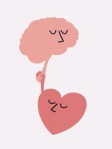
active Heart-Mind

Consciousness, it appears, may be the primary or fundamental factor in our experience of what we know as as the cosmos or the world. It also appears that your own consciousness may actually be an aspect or a portion of a universal field of consciousness. In the Chinese tradition this is all consistent with the idea of the pervasive Qi of Heaven entering the individual and residing in the heart (Heart/Mind). This means that our heart reflects the One.

chenshixing1

When the great masters who teach with life and compassion do their good work it is essentially, according to the Chinese, opening to the natural Yin force of Earth, opening to the natural Yang force of Heaven and allowing them to merge in the Heart/Mind center. By over coming the illusion of separateness that causes fear and worry the heart opens and the influence of Heaven and Earth pour through you and into your life, your work, your family, your community. When you purposefully cultivate Qi to eliminate resistance and the forces of the universe flow through you, it is an expression of the One. Complete surrender to all that is — that is openness to the One. Openness to all that is that is love and love resides in and expresses through the Heart.
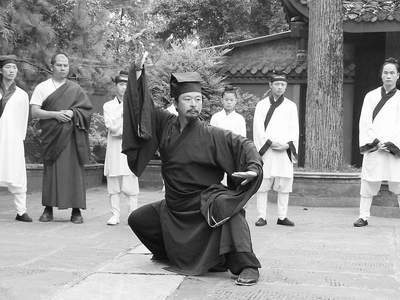
wudang3

Nesting — Embedding
The Multidimensional Human
Physiology – Earth internal, material, local

Bioenergy – HeartMind internal, non material, local

Biofield – Heart Mind internal/external, non-material, local

Quantum – Heaven Qi internal/external, nonmaterial, nonlocal

Of the four Western equivalents of Qi, only one is material. Yet, for most practical applications particularly in health and medicine, Western science has been completely focused on the material. Our science has definitely demonstrated the power to study, and apparently even control, the physical domain. The future of Western science is guaranteed to be awesome given only the smallest material portion of the multi-dimensional world and only a minor aspect of the multi-dimensional human has been explored.

The Chinese are contributing to our capacity to understand what looks like the limitless nature of our being. It appears that each of the levels of our self may be nested or embedded in the other levels. This can be viewed from bottom up as is typical here in the contemporary science of the West, or top down as in the more intuitive sciences of the ancients.

Bottom up – Western Science —

The body — physiology and biochemistry — is the conductive ground for the bioenergetic frame work which generates the biofield. These together provide the local framework for the interface of quantum/consciousness which is boundless and timeless.
16

Top down – Ancient Science —

The boundless and timeless ocean of Qi (quantum) creates the personal Qi Matrix (biofield), which infuses channels and centers (Dan Tian). This constructs and maintains the physical body ( structural and biochemical interactions).

This nesting integrates the parts into a whole. In our practice of cultivation we can either work from the Heaven Level down – which is not generally that easy to accomplish for people from our background in the material world — using Natural Flow Qigong, Circulating the Light or Guarding the One are examples of this. Or, fortunately, we can cultivate from the bottom up as well. This approach is the approach to Qigong that is open to everyone. Creating inner physiological coherence among the heart, brain, nervous system and other organ systems enhances the flow of the ions which maximize the capacity of the biofield. Western science has recently progressed rapidly toward understanding this. In addition, our coherent biofield very likely creates a positive relationship with or impact upon our interaction with the universal field of conscious or the quantum domain. While this aspect of the multi-dimensional human is going to be a big challenge for science, there are excellent Qigong tools for practice in this area that have been refined and improved for centuries.

Earlier we explored briefly the ancient formula for health and longevity. The emerging new formula that expresses the equivalents from the contemporary sciences of biology and physics for the knowledge of the ancients:

Inner Coherence = Information Exchange = Optimal Function

Western culture is experiencing a breakthrough to new knowledge about the fact that it is possible to purposefully enhance inner coherence through the methods developed by the ancients as well as some more recently developed self-improvement methods. The new formula for the use of personal practice to potentiate optimal function:

Practice + Intention =

Coherence = Information Exchange = Optimal Function

The ancient Chinese would declare that we can manage our relationship to the universal Qi to improve our lives through the practice of Qigong and Tai Chi. Western science is progressing rapidly to confirm this. The Chinese would declare that by doing the cultivation practices we engage our Heaven self (spirit, Shen) which enters into us to create the illuminated life. With current trends in energy medicine and quantum science we are, it seems, close to this same discovery in the West. Will we solve the Mystery in the West through our sophisticated scientific methods? The ancients would predict that there is quite a bit that you can uncover about the nature and benefits of the Qi, but that it is unlikely that we will solve the ultimate mystery known as Tai Xuan – Supreme Mystery.

Paradoxically, it has become apparent that way before Einstein, the ancient Chinese were doing medical research that was completely consistent with modern physics. This fact is having a major impact on contemporary science and causing a radical new trend to use the framework of quantum era physics to investigate medicine, healing and human potential. From its earliest history, Qigong has been associated with a mysterious and wonderful inner medicine, the Golden Elixir, which is based in Qi and the universal field of potential. The ancient theory that Qi is everywhere has both frustrated and stimulated Western science. Western science has a strong aversion to unsolved mysteries. To solve the mystery of Qi, Western science will have to experience a radical transformation. Research in Asia and Western countries has led to speculation that Qi could be a multi-dimensional factor that may link specific components of the local world with unspecific and immeasurable fields of cosmic proportion into a dynamic, unbounded and unified web of life.

I hope you enjoyed this article on Qigong?

Namaste

Mark

Excerpt from:

The Healing Promise of Qi, Chapter 16, The Light of Science on Qi
McGraw-Hill; 2002 by Dr. Roger Jahnke ,OMD
Sources
48. Schmidt, Helmut. “The Mysterious Side of Psychokinesis (PK).” Esalen-Noetic Sciences Conference on Subtle Energy and Uncharted Mind. Esalen Center for Theory and Research (http://www.esalenctr.org/display/psi.cfm), 2000.
49. Schmidt, Helmut. “PK Tests in a Pre-Sleep State.” Journal of Parapsychology 64:317-31 (Sept. 2000).
50. Targ, Russell. “The Scientific and Spiritual Implications of Psychic Abilities.” Esalen-Noetic Sciences Conference on Subtle Energy and Uncharted Mind. Esalen Center for Theory and Research (http://www.esalenctr.org/display/psi.cfm), 2000.
51. Targ, Russell. Miracles of Mind: Exploring Nonlocal Consciousness and Spiritual Healing. Novato, CA: New World Library, 1999.
52 . Radin, Dean. “Time Reversed Human Experience.” Esalen-Noetic Sciences Conference on Subtle Energy and Uncharted Mind. Esalen Center for Theory and Research (http://www.esalenctr.org/display/psi.cfm), 2000.
53. Radin, Dean. The Conscious Universe: The Scientific Truth of Psychic Phenomena. San Francisco: HarperCollins, 1997.

[Dr. Roger Jahnke, OMD – has practiced clinical Chinese medicine for over 30 years. He has traveled to China 8 times to research Qigong and Tai Chi in universities, hospitals, temples and sacred mountain sites. He is a co-founder of the National Qigong Association and is director of training and research at the Institute of Integral Qigong and Tai Chi IIQTC, http://IIQTC.org and http://FeelTheQi.com. Dr. Jahnke is the author of The Healer Within, which is widely used in wellness and health promotion programs, and The Healing Promise of Qi, which became an instant classic of mind-body practice and energy medicine. He, along with his colleagues have recently published the most comprehensive review of the Qigong and Tai Chi research literature in the American Journal of Health Promotion (AJHP). The Integral Qigong and Tai Chi Teacher Training program at the IIQTC is considered by many to be among the most credible Teacher Training programs outside of China.]

LaoZi – The Hidden Dragon

Published 24/06/2013 by inspiringyourspirit

My dear friends, I would like to add the following post from Master Zhongxian Wu, whom I had the pleasure to meet here in Shanghai a few months ago. Master Wu left an everlasting impression on me and I will remember his words and his teachings forever.

1. Introduction

The first time I picked up LaoZi’s DaoDeJing 道德經, I could not truly understand one single sentence. I found this interesting, as I already had a solid foundation in classical Chinese literature. The very first sentence, 道可道非常道DaoKeDaoFeiChangDao, which literally translates as “The Dao that can be the Dao is not the constant Dao” initially felt like a maze to me. I used my knowledge of classical Chinese to interpret the meaning as “The Dao that can be spoken is not the eternal Dao.” Still, I felt slightly puzzled.

After some years of a dedicated inner cultivation practice, I picked up the book again and I found that could understand it a little bit more than before. When reading the first sentence again, I decoded a different interpretation: “The Dao, discussed in any language, loses its original meaning.” In other words, we cannot truly understand the Dao simply through words alone. The way to access the Dao is through direct bodily experience. In order to gain experiential knowledge, you must be seriously committed to your inner cultivation practice.

44408_577954185548369_2030038603_n

I have had a concentrated focus on Qigong, Neigong, marital arts and other internal cultivation practices since the 1970s. I continue to come back to the DaoDeJing again and again. Each time, I gain insights based on the layers of meaning that reveal themselves to me. Now, the very same opening sentence tells me that the entire book is not a text that passes philosophical truths to us. Behind the words is a powerful teaching encouraging us to use our cultivation practice to connect with the Dao and Xian 仙 – immortality.

Wu

Over the last twenty years, I have been preparing to write a commentary on DaoDeJing from a Qigong/internal cultivation perspective. In this article, I will share a small piece of my project with you.

2. ZhiQiDongLai 紫氣東來

ZhiQiDongLai is a popular Chinese phrase often used as a prayer or charm. It is very common for Chinese families to post this above the entryway of their home as a blessing. ZhiQiDongLai literally translates as “purple colored Qi comes from the East”. The phrase originates from the birth story of the DaoDeJing:

In the Eastern Zhou Dynasty (circa 770-256 BCE), there was a famous astronomer named YinXi 尹喜. One evening while he was reading the sky, he noted a mass of purple colored Qi accumulating in the East. He was astonished by this natural phenomenon, and recognized it as an omen indicating that a great sage or truly enlightened master was traveling from the eastern direction. He made a predication about the master’s travel route – passing through HanGuGuan 函谷關and arriving in LouGuan 樓關. YinXi subsequently traveled to LouGuan and built himself a hut to wait for the master’s arrival. After several days, an old man with long gray eyebrows and beard rode towards his hut. He was riding on a green colored ox. YinXi immediately understood that this was the person he had been waiting for. He invited the old man to be his guest in his hut, hoping that he could study with the old master. The old master, LaoZi, saw that YinXi was seriously committed to his own inner cultivation and agreed to spend some time teaching him.

After three months had passed, LaoZi decided he was ready to keep traveling onwards. YinXi humbly requested that LaoZi write down some teachings for him before he left, so that YinXi would be able to continue his studies even if they would not have a chance to see each other again. LaoZi consented, extending his stay to write what we now know as the DaoDeJing for his student, YinXin. YinXi continued to live a hermit’s life in LouGuan, continuing his cultivation practice with the guidance of LaoZi’s DaoDeJing. Years later, after YinXi achieved true enlightenment, he wrote the renowned Daoist classic WenShiJing 文始經.

From this creation story, we see that the original purpose of the DaoDeJing is to provide guidance for our spiritual cultivation. It is a great blessing to create opportunities that allow you to focus on our spiritual selves. Through our Qigong practice we can continuously refine our study and understanding of the DaoDeJing.

3. The Wordless Teaching

In general, the first chapter of each of the Chinese classics reveals the purpose of the rest of the book. Consequently, it is always worth spending extra time on the first chapter so that you can get a real sense of the spirit of the book.

6a00d8341c630a53ef0120a7285281970b-800wi

Please allow me to make a set of GongFu 功夫 tea so that we can savor the first chapter of the DaDeJing together slowly (please read my book, Vital Breath of the Dao, if you are interested in learning more about the GongFu tea ceremony).

Let us sip our tea and discuss the first line of DaoDeJing together.

Dao 道
Ke 可
Dao 道
Fei 非
Chang 常
Dao 道
The Dao that can be spoken is not the eternal Dao.

Tea Commentary: The original meaning of Chinese character 道 (Dao) is simply a trail, road, or path on which to walk. Later on, the meaning expanded to include rule, law, way, method, and the spoken word. In traditional Chinese philosophy, the Dao also refers to the way of nature or the universal law. In the first sentence of the DaoDeJing there are three Dao characters. The first and the third instances use Dao to mean the way or the method, while the second occurrence is used to mean speak or express.

The hidden meaning of this line is as follows:

The ways that are expressed in our daily lives, such as those pertaining to politics, business, and knowledge do not provide the pathway to the Eternal Dao – immortality or true enlightenment.

The way to attain the Eternal Dao is wordless. The path to the Eternal Dao involves gaining a deep understanding of your physical body, your Qi body, and your spiritual body. That is because the path to the Eternal Dao is not mental or verbal. Rather, it is experiential.

We reach the Eternal Dao through the same method as we enjoy our tea. We savor the tea, experiencing it directly through our senses – by tasting, smelling and seeing it, and by being in touch its affects on our bodies – that we accurately understand the rich and subtle complexities of the tea. If I tried to describe the flavor, fragrance, and color of the tea to you and never offered you the opportunity to savor the tea yourself, you would gain some superficial knowledge about the tea but you would never grow to truly understand it.

We learn about the Eternal Dao not only through the Dao of tea, but also through the Dao of Qi. Traditional Qigong forms serve as another pathway to the Eternal Dao. By cultivating our Qi, we learn to experience the Eternal Dao through our bodies, our breath, and our spirits.

4. Conclusion

Guan觀, which means observe or observation, is one of the traditional names for Qigong. Guan is also the name used to refer to all traditional Daoist temples in China. For thousands of years, Daoist temples have been much more than regional sites for ceremony or religion. Traditional Daoist temples have been and continue to be havens where Daoist masters, following LaoZi’s teaching, diligently practice various methods of Guan, or inner observation. Guan is both the secret and not-so-secret method of LaoZi’s own Qigong and inner cultivation practice.

The lineage of LaoZi’s teachings is known as the Hidden Immortal Lineage or Dragon Like Lineage. This name came about through Confucius. One day, Confucius returned from studying with LaoZi. His students, curious about the mysterious master, asked Confucius what he thought about LaoZi. Confucius replied: “LaoZi is just like a dragon.”

In China, the dragon is the most common icon, replicated on businesses and temples, in homes, on paintings, ceramics, clothes, etc. However ubiquitous in Chinese culture, the dragon itself is still a mystery – both seen and unseen, ever present but little understood.

Similarly, although the DaoDeJing is arguably China’s famous book, most people don’t realize that the DaoDeJing is actually LaoZi’s cultivation handbook. The secret to understanding the DaoDeJing is not a secret at all. Through a committed inner cultivation practice and guidance of an illumined master, you can decode the enigmas within these five thousand words and find the path to the Eternal Dao.

Acknowledgment: I’d like to express my gratitude and appreciation for my wife, Dr. Karin Taylor Wu, for her helpful suggestions and her editorial assistance.

Master Zhongxian Wu is the lineage holder of four different schools of Qigong, Taiji and martial arts. Since 1988, he has instructed thousands of students, both Eastern and Western in ancient Chinese wisdom traditions. Master Wu is the author of Vital Breath of the Dao, Seeking the Spirit of the Book of Change, The 12 Chinese Animals, Chinese Shamanic Cosmic Orbit Qigong and of Fire Dragon Meridian Qigong. He synthesizes wisdom and experience for beginning and advanced practitioners, as well as for patients seeking healing, in his unique and professionally designed courses and workshops. For detailed information, please visit http://www.masterwu.net.


Namaste

Mark

Jade Buddha Temple

Published 23/06/2013 by inspiringyourspirit

20130622_143330

It was Midsummers day yesterday so my wife and I visited the Jade Buddha Temple here in Shanghai, China. We gave our blessings to The Buddha, presented our prayers in silence, took in the atmosphere and the heady smell of incense and sat a while beside the small fish pond and observed the fish, its a beautiful place, very tranquil, very quiet and the fish help me meditate. A beautiful few hours spent it peaceful silence and reflection 🙂

Namaste
Mark

Peace and Happiness is Within

Published 23/06/2013 by inspiringyourspirit

16588033-two-lonely-old-woman-a-kitten-on-a-bench-under-a-street-lamp-loneliness

Once, a group of students met an old lady sitting at the pavement under a lamp post searching for something.
They soon discovered that she had lost a needle. So they offered to help.
They searched high and low for it but to no avail.
Then, one of the students asked. “Auntie, where did you drop the needle?” The old lady replied, “ I dropped it in my room but it is too dark to search there, the pavement is much brighter…”
In life, we pursue and search everywhere endlessly for peace and happiness. But we forget that all these come from within us, our own heart,not elsewhere outside of us.
Just because somewhere else looks brighter doesn’t mean we can find what we want by searching for it there.

Peace and happiness is all within.

Namaste
Mark

Chinese Pure Land Buddhism

Published 21/06/2013 by inspiringyourspirit

1-a fish (2)-001

A way for

global peace

happiness

harmony

prosperity

Chinese Buddhism

During the 17th National Congress of the Communist Party of China President Hu Jintao emphasized the importance of reviving the Chinese culture for future development. President Hu went on to say that the ethical and ideological standards of the people play a crucial role in the development of a harmonious society.

Chinese culture is underpinned by three of Chinese greatest and enduring philosophies which have been embraced worldwide: Buddhism, Taoism and Confucianism. These three philosophies are interwoven in the fabric of the Chinese psyche and reflected in society. I call these the tripod upon which Chinese society is built.

Since the late 1960’s there has been much interest in the West of Eastern philosophies and religions and we are now seeing many components of these philosophies now becoming part of mainstream clinical psychology as in the Mindfulness based therapies and Acceptance and Commitment Therapy. Since the 1980’s Buddhism, Taoism and Confucianism have begun to spring forth new buds in the spring of cultural and economic revival in China. Many westerners are coming to China, not just for viewing the many breathtaking scenic places and exciting cities of China but also to come in touch with the heartbeat of an ancient culture which has dynamic relevance and importance to today’s world. Indeed, many Chinese are unaware of their own culture and its vital importance in the face of rapid economic development within China. A society cannot survive purely upon economic prosperity. There must be a cohesive humanistic culture which sustains the prosperity.

Buddhism came to China during the first century when both Taoism and Confucianism were already established. Buddhism has had a remarkable ability to blend within the colours and shapes of a culture and maintain its essence. To this end Buddhism absorbed the essence of both Confucianism and Taoism and took on its own identity as Chinese Buddhism.

During a Buddhist forum with foreign students at Guang Jue Temple, Zaoxi-Lin’an, in 2011, The Venerable Zheng Rong, spoke of the correlation of the three great teachings. Confucianism is about relationships between people and has a clear model in this regard. Taoism is about the relationship between man and nature, namely how to handle the relationship between our environment and ourselves. Buddhism is about ‘man and his heart-mind”. Our minds and a sense of the transcendent, our environment and relationships – these three are significant in our social development.

Buddhism is an education which emphasizes the pursuit of enlightenment. Enlightenment must be attained by our own effort. Only with self-awareness will we find the strength to deal with many worries and illusions, resolve to maintain our integrity and find peace and stability. To this end Chinese Buddhism has the model in which we can promote self-integrity and self-awareness which can change the world and benefit humanity.

In the past people used to think that Buddhism was nothing more than chanting or holding ceremonies for the dead and that monks lived apart from society in mountains. Every phenomenon in this world depends on a set of causes and conditions for its existence. Thus we cannot survive if we move away from people as they are our cause and condition, the heart of our survival.

Buddhahood can only be reached by the interaction of sentient beings. In the Buddhist sutras, it is said that every Dharma gathering or undertaking requires the presence of an assembly of beings to happen. The only way to success is to work side-by-side with other beings. This is an undeniable truth!

The most valuable things in this world are the good conditions between us and others in order to have harmony, success, fulfilment and merits. Therefore there are many good deeds worth doing in this world, for instance, contribute to or serving others, the building of international harmony networks.

China faces many challenges as it develops economically. There is a rapidly aging population with few children to look after families, there is need for education for those who cannot afford formal education, there is the need of medical services catering for increasing psychological problems which are inevitably part of materialistic development. Buddhism has much to offer to serve its local

communities and benefit the nation as well as the world. Its very survival depends upon its humanistic involvement.

It is important for Chinese Buddhism to establishes “bridges” between cultures so that not only the world may be able to access the wealth of teaching of Chinese Buddhism but also be able to cross over the bridge to reach out to humanity and the world in service and fulfil the aim of the Bodhi Mind.

In Chinese Buddhism we know the power of Vows to help us fulfil our spiritual aims. Vows strengthen our resolve. In the Vizualization Sutra Shakyamuni Buddha told Ananda to go and teach to many. Teaching is also by example. We must find resolve to respect the admonition of our Root Teacher and not only resolve but also ways to attain the spreading of the Dharma that are in tune with the needs of our society and in a way that modern society can comprehend.

Chinese Buddhism is one of China’s great cultural heritages. Let us not confine it to the museum of history but revive it to serve both the people of China and the world as well as bring peace, harmony and prosperity to all beings.

Master Zhi Sheng is Retreat Facilitator of Guang Jue Temple and has worked most of his career as a psychotherapist and mental health educator in Australia. His work, at Guang Jue Temple Zaoxi is in bringing foreigners to understand, practice and preserve Chinese Buddhism especially Pure Land Buddhism.

Choying Drolma and Guqing in Shanghai 琼音卓玛与成公亮 梵呗古琴音乐会

Published 10/06/2013 by inspiringyourspirit

A wonderful concert held here in Shanghai, the beautifully calming voice of Choying Dolma, stunning Mantra’s giving you protection and the lovely music of the Guqin.

Enjoy my friends

Namaste

Mark


Leshan 10

Published 07/06/2013 by inspiringyourspirit

Here we are, at last you say!

We have arrived…Here is ‘Dafo’ Big Buddha. As you can see he is huge and commanda a special place overlooking the river.

I do hope you enjoyed your walk with me around the gardens of Leshan and you gained some peace, solitude and compassion from the journey.

Namaste
Mark

LeshanMonk copy

climb-down-to-view-leshan-giant-buddha Dafo Dafo2 Dafo3 Onwatch

TCM Traditional Chinese Medicine

Published 05/06/2013 by inspiringyourspirit

TCM. Traditional Chinese Medicine in China.

china-tcm-man2

Traditional Chinese medical education has a history going back thousands of years, and it has kept abreast of the development of TCM culture and Chinese civilization, which is rarely seen in the world medical history. Numerous practitioners have been trained and they have offered much in medical and health care for the Chinese people, and promoted development of traditional Chinese medicine. So far, it occupies an important place in national medical education.

A Brief History of the TCM Education System in China.
The ancient medical examination system took shape during the Zhou Dynasty fro 1100-256 B.C. Laid down In the Zhou Li Yi Shi (The Chief Practitioners Book of Rites) the requirements for TCM chief practitioners were recorded. Their compensation depended upon the response to their treatment, e.g. those whose patients responded well to their treatment without any failiure received the highest level of compensation, whilst those whose treatments were not effective received lower levels of compensation.
From the Qin to Han Dynasties 221 B.C – A.D 24 the teacher apprentice system prevailed, but by the Southern and Northern Dynasties 386 A.D – 589A.D, there was a systematic government run education. In the Sui Dynasty 581A.D – 618 A.D, the Imperial Administration of Health was set-up, and in the Tang Dynasty 618A.D – 907 A.D, the Imperial Administration of Health expanded and medical schools appreared throughout China. Through the Song, Yuan, Ming and Qing Dynasties 960 A.d – 1911 A.D, the medical education system was gradually perfected.
The Basic Principles of TCM, Traditional Chinese Medicine.

In Traditional Chinese Medicine all illness symptoms are based on the theory of eight principals. They are grouped in the four pairs of opposites.
They are:-
Cold and Heat
Exterior and Interior
Deficiency and Excess
Yin and Yang
These four pairs represent eight elements and explain the nature of diseases and the location of pathological changes. These principals lay in the basics of differentiating the symptoms and giving the analysis.
Cold and Heat
These two principles indicate the nature of disease.
Manifestations of cold syndromes include absence of thirst, slow pulse, tastelessness in the mouth and many others. These are the signs of having an excessive Yin and may be caused by Yang deficiency. Cold syndromes may also be caused by pathological changes.
Fever, thirst, red eyes, rapid pulse, red tongue, constipation, yellow urine are some of the symptoms of heat syndromes. They all all caused by a yin deficiency
Exterior and Interior
Exterior conditions can affect muscles, skin and channels. This refers to flu, viruses and cold. These conditions are caused by the invasion of the body by pathogens while Interior result from pathogens entering the interior of the body. These symptoms affect brain, bones, nerves and other inner organs.
Deficiency and Excess
These principles are used to analyze the bodies resistance to pathogenic factors. Deficiency is explained by the lack of something in the body. It may be caused by a weak constitution, low immune system, deficiency in Qi flow or loss of weight. Among the symptoms are weakness, tiredness, dull pain and many others.
Irritability, rapid breathing, constipation, pain in the chest and abdomen are the main symptoms of Excess. To give you a clear idea here is an example: a common; fast developing cold with high temperature, sore throat and sweating.
Yin and Yang
Exterior, Heat and Excess belong under Yang; Interior, Cold and Deficiency belong to Yin.
People who belong to the yang category are usually dynamic and outgoing. They are extremely energetic and choose careers to display their abilities. It is often very hard for them to sit back and relax. That’s why the symptoms of diseases are usually sudden and among them are:- fever, thirst, swellings and other Yang symptoms. Yang people need to take frequent breaks and learn to calm down, meditate from time to time. Chinese herbs will help them achieve this change to their hectic lifestyle.
Yin people on the contrary are pretty quiet. They choose careers where they can be supportive and more reserved in their outlook on life. They are happy with their quiet lives and go with the flow. The problem may be in their Qi flow. In order to strengthen their Qi flow and yang they also should take special herbs.

chinese_medicine_therapeutic_principlesda25fbb4dffd303eca16
It doesn’t mean that being reserved or active is either bad or good , all our emotions and states are natural and given to us by God. Sometimes we can become tired and quiet and sometimes we feel, joyful, happy and are dynamic.

The only thing that is very important is balance.


Namaste

Mark

Daily Life and our Education

Published 04/06/2013 by inspiringyourspirit

080fd-quotes-of-happiness-image-search-results-63099

No pain that we suffer, no trial that we experience is wasted. It ministers to our education, to the development of such qualities as patience, compassion, faith, fortitude and humility. All that we suffer and all that we endure, especially when we endure it patiently, builds up our characters, purifies our hearts, expands our souls, and makes us more tender and charitable so that we can continue to do good for others.

Yesterday I fumbled, I got myself lost on my spiritual journey, I faltered and questioned ‘Why Now, Why Me’! I took the time to ‘Think Too Much’ and allow my ego to have a place in my mind, to question me as to why i was on this pathway!…It took me sometime to bring my mind back into the ‘Now’ to push these thoughts away and to clear my mind, it also helped to receive some encouraging replies to my post from some dear blogging friends (Heidi, Frank and Rising Hawk) their comments can be seen following the blog post as can their contact links if you would like to check their blogs out too 🙂

Today is a different day, the sun is shining, I awoke with a clear mind after a refreshingly good nights sleep, I’m looking forward to my day with a smile on my face and I’m carrying on my spiritual journey with gusto 🙂

Namaste
Mark


http://dailypost.wordpress.com/2013/06/14/daily-prompt-faith/