Tai Chi

All posts tagged Tai Chi

Leshan 8

Published 25/05/2013 by inspiringyourspirit

at rest harmony nothing to fear Open Hand water of life

Leshan 7

Published 24/05/2013 by inspiringyourspirit

Hi everyone,

Happy Vesak Day to you all, may your lives be filled with Love, Happiness, Compassion and excellent health 🙂

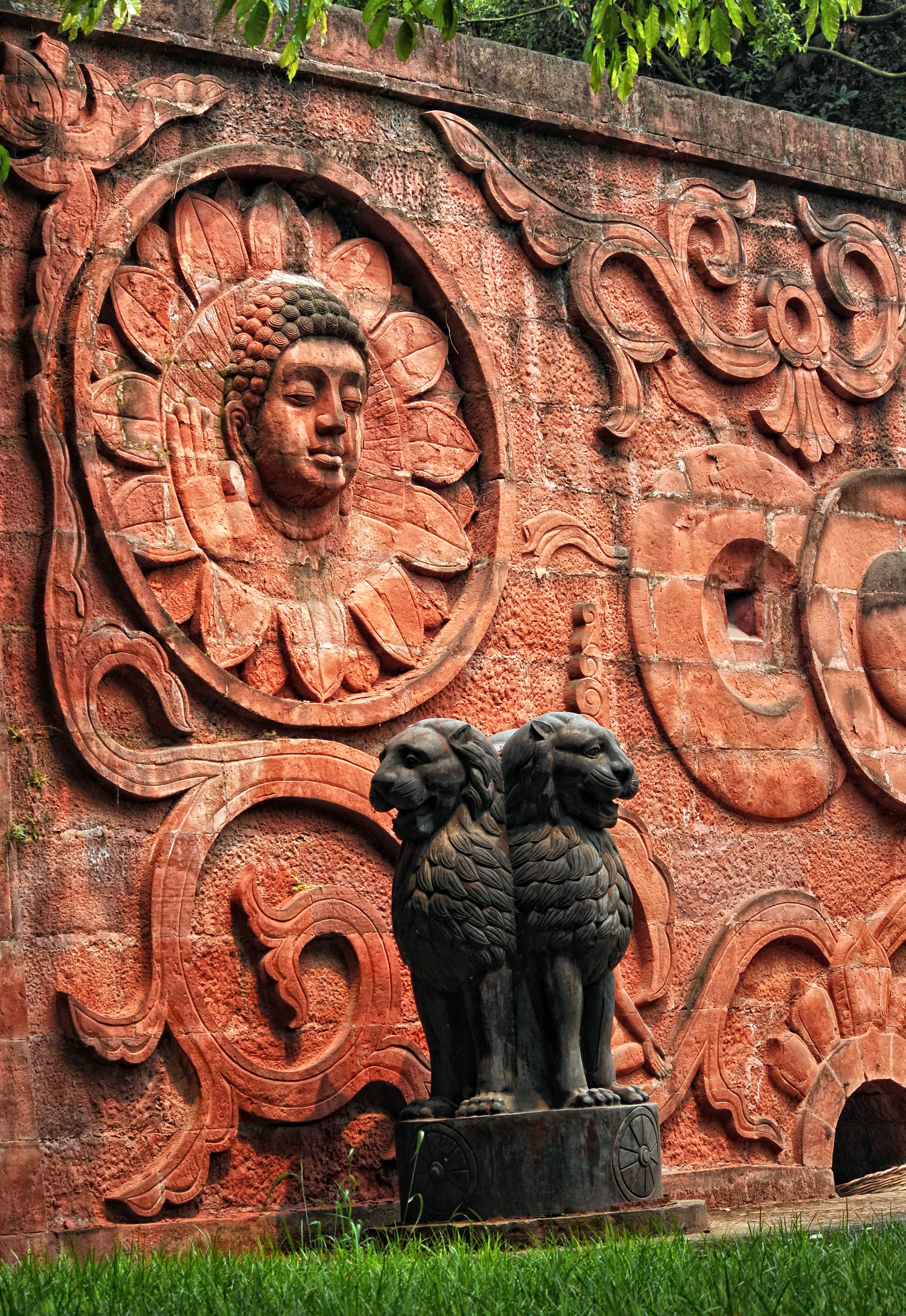
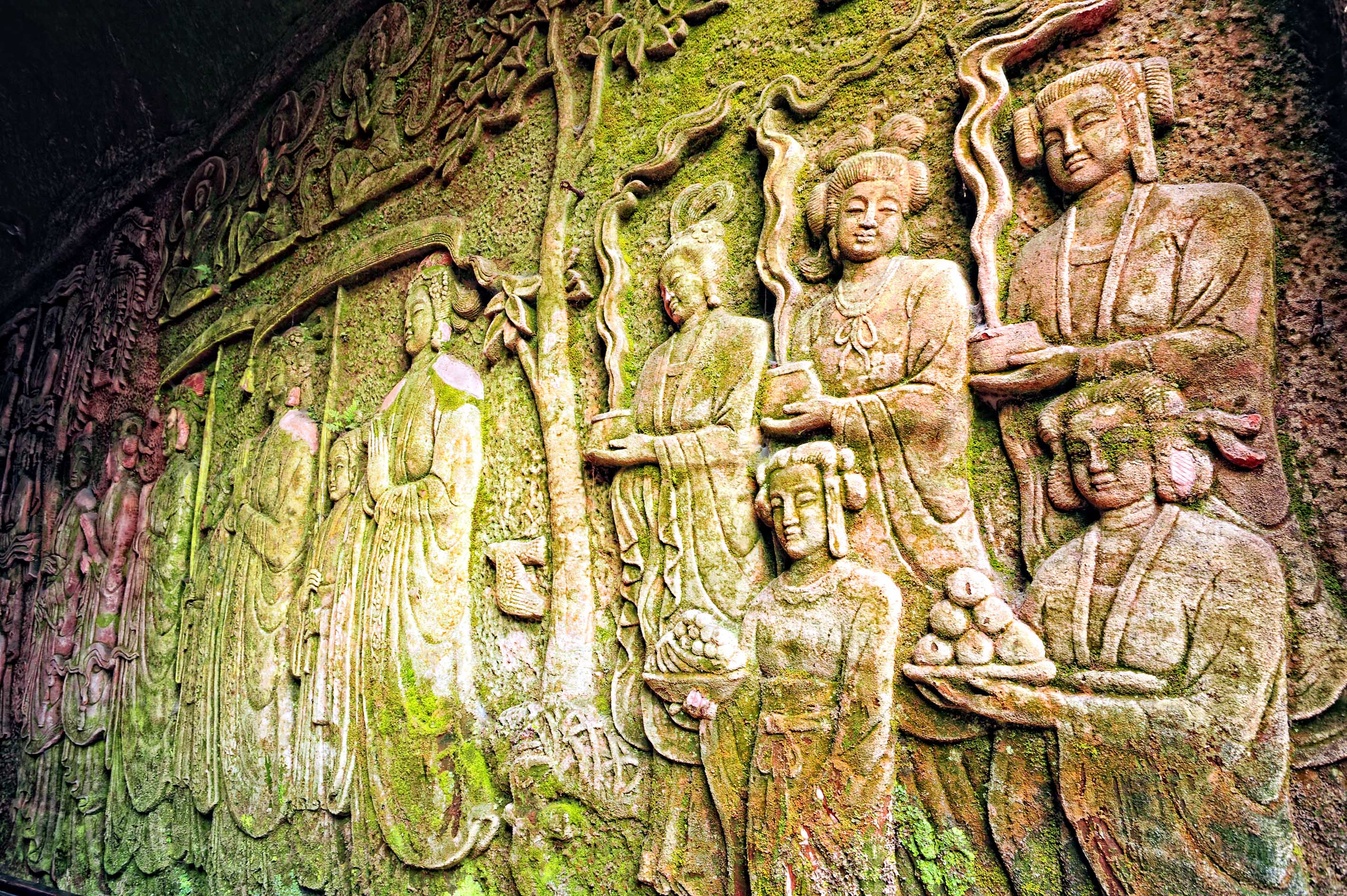
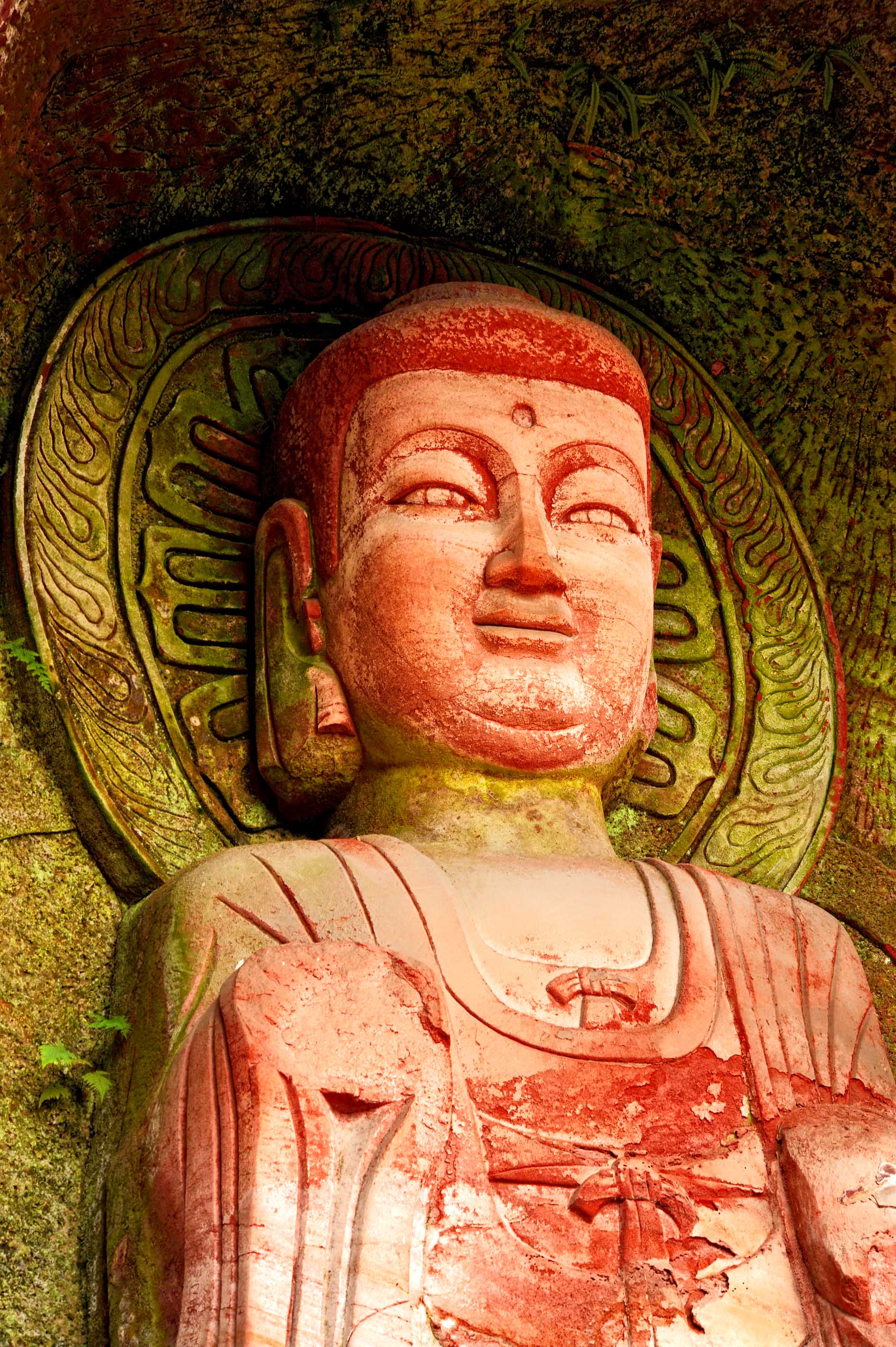
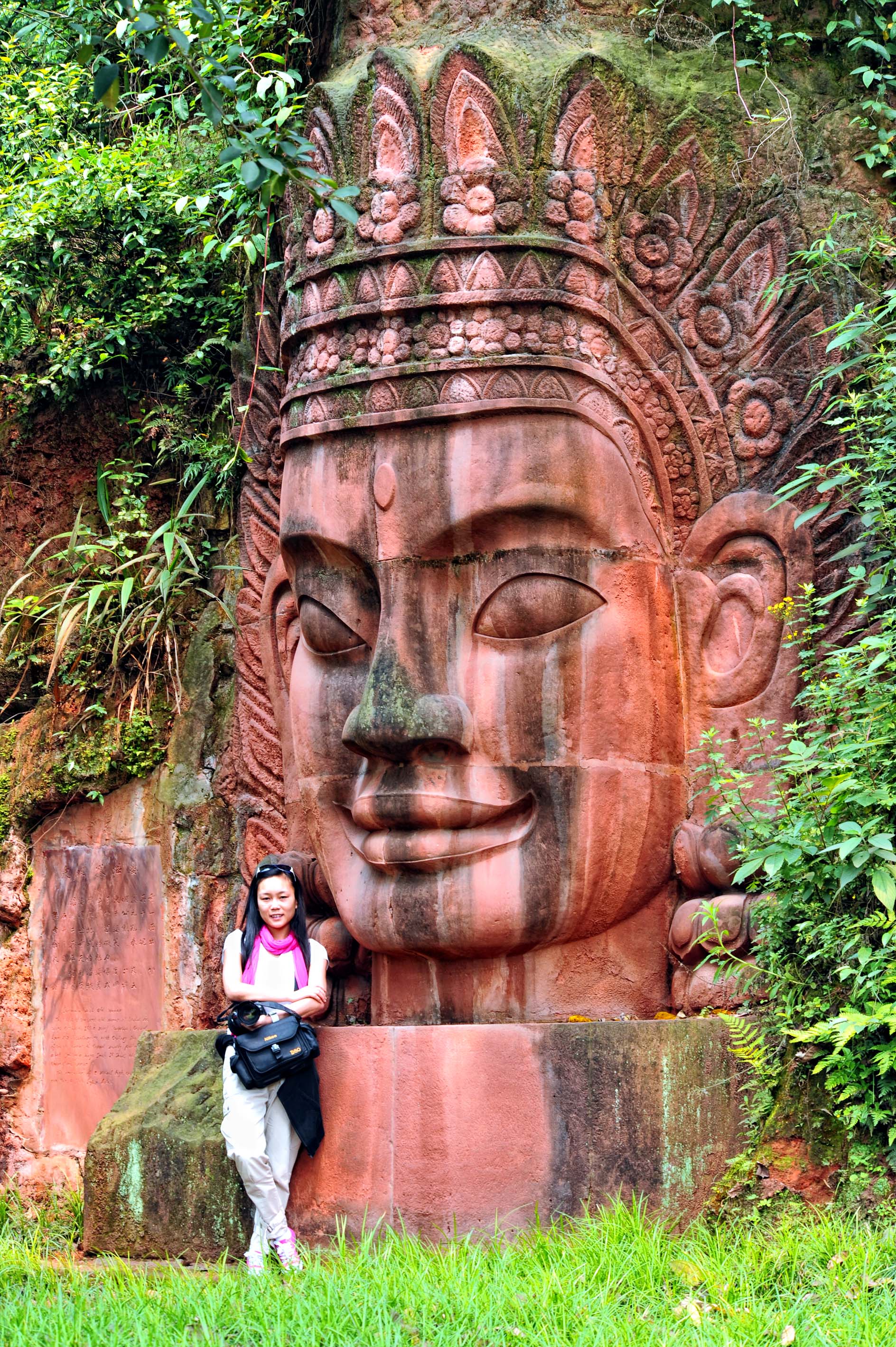
Sorry, I have been a little tardy and busy with mundane things like work 🙂 So I have not had so much time to update my post on my walk around the Leshan Temple in Sichuan China. So here we are continuing our walk around this stunningly beautiful place of worship which eventually leads us to the largest Buddha carving in the world ‘Dafo’, I do hope you are all enjoying this walk with me and my beautiful wife May (she is in one of these pictures)?

Namaste
Mark

Alms

circle of the buddha

goddess

leshan buddhas

Mayand carving

Leshan 2

Published 08/05/2013 by inspiringyourspirit

Buddas2 Stunningly beautiful carvings are everywhere as you walk through the vast gardens which surround the temples and Dafo Buddha. intrecate detail A place to sit, to close your eyes, listen to the birds singing in the trees, to feel the wind on your face, relax and be mindful 🙂 Namaste Mark

We are all the Same

Published 19/04/2013 by inspiringyourspirit

His Holyness The Dali Lama

When will we start to realise that we are ‘All THE SAME’ and start to respect each other as brothers and sisters, unite and be as one?

Namaste
Mark

Naked Feet

Published 19/04/2013 by inspiringyourspirit

73372_601674433193786_1507949159_n

There was a time when barefoot walking was considered to be immodest and was frowned upon by people. In fact, watching someone walking without his/her shoes, or at least slippers, on was bound to create a negative impression about him/her in other people’s mind. However, this has ceased be the case in the present times. In fact, today, there is a complete society, called ‘Society of Barefoot’, dedicated to the cause of walking barefoot. Have you ever wondered why more and more people are taking to bare foot walking these days, especially in their home? Let us tell you that walking bare foot has a lot of positive effects on the health of a person. If you want to explore the benefits of bare foot walking, go through the following lines.

In Children
It has been noticed that people who have walked barefoot in their childhood encounter much less foot troubles, as compared to those whose feet were always covered with slippers, sandals or shoes. In other words, the children who go barefoot, and are allowed to do so by their parents, have been seen to have lesser foot deformities, greater flexor strength and more feet agility. At the same time, they are able to spread their toes to a greater extent than others.

In General
• Irrespective of the extent of care shoes companies take, in making footwear that suits the shape of human feet, they can never ever beat the comfort that one gets from bare foot walking. In fact, those who walk with their shoes on encounter much more aches and pains in the body, as compared to the people who indulge in home bare foot walking.
• Barefoot walking helps straighten out the toes of a person. At the same time, if you walk bare foot, even the lazy muscles of your feet are prompted to move and develop more, with the result that you have toned and much stronger foot muscles.
• Another positive effect of bare foot walking, which most of the people are unaware of, is that it helps the leg muscles pump blood back to the heart. This makes it beneficial for those who are suffering from the problem of varicose veins.
• Though most of the people are unaware of the fact, walking barefoot helps relax tired feet. It has also proven beneficial for people suffering from flat feet, in many cases helping them overcome the problem altogether.
• Walking barefoot in the summer season has been found to have a cooling effect on the body of a person, especially if he/she walks on morning grass, leaves or a piece of log in the garden.
• In traditional exercises, like yoga, tai-chi and martial arts, it is believed that being barefoot helps a person absorb Chi, the life-force energy. As you walk with your feet bare, you increase your vitality. At the same time, it helps you think clearly and increases your capacity to work.
• Walking barefoot in your garden or the local park will help you feel closer to the nature. This will not only take your mind off everyday tensions and relax your body, but also rejuvenate your mind and boost your energy levels.

Wise Woman Way: Barefoot Meditation
By:Susun Weed

Winter or summer, indoors or out, in the forest or the desert, on a mountain or a city street, I prefer my feet to be bare. I do own shoes, not many, which I wear when I must (airplanes, restaurants, when driving, at the gym), but most of the time my feet are bare. (My bare toes are wiggling at you as I write this.) What is this love affair with bare feet? Why would I expose my toes and soles to wet, gooey, sharp, slimy, muddy, thorny, prickly, and possibly dangerous terrains? Because bare feet sharpen my senses, expand my consciousness, give me a greater connection to nature, energize me, keep me in touch with my overall health (thanks to reflexology), and remind me that every step is a blessing.
Going barefoot sharpens my senses. I listen more acutely, pay much more attention to odors, even use my eyes in a different way when I am barefoot. I am more present, more aware of every detail. When walking barefoot, I go more slowly, I observe my surroundings in detail. Instead of being lost in my head, I am connecting to what is beneath my feet. Instead of carelessly plopping my heels down on the ground, I send my toes out ahead to reconnoiter. Once they give the “all clear,” the rest of my foot is safe to fall softly and caringly upon the earth.
Going barefoot expands my consciousness and enhances my experience of being alive. It nourishes the thoughtful and appreciative aspects of my personality. It causes me to move more gracefully through life.
Going barefoot gives me a greater connection to nature, physically, because I are experiencing it with my bare feet, and metaphysically, because I are being grounded into the electrical circuit of the planet. Rubber (the soles of most shoes) insulates me and prevents me from partaking of the energy of the earth.
Without shoes, I become part of the electrical and magnetic flows around this planet. I pulse with the same rhythms as all other barefoot life. Grandmother Twylah (Wold Clan Grandmother of the Seneca Nation) admonished us to: “Let your heart beat as one with the heartbeat of Mother Earth.”
Going barefoot energizes me, directly and intimately, with Earth Energy. My bare feet connect me to the endless flow of loving, healing energy that emanates from the earth. With every barefooted step, I can feel it tingling up my legs. I breathe it into my belly and nourish my personal power. I breathe it into my heart to help it stay in rhythm. I breathe it into my joints, and let it put a spring in my step.
You can experience this merely by taking off your shoes and placing your bare feet on the ground. No need to walk around if that is a challenge. Even five minutes a day of sitting quietly with your bare feet on the earth can have amazing repercussions on your health, sense of contentment, and feelings of joy.
Going barefoot keeps me in touch with my overall health. When I am healthy, my feet flex in all directions and conform to uneven ground without pain or discomfort. When I am ill, it hurts to walk barefoot. Reflexologists say that there is a reflex point on the bottom of the foot that relates to each organ and system of the body. When it hurts to walk on gravel, I connect the pain I feel to the part of the body it reflexes to, and then do what I can to nourish that organ. (Reflexology charts are easy to find.)
One of my first teachers (Margo Geiger), would go into a room, choose a “victim,” drop down on the floor next to them, take their foot in her hands, remove their shoe and sock, elicit a piercing scream as she knuckled their reflex points, and finish by telling them what their health problems were, all within a minute! Walking barefoot is like having a reflexology treatment several times a day. Perhaps it keeps me healthy, too.
Going barefoot reminds me that every step is a blessing. I am blessed to be alive in these most interesting times. Every barefooted step is a blessing. I allow myself to be blessed and to bless each thing my feet touch. Every step is a blessing. I am filled with gratitude to have a body. Every step is a bountiful blessing. Each step is a barefoot meditation. Each step is a blessing. Beneath my feet, plants. Each step is a green blessing.

I hope this article inspires you to take off your shoes and feel the earth as it should be felt ‘Naked’

Namaste
Mark

Meditate

Published 12/04/2013 by inspiringyourspirit

74441_590491360978760_2103158131_n

And Who Am I to Argue !

Spend some quality time alone this weekend, relax your mind, de-stress, feel the life blood and Qi energy flowing throughout your body, concentrate on your breathing and be at peace with the world 🙂

Namaste
Mark

Develop Immunity against Negativity

Published 27/02/2013 by inspiringyourspirit

46505_447973605249112_1737747143_n

Negativity is viral. It spreads quickly, as it is infectious. Stay with a negative person for a while and you will be infected, from out of nowhere your mind will fall into a negative, downward spiral! You know very well that in your family, or in your work place, you are surrounded by umpteen numbers of the carrier of this deadly disease. Negativity is the root cause of diseases.

We need to discuss various ways and means to take care of this root disease of all illnesses of mind and body.

Let us not forget that the breeding ground of all mind-body diseases start with our thoughts. Is there anything that can be prescribed to rid ourselves of this most potent negative virus? Are there any home remedies we can use to fight off our negative thoughts?

Just as when you feel so healthy and happy when you drink pure water, you can also gift yourself the joy of drinking the positive thoughts of your mind that will eventually purify the water of your body. That is what you are, water and space! Your thoughts purify water and your thoughts purify space!!!!
It is so surprising that we are so careful that we don’t ever compromise on the quality of drinking water. We have the best purifiers and always make sure we drink pure water, uncontaminated by any poisonous chemicals.
But how come we poison the water of our body (approximately 70% of it is water) with poisonous chemicals and disease producing hormones, and suffer with all kinds of dis-ease! Let us not forget that our negative thoughts or attitude about life are more poisonous than anything else. You are not only inhaling polluted air, but are poisoning the water of your body with negative thoughts.
With positive thoughts, the water of your body can become purified, and lead you to health, both in body and in mind.
But this process of self-purification can be very difficult. Most people today are surrounded by and bombarded with all kinds of negative environments at home and in the work place! That is the reason I am trying to share with you all that until we focus FIRST on changing the INNER ENVIRONMENT, the outer environmental support will not come to us.

As you know, negativity is destructive. It destroys much of your natural tendencies to stand firm for higher goals of life. It sucks your energy from inside, and your self-esteem or your self-confidence is afflicted with this negative force. It robs your good qualities and divine potentials.
Your goal is to take charge of your thoughts, not others’ thoughts, and let them flow, not succumbing to the pull of the instinctive lower mind. Lift your thoughts with your own mind. For your mind can be heaven or it can be hell, either of which are your own creation.
Intensify your conviction that you alone can change the thoughts of your mind. Deeply realize that every thought creates an outcome according to its own nature.

In my book, Making Your Mind Your Best Friend, you are taught to befriend your own mind. Basically the idea is that through meditative practices you begin to learn to anchor yourself with the Spirit within.
Identify the areas that trigger your negativity. Identify the persons who push you into negative brooding. From now on try to evoke your positive energy. Always think well about those persons and try to be more conscious and alert when you face situations that trigger your negative impulses. You have to gradually lighten up the areas that suffer with lesser light.
The whole process is one of your awakening the self-management part in your mind, which unfortunately no universities in the world care to teach. The more you become aware of your strengths, and at the same time your weaknesses, the more it is possible for you to reinforce your strengths and work vigilantly to transform your weaknesses into strengths of your character.

The whole universe is continually supporting you if only you accept, acknowledge, and arise to the situations that demand your Mindfulness.
Keep working throughout the day, and when you retire to bed and are about to fall asleep, sit erect, relax your body, and focus your mind on your breathing. Feel a sense of calm descending upon your being and at that point of time impregnate into your subconscious mind positive affirmations about how good your life can be. When your mind is calm and your body is relaxed, the gateway to universal intelligence opens up. Then whatever you commune reaches to the subtler regions of your own being. Your transformation is assured. You’re on your way to freedom!

If you vigilantly work on your thoughts, and make sure that they are not like a stagnant pool, but like a flowing crystalline creek, then you can be sure that your thoughts will flow with the rhythm of the Universal Laws. From Laws of attraction, to laws of forgiveness, to laws of acceptance, and to laws of transcendence you will flow. Your positive thoughts will purify your mind, and your body, and the water and space within. You have truly begun to heal yourself from the inside-out and to immunize yourself against the virus of negativity!

By Baba Shuddhaanandaa Brahmachari

I truly hope you enjoyed this article and start to or continue to ‘Think Positive Thoughts’ from today onward!

Namaste with Love
Mark

The Lantern Festival

Published 24/02/2013 by inspiringyourspirit

Taiwan-lantern-festival

The Lantern Festival falls on the 15th day of the 1st lunar month according to the Chinese Nongli Calendar, usually in February or March in the Western Gregorian calendar, in 2013 this falls on February 24th. As early as the Western Han Dynasty (206 BC-AD 25), it had become a festival with great significance.

This day’s important activity is watching lanterns. Throughout the Han Dynasty (206 BC-AD 220), Buddhism flourished in China. One emperor heard that Buddhist monks would watch sarira, or remains from the cremation of Buddha’s body, and light lanterns to worship Buddha on the 15th day of the 1st lunar month, so he ordered to light lanterns in the imperial palace and temples to show respect to Buddha on this day. Later, the Buddhist rite developed into a grand festival among common people and its influence expanded from the Central Plains to the whole of China.

images

Till today, the lantern festival is still held each year around the country. Lanterns of various shapes and sizes are hung in the streets, attracting countless visitors. Children will hold self-made or bought lanterns to stroll with on the streets, extremely excited.

U137P200T1D216287F14DT20090205171348

“Guessing lantern riddles”is an essential part of the Festival. Lantern owners write riddles on a piece of paper and post them on the lanterns. If visitors have solutions to the riddles, they can pull the paper out and go to the lantern owners to check their answer. If they are right, they will get a little gift. The activity emerged during people’s enjoyment of lanterns in the Song Dynasty (960-1279). As riddle guessing is interesting and full of wisdom, it has become popular among all social strata.

People will eat yuanxiao, or rice dumplings, on this day, so it is also called the “Yuanxiao Festival.”Yuanxiao also has another name, tangyuan. It is small dumpling balls made of glutinous rice flour with rose petals, sesame, bean paste, jujube paste, walnut meat, dried fruit, sugar and edible oil as filling. Tangyuan can be boiled, fried or steamed. It tastes sweet and delicious. What’s more, tangyuan in Chinese has a similar pronunciation with “tuanyuan”, meaning reunion. So people eat them to denote union, harmony and happiness for the family.

Lantern_Food

In the daytime of the Festival, performances such as a dragon lantern dance, a lion dance, a land boat dance, a yangge dance, walking on stilts and beating drums while dancing will be staged. On the night, except for magnificent lanterns, fireworks form a beautiful scene. Most families spare some fireworks from the Spring Festival and let them off in the Lantern Festival. Some local governments will even organize a fireworks party. On the night when the first full moon enters the New Year, people become really intoxicated by the imposing fireworks and bright moon in the sky.

75snake_lantern0010dc53fa040afb1d020efireworks-china_1828324i

Mindfulness a stab at a definition

Published 22/02/2013 by inspiringyourspirit

images

Wow, I receive a very profound question from one of our fellow bloggers bert0001  in regard to one of my recent posts ‘Mindfulness’, as follows :-

“I have a profound question here. I wrote a post last week about the difference between awareness and metacognition. And here I see mindfulness. I know that this has been around for 25 years in the Western Hemisphere and that it is a watered down version coming from buddhism. But in a way, this video makes me pleasantly agitated. There is no answer here. It is like publicity for sigarets. And if I walk around the internet, I see 700 different interpretations of mindfulness, awareness, metacognition and so on.
Many people, if not most think that meditation is sitting cross legged, listening to Enya in the vicinity of a candle and some incense.
So let me come back to the question. Could you give a concise and correct definition of mindfulness, in respect with my brain and mind, so that people know when they are mindfull and when they are mindless. (like me right now )”

Well, as I replied to bert0001, this is certainly a very profound question and one in which I’m sure is debated and contested on a daily basis all around the world especially between Scientists of the Mind and Traditional Religions and Buddhism followers across the globe. So in order for me to try and reply to bert0001’s question as best as possible I have attached two items to this post, the first one is an article by Thanissaro Bhikkhu re a definition of Mindfulness from a Buddhist perspective and the second a YouTube video by Professor Mark Williams from Oxford University Science who provides in my mind an excellent presentation on Mindfulness from a Mindfulness Cognitive Therapy perspective which clearly links both the science of the mind and the ancient Buddhist forms and practice of meditation techniques to help aid both clinical patients suffering from Depression, ADHD, Anxiety Health Issues, Child Birth etc; and also for everyday use by general members of the public who wish to re-connect with themselves on a daily basis due to the stresses and pressures of everyday life.

I do hope these items help you all with your understanding of Mindfulness and how its use can help us all in our daily lives 🙂
Namaste
Mark

Mindfulness Defined

by

Thanissaro Bhikkhu

© 2008–2013

What does it mean to be mindful of the breath? Something very simple: to keep the breath in mind. Keep remembering the breath each time you breathe in, each time you breathe out. The British scholar who coined the term “mindfulness” to translate the Pali word sati was probably influenced by the Anglican prayer to be ever mindful of the needs of others—in other words, to always keep their needs in mind. But even though the word “mindful” was probably drawn from a Christian context, the Buddha himself defined sati as the ability to remember, illustrating its function in meditation practice with the four satipatthanas, or establishings of mindfulness.

“And what is the faculty of sati? There is the case where a monk, a disciple of the noble ones, is mindful, highly meticulous, remembering & able to call to mind even things that were done & said long ago. (And here begins the satipatthana formula:) He remains focused on the body in & of itself — ardent, alert, & mindful — putting aside greed & distress with reference to the world. He remains focused on feelings in & of themselves… the mind in & of itself… mental qualities in & of themselves — ardent, alert, & mindful — putting aside greed & distress with reference to the world.”

SN 48.10

The full discussion of the satipatthanas (DN 22) starts with instructions to be ever mindful of the breath. Directions such as “bring bare attention to the breath,” or “accept the breath,” or whatever else modern teachers tell us that mindfulness is supposed to do, are actually functions for other qualities in the mind. They’re not automatically a part of sati, but you should bring them along wherever they’re appropriate.

One quality that’s always appropriate in establishing mindfulness is being watchful or alert. The Pali word for alertness, sampajañña, is another term that’s often misunderstood. It doesn’t mean being choicelessly aware of the present, or comprehending the present. Examples in the Canon shows that sampajañña means being aware of what you’re doing in the movements of the body, the movements in the mind. After all, if you’re going to gain insight into how you’re causing suffering, your primary focus always has to be on what you’re actually doing. This is why mindfulness and alertness should always be paired as you meditate.

In the Satipatthana Sutta, they’re combined with a third quality, ardency. Ardency means being intent on what you’re doing, trying your best to do it skillfully. This doesn’t mean that you have to keep straining and sweating all the time, just that you’re continuous in developing skillful habits and abandoning unskillful ones. Remember, in the eight factors of the path to freedom, right mindfulness grows out of right effort. Right effort is the effort to be skillful. Mindfulness helps that effort along by reminding you to stick with it, so that you don’t let it drop.

All three of these qualities get their focus from what the Buddha called yoniso manasikara, appropriate attention. Notice: That’s appropriate attention, not bare attention. The Buddha discovered that the way you attend to things is determined by what you see as important: the questions you bring to the practice, the problems you want the practice to solve. No act of attention is ever bare. If there were no problems in life you could open yourself up choicelessly to whatever came along. But the fact is there is a big problem smack dab in the middle of everything you do: the suffering that comes from acting in ignorance. This is why the Buddha doesn’t tell you to view each moment with a beginner’s eyes. You’ve got to keep the issue of suffering and its end always in mind.

Otherwise inappropriate attention will get in the way, focusing on questions like “Who am I?” “Do I have a self?”—questions that deal in terms of being and identity. Those questions, the Buddha said, lead you into a thicket of views and leave you stuck on the thorns. The questions that lead to freedom focus on comprehending suffering, letting go of the cause of suffering, and developing the path to the end of suffering. Your desire for answers to these questions is what makes you alert to your actions—your thoughts, words, and deeds—and ardent to perform them skillfully.

Mindfulness is what keeps the perspective of appropriate attention in mind. Modern psychological research has shown that attention comes in discrete moments. You can be attentive to something for only a very short period of time and then you have to remind yourself, moment after moment, to return to it if you want to keep on being attentive. In other words, continuous attention—the type that can observe things over time—has to be stitched together from short intervals. This is what mindfulness is for. It keeps the object of your attention and the purpose of your attention in mind.

Popular books on meditation, though, offer a lot of other definitions for mindfulness, a lot of other duties it’s supposed to fulfill—so many that the poor word gets totally stretched out of shape. In some cases, it even gets defined as Awakening, as in the phrase, “A moment of mindfulness is a moment of Awakening”—something the Buddha would never say, because mindfulness is conditioned and nirvana is not.

These are not just minor matters for nitpicking scholars to argue over. If you don’t see the differences among the qualities you’re bringing to your meditation, they glom together, making it hard for real insight to arise. If you decide that one of the factors on the path to Awakening is Awakening itself, it’s like reaching the middle of a road and then falling asleep right there. You never get to the end of the road, and in the meantime you’re bound to get run over by aging, illness, and death. So you need to get your directions straight, and that requires, among other things, knowing precisely what mindfulness is and what it’s not.

I’ve heard mindfulness defined as “affectionate attention” or “compassionate attention,” but affection and compassion aren’t the same as mindfulness. They’re separate things. If you bring them to your meditation, be clear about the fact that they’re acting in addition to mindfulness, because skill in meditation requires seeing when qualities like compassion are helpful and when they’re not. As the Buddha says, there are times when affection is a cause for suffering, so you have to watch out.

Sometimes mindfulness is defined as appreciating the moment for all the little pleasures it can offer: the taste of a raisin, the feel of a cup of tea in your hands. In the Buddha’s vocabulary, this appreciation is called contentment. Contentment is useful when you’re experiencing physical hardship, but it’s not always useful in the area of the mind. In fact the Buddha once said that the secret to his Awakening was that he didn’t allow himself to rest content with whatever attainment he had reached. He kept reaching for something higher until there was nowhere higher to reach. So contentment has to know its time and place. Mindfulness, if it’s not glommed together with contentment, can help keep that fact in mind.

Some teachers define mindfulness as “non-reactivity” or “radical acceptance.” If you look for these words in the Buddha’s vocabulary, the closest you’ll find are equanimity and patience. Equanimity means learning to put aside your preferences so that you can watch what’s actually there. Patience is the ability not to get worked up over the things you don’t like, to stick with difficult situations even when they don’t resolve as quickly as you want them to. But in establishing mindfulness you stay with unpleasant things not just to accept them but to watch and understand them. Once you’ve clearly seen that a particular quality like aversion or lust is harmful for the mind, you can’t stay patient or equanimous about it. You have to make whatever effort is needed to get rid of it and to nourish skillful qualities in its place by bringing in other factors of the path: right resolve and right effort.

Mindfulness, after all, is part of a larger path mapped out by appropriate attention. You have to keep remembering to bring the larger map to bear on everything you do. For instance, right now you’re trying to keep the breath in mind because you see that concentration, as a factor of the path, is something you need to develop, and mindfulness of the breath is a good way to do it. The breath is also a good standpoint from which you can directly observe what’s happening in the mind, to see which qualities of mind are giving good results and which ones aren’t.

Meditation involves lots of mental qualities, and you have to be clear about what they are, where they’re separate, and what each one of them can do. That way, when things are out of balance, you can identify what’s missing and can foster whatever is needed to make up the lack. If you’re feeling flustered and irritated, try to bring in a little gentleness and contentment. When you’re lazy, rev up your sense of the dangers of being unskillful and complacent. It’s not just a matter of piling on more and more mindfulness. You’ve got to add other qualities as well. First you’re mindful enough to stitch things together, to keep the basic issues of your meditation in mind and to observe things over time. Then you try to notice—that’s alertness—to see what else to stir into the pot.

It’s like cooking. When you don’t like the taste of the soup you’re fixing, you don’t just add more and more salt. Sometimes you add onion, sometimes garlic, sometimes oregano—whatever you sense is needed. Just keep in mind the fact that you’ve got a whole spice shelf to work with.

And remember that your cooking has a purpose. In the map of the path, right mindfulness isn’t the end point. It’s supposed to lead to right concentration.

We’re often told that mindfulness and concentration are two separate forms of meditation, but the Buddha never made a clear division between the two. In his teachings, mindfulness shades into concentration; concentration forms the basis for even better mindfulness. The four establishings of mindfulness are also the themes of concentration. The highest level of concentration is where mindfulness becomes pure. As Ajaan Lee, a Thai Forest master, once noted, mindfulness combined with ardency turns into the concentration factor called vitakka or “directed thought,” where you keep your thoughts consistently focused on one thing. Alertness combined with ardency turns into another concentration factor: vicara, or “evaluation.” You evaluate what’s going on with the breath. Is it comfortable? If it is, stick with it. If it’s not, what can you do to make it more comfortable? Try making it a little bit longer, a little bit shorter, deeper, more shallow, faster, slower. See what happens. When you’ve found a way of breathing that nourishes a sense of fullness and refreshment, you can spread that fullness throughout the body. Learn how to relate to the breath in a way that nourishes a good energy flow throughout the body. When things feel refreshing like this, you can easily settle down.

You may have picked up the idea that you should never fiddle with the breath, that you should just take it as it comes. Yet meditation isn’t just a passive process of being nonjudgmentally present with whatever’s there and not changing it at all. Mindfulness keeps stitching things together over time, but it also keeps in mind the idea that there’s a path to develop, and getting the mind to settle down is a skillful part of that path.

This is why evaluation—judging the best way to maximize the pleasure of the breath—is essential to the practice. In other words, you don’t abandon your powers of judgment as you develop mindfulness. You simply train them to be less judgmental and more judicious, so that they yield tangible results.

When the breath gets really full and refreshing throughout the body, you can drop the evaluation and simply be one with the breath. This sense of oneness is also sometimes called mindfulness, in a literal sense: mind-fullness, a sense of oneness pervading the entire range of your awareness. You’re at one with whatever you focus on, at one with whatever you do. There’s no separate “you” at all. This is the type of mindfulness that’s easy to confuse with Awakening because it can seem so liberating, but in the Buddha’s vocabulary it’s neither mindfulness nor Awakening. It’s cetaso ekodibhava, unification of awareness—a factor of concentration, present in every level from the second jhana up through the infinitude of consciousness. So it’s not even the ultimate in concentration, much less Awakening.

Which means that there’s still more to do. This is where mindfulness, alertness, and ardency keep digging away. Mindfulness reminds you that no matter how wonderful this sense of oneness, you still haven’t solved the problem of suffering. Alertness tries to focus on what the mind is still doing in that state of oneness—what subterranean choices you’re making to keep that sense of oneness going, what subtle levels of stress those choices are causing—while ardency tries to find a way to drop even those subtle choices so as to be rid of that stress.

So even this sense of oneness is a means to a higher end. You bring the mind to a solid state of oneness so as to drop your normal ways of dividing up experience into me vs. not-me, but you don’t stop there. You then take that oneness and keep subjecting it to all the factors of right mindfulness. That’s when really valuable things begin to separate out on their own. Ajaan Lee uses the image of ore in a rock. Staying with the sense of oneness is like being content simply with the knowledge that there’s tin, silver, and gold in your rock: If that’s all you do, you’ll never get any use from them. But if you heat the rock to the melting points for the different metals, they’ll separate out on their own.

Liberating insight comes from testing, experimenting. This is how we learn about the world to begin with. If we weren’t active creatures, we’d have no understanding of the world at all. Things would pass by, pass by, and we wouldn’t know how they were connected because we’d have no way of influencing them to see which effects came from changing which causes. It’s because we act in the world that we understand the world.

The same holds true with the mind. You can’t just sit around hoping that a single mental quality—mindfulness, acceptance, contentment, oneness—is going to do all the work. If you want to learn about the potentials of the mind, you have to be willing to play—with sensations in the body, with qualities in the mind. That’s when you come to understand cause and effect.

And that requires all your powers of intelligence—and this doesn’t mean just book intelligence. It means your ability to notice what you’re doing, to read the results of what you’ve done, and to figure out ingenious ways of doing things that cause less and less suffering and stress: street smarts for the noble path. Mindfulness allows you to see these connections because it keeps reminding you always to stay with these issues, to stay with the causes until you see their effects. But mindfulness alone can’t do all the work. You can’t fix the soup simply by dumping more pepper into it. You add other ingredients, as they’re needed.

This is why it’s best not to load the word mindfulness with too many meanings or to assign it too many functions. Otherwise, you can’t clearly discern when a quality like contentment is useful and when it’s not, when you need to bring things to oneness and when you need to take things apart.

So keep the spices on your shelf clearly labeled, and learn through practice which spice is good for which purpose. Only then can you develop your full potential as a cook.

Provenance: ©2008 Thanissaro Bhikkhu. Transcribed from a file provided by the author. This Access to Insight edition is ©2008–2013.

Terms of use: You may copy, reformat, reprint, republish, and redistribute this work in any medium whatsoever, provided that: (1) you only make such copies, etc. available free of charge; (2) you clearly indicate that any derivatives of this work (including translations) are derived from this source document; and (3) you include the full text of this license in any copies or derivatives of this work. Otherwise, all rights reserved. For additional information about this license, see the FAQ.

How to cite this document (one suggested style): “Mindfulness Defined”, by Thanissaro Bhikkhu. Access to Insight, 1 December 2012,

Wudang Mountain-Cradle of Taoism E4

Published 11/02/2013 by inspiringyourspirit

Wudang Mountain Cradle of Taoism E03

Published 09/02/2013 by inspiringyourspirit

Wudang Mountains – Cradle of Taoism Part 2

Published 08/02/2013 by inspiringyourspirit

Part 2 of Wudang Mountain. Cradle of Taoism

Please enjoy
Namaste
Mark

Wudang Mountains a place close to my heart

Published 07/02/2013 by inspiringyourspirit

Wudang Mountains-The Cradle of Taoism, a place in China close to my heart.

I do hope you will enjoy this short video and the one I will post tomorrow 🙂

Namaste
Mark

Chi Energy Amazing Footage

Published 02/02/2013 by inspiringyourspirit

This is a repost of an exerpt of a series of documentarys by Lawrence Blair, called Ring of Fire; an Indonessian odyssey. the guys name is supposedly John Chang

this is a must see documentary piece. Meet the master of energy, this is an amazing story about a man who has mastered the art of harnessing and using energy.It is called Chii and he can use it to heal or even to set objects on fire using his mind.

Enjoy.
Namaste
Mark

Go with the Flow

Published 25/01/2013 by inspiringyourspirit

227786_477613598962825_381619268_n[1]

The Most Important Question You Can Ask

Published 20/01/2013 by inspiringyourspirit

382161_338406259600595_1976393801_n

If you are working on your spiritual self the most important question is –

“What do I feel about me…right now?”

Having self-esteem means learning to love the one you see in the mirror first, and then taking care of the rest of the world.

Having self-esteem means… I think loving thoughts about myself.
Having self-esteem means… I behave in loving ways towards myself.
Having self-esteem means… I react in loving ways towards myself.
Having self-esteem means… My actions are consistently loving towards myself.
Having self-esteem means… I trust myself and my judgement.

If you feel good about the one you see in the mirror… then reward the child within with a small treat… something special 🙂

If you feel bad about yourself… then don’t beat yourself up, don’t fall prey to guilt and shame, just see in your minds eye that next time you’ll do things differently.

You’re not perfect, no one is perfect, and you came to this planet as the Divine essence of God to learn… and love yourself at the same time.

That’s the most important aspect of self-esteem… learning to love yourself as you learn.

So Love Yourself and start enjoying what this life has to offer 🙂

Namaste
Mark

Intend to be Love

Published 07/01/2013 by inspiringyourspirit

20121001_180159

Quiet the mind
Be still
And watch the breath of God
Rise and fall
In all things.

Allow God’s breath
To be your breath;
Allow God’s nature
To be your nature.

The nature of God
Is to love and be loved;
Your desire to love creates intention,
Intention focuses attention,

Attention illuminates understanding,
Understanding manifests forgiveness,
Forgiveness is the essence of Love.

Intend to be Love.

Namaste
Mark

Yourself

Published 19/11/2012 by inspiringyourspirit

You don’t need anything except yourself and your totality.

Going beyond the mind..is not dropping the mind
it is going beyond the mind..into a state of no mind.

Just accept yourself exactly how you are
and the struggle will disappear
and your energy will become a vast reservoir of love
settled and relaxed
then you can listen deeply
and trust your inner being.

Love yourself..accept yourself..be yourself
these qualities will create for the first time
an individual whose inner flame is un-dividable
a great pool of energy will gather and surround you
with this an inner trust will arise from within you.

The journey is simple
from the fragmented many..
to the individual one..to the cosmic all
live life..love life..accept life with laughter and joy
life is a pure celebration of you..a celebration of your being
being alive each moment in this dance of the universe.

Swami Rajneesh

Namaste

Mark

Gautam Buddha. The Forty Two Sutras

Published 18/11/2012 by inspiringyourspirit

Gautam Buddha – The Forty-Two Chapter Sutra

Having attained Buddha hood, the World-honored One thought thus: 


“To be free from the passions and to be calm, this is the most excellent Way.” He was absorbed in Great Meditation, subdued all evil ones, and in Deer Park caused to revolve the Wheel of Dharma, which was the Fourfold Truth, 
 and converted the five Bhikshus, Kaudinya, etc., inducing them to attain Enlightenment. Again, there were other Bhikshus who implored the Buddha to remove their doubts, which they had concerning his doctrine. The World-honored One illumined all their minds through his authoritative teachings. The Bhikshus, joining their hands and reverentially bowing, followed his august instructions.


(1) The Buddha said: “Those who leave their parents, go out of the home, understand the mind, reach the source, and comprehend the immaterial, are called Çramana. “Those who observe the two hundred and fifty precepts of morality, who are pure and spotless in their behavior, and who exert themselves for the attainment of the four fruits of saintship, are called Arhats.
“The Arhat is able to fly through space and assume different forms; his life is eternal, and there are times when he causes heaven and earth to quake.
“Next is the Anâgâmin. At the end of his life, the spirit of the Anâgâmin ascends to the nineteenth heaven and obtains Arhatship.
“Next is the Skridâgâmin. The Skridâgâmin ascends to the heavens [after his death], comes back to the earth once more, and then attains Arhatship.
“Next is the Srotaâpanna. The Srotaâpanna dies seven times and is born seven times, when he finally attains Arhatship.
“By the severance of the passions is meant that like the limbs severed they are never again made use of.”


(2) The Buddha said: “The homeless Çramana cuts off the passions, frees himself of attachments, understands the source of his own mind, penetrates the deepest doctrine of Buddha, and comprehends the Dharma which is immaterial. He has no prejudice in his heart; he has nothing to hanker after. He is not hampered by the thought of the Way, nor is he entangled in karma. No prejudice, no compulsion, no discipline, no enlightenment, and no going up through the grades, and yet in possession of all honors in itself, –this is called the Way.”


(3) The Buddha said: “Those who shaving their heads and faces become Çramanas and who receive instruction in the Way, should surrender all worldly possessions and be contented with whatever they obtain by begging. One meal a day and one lodging under a tree, and neither should be repeated. For what makes one stupid and irrational are attachments and the passions. 


(4) The Buddha said: “There are ten things considered good by all beings, and ten things evil. What are they? Three of them depend upon the body, four upon the mouth, and three upon thought. 
”Three evil deeds depending upon the body are: killing, stealing, and committing adultery. The four depending upon the mouth are: slandering, cursing, lying, and flattery. The three depending upon thought are: envy, anger, and infatuation. All these things are against the Holy Way, and therefore they are evil. “When these evils are not done, there are ten good deeds.

(5) The Buddha said: “If a man who has committed many a misdemeanor does not repent and cleanse his heart of the evil, retribution will come upon his person as sure as the streams run into the ocean which becomes ever deeper and wider. 

”If a man who has committed a misdemeanor come to the knowledge of it, reform himself, and practice goodness, the force of retribution will gradually exhaust itself as a disease gradually loses its baneful influence when the patient perspires.”


(6) The Buddha said: “When an evil-doer, seeing you practice goodness, comes and maliciously insults you, you should patiently endure it and not feel angry with him, for the evil-doer is insulting himself by trying to insult you.”


(7) The Buddha said: “Once a man came unto me and denounced me on account of my observing the Way and practicing great loving-kindness. But I kept silent and did not answer him. The denunciation ceased. I then asked him, if you bring a present to your neighbor and he accepts it not, does the present come back to you?’ The man replied, ‘It will.’ I said, ‘you denounce me now, but as I accept it not, you must take the wrong deed back on your own person. It is like echo succeeding sound, it is like shadow following object; you never escape the effect of your own evil deeds. Be therefore mindful, and cease from doing evil.'”


(8) The Buddha said: “Evil-doers who denounce the wise resemble a person who spits against the sky; the spittle will never reach the sky, but comes down on himself. Evildoers again resemble a man who stirs the dust against the wind; the dust is never raised without doing him injury. Thus, the wise will never be hurt, but the curse is sure to destroy the evil-doers themselves.”


(9) The Buddha said: “If you endeavor to embrace the Way through much learning, the Way will not be understood. If you observe the Way with simplicity of heart, great indeed is this Way.”


(10) The Buddha said: “Those who rejoice in seeing others observe the Way will obtain great blessing.” A Çramana asked the Buddha, “Would this blessing ever be destroyed?” The Buddha said, “It is like a lighted torch whose flame can be distributed to ever so many other torches which people may bring along; and therewith they will cook food and dispel darkness, while the original torch itself remains burning ever the same It is even so with the bliss of the Way.”


(11) The Buddha said: “It is better to feed one good man than to feed one hundred bad men. It is better to feed one who observes the five precepts of Buddha than to feed one thousand good men. It is better to feed one Srotaâpanna than to feed ten thousands of those who observe the five precepts of Buddha. It is better to feed one Skridâgâmin than to feed one million of Srotaâpannas. It is better to feed one Anâgâmin than to feed ten millions of Skridâgâmins. It is better to feed one Arhat than to feed one hundred millions of Anâgâmins. It is better to feed one Pratyekabuddha than to feed one billion of Arhats. It is better to feed one of the Buddha’s, either of the present, or of the past, or of the future, than to feed ten billions of Pratyekabuddhas. It is better to feed one who is above knowledge, one-sidedness, discipline, and enlightenment than to feed one hundred billions of Buddha’s of the past, present, or future.”

(12) The Buddha said: “There are twenty difficult things to attain [or to accomplish] in this world:
(1) It is difficult for the poor to practice charity
(2) It is difficult for the strong and rich to observe the Way
(3) It is difficult to disregard life and go to certain death
(4) It is only a favored few that gets acquainted with a Buddhist sutra
(5) It is by rare opportunity that a person is born in the age of Buddha
(6) It is difficult to conquer the passions, to suppress selfish desires
(7) It is difficult not to hanker after that which is agreeable
(8) It is difficult not to get into a passion when slighted
(9) It is difficult not to abuse one’s authority
(10) It is difficult to be even-minded and simple-hearted in all one’s dealings with others
(11) It is difficult to be thorough in learning and exhaustive in investigation
(12) It is difficult to subdue selfish pride
(13) It is difficult not to feel contempt toward the unlearned
(14) It is difficult to be one in knowledge and practice
(15) It is difficult not to express an opinion about others
(16) It is by rare opportunity that one is introduced to a true spiritual teacher
(17) It is difficult to gain an insight into the nature of being and to practice the Way
(18) It is difficult to follow the steps of a savior
(19) It is difficult to be always the master of oneself
(20) It is difficult to understand thoroughly the Ways of Buddha.”


(13) A monk asked the Buddha: “Under what conditions is it possible to come to the knowledge of the past and to understand the most supreme Way?”

The Buddha said: “Those who are pure in heart and single in purpose are able to understand the most supreme Way. It is like polishing a mirror, which becomes bright when the dust is removed. Remove your passions, and have no hankering, and the past will be revealed unto you.”


(14) A monk asked the Buddha: “What is good, and what is great?” The Buddha answered: “Good is to practice the Way and to follow the truth. Great is the heart that is in accord with the Way.”


(15) A monk asked the Buddha: “What is most powerful, and what is most illuminating?” The Buddha said: “Meekness is most powerful, for it harbors no evil thoughts, and, moreover, it is restful and full of strength. As it is free from evils, it is sure to be honored by all. “The most illuminating is a mind which is thoroughly cleansed of dirt, and which, remaining pure, retains no blemishes. From the time when there was yet no- heaven and earth till the present day, there is nothing in the ten quarters which is not seen, or known, or heard by such a mind, for it has gained all-knowledge, and for that reason it is called ‘illuminating.”

(16) The Buddha said: “Those who have passions are never able to perceive the Way; for it is like stirring up clear water with hands; people may come there wishing to find a reflection of their faces, which, however, they will never see. A mind troubled and vexed with the passions is impure, and on that account it never sees the Way. O monks, do away with passions. When the dirt of passion is removed the Way will manifest itself.”


(17) The Buddha said: “Seeing the Way is like going into a dark room with a torch; the darkness instantly departs, while the light alone remains. When the Way is attained and the truth is seen, ignorance vanishes and enlightenment abides forever.”


(18) The Buddha said: “My doctrine is to think the thought that is unthinkable, to practice the deed that is not-doing, to speak the speech that is inexpressible, and to be trained in the discipline that is beyond discipline. Those who understand this are near; those who are confused are far. The Way is beyond words and expressions, is bound by nothing earthly. Lose sight of it to an inch, or miss it for a moment, and we are away from it forevermore.”


(19) The Buddha said: “Look up to heaven and down on earth, and they will remind you of their impermanency. Look about the world, and it will remind you of its impermanency. But when you gain spiritual enlightenment, you shall then find wisdom. The knowledge thus attained leads you anon to the Way.”


(20) The Buddha said: “You should think of the four elements of which the body is composed. Each of them has its own name, and there is no such thing there known as ego. As there is really no ego, it is like unto a mirage.” 


(21) The Buddha said: “Moved by their selfish desires, people seek after fame and glory. But when they have acquired it, they are already stricken in years. If you hanker after worldly fame and practice not the Way, your labors are wrongfully applied and your energy is wasted. It is like unto burning an incense stick. However much its pleasing odor be admired, the fire that consumes is steadily burning up the stick.”


(22) The Buddha said: “People cleave to their worldly possessions and selfish passions so blindly as to sacrifice their own lives for them. They are like a child who tries to eat a little, honey smeared on the edge of a knife. The amount is by no means sufficient to appease his appetite, but he runs the risk of wounding his tongue.”


(23) The Buddha said: “Men are tied up to their families and possessions more helplessly than in a prison. There is an occasion for the prisoner to be released, but householders entertain no desire to be relieved from the ties of family. When a man’s passion is aroused nothing prevents him from ruining himself. Even into the maws of a tiger will he jump? Those who are thus drowned in the filth of passion are called the ignorant. Those who are able to overcome it are saintly Arhats.”


(24) The Buddha said: “There is nothing like lust. Lust may be said to be the most powerful passion. Fortunately, we have but one thing, which is more powerful. If the thirst for truth were weaker than passion, how many of us in the world would be able to follow the way of righteous?”


(25) The Buddha. said: “Men who are addicted to the passions are like the torch-carrier running against the wind; his hands are sure to be burned.”

(26) The Lord of Heaven offered a beautiful fairy to the Buddha, desiring to tempt him to the evil path. But the Buddha said, “Be gone. What use have I for the leather bag filled with filth which you have brought to me?” Then, the god reverently bowed and asked the Buddha about the essence of the Way, in which having been instructed by the Buddha, it is said, and he attained the Srotaâpanna-fruit.


(27) The Buddha said: “Those who are following the Way should behave like a piece of timber which is drifting along a stream. If the log is neither held by the banks, nor seized by men, nor obstructed by the gods, nor kept in the whirlpool, nor itself goes to decay, I assure you that this log will finally reach the ocean. If monks walking on the Way are neither tempted by the passions, nor led astray by some evil influences, but steadily pursue their course for Nirvâna, I assure you that these monks will finally attain enlightenment.”


(28) The Buddha said: “Rely not upon your own will. Your own will is not trustworthy. Guard yourselves against sensualism, for it surely leads to the path of evil. Your own will becomes trustworthy only when you have attained Arhatship.”


(29) The Buddha said: “O monks, you should not see women. [If you should have to see them], refrain from talking to them. [If you should have to talk], you should reflect in a right spirit: ‘I am now a homeless mendicant. In the world of sin, I must behave myself like unto the lotus flower whose purity is not defiled by the mud. Old ones I will treat as my mother; elderly ones as elder sisters; younger ones as younger sisters; and little ones as daughters.’ And in all this you should harbor no evil thoughts, but think of salvation.”


(30) The Buddha said: “Those who walk in the Way should avoid sensualism as those who carry hay would avoid coming near the fire.”


(31) The Buddha said: “There was once a man who, being in despair over his inability to control his passions, wished to mutilate himself. The Buddha said to him: ‘Better destroy your own evil thoughts than do harm to your own person. The mind is lord. When the lord himself is calmed the servants will of themselves be yielding. If your mind is not cleansed of evil passions, what avails it to mutilate yourself?”
Thereupon, the Buddha recited the gâthâ,
”Passions grow from the will,
The will grows from thought and imagination:
When both are calmed,
There is neither sensualism nor transmigration.”
The Buddha said, this gâthâ was taught before by Kâshyapabuddha.

(32) The Buddha said: “From the passions arise worry, and from worry arises fear. Away with the passions, and no fear, no worry.”


(33) The Buddha said: Those who follow the Way are like unto warriors who fight single-handed with a multitude of foes. They may all go out of the fort in full armor; but among them are some who are faint-hearted, and some who go halfway and beat a retreat, and some who are killed in the affray, and some who come home victorious. O monks, if you desire to attain enlightenment, you should steadily walk in your Way, with a resolute heart, with courage, and should be fearless in whatever environment you may happen to be, and destroy every evil influence that you may come across; for thus you shall reach the goal.”


(34) One night a monk was reciting a sutra bequeathed by Kâshyapabuddha. His tone was so mournful, and his voice so fainting, as if he were going out of existence. The Buddha asked the monk, “What was your occupation before you became a homeless monk? “Said the monk, “I was very fond of playing the guitar.” The Buddha said, “How did you find it when the strings were too loose?” Said the monk, “No sound is possible.” “How when the strings were too tight?” “They crack.” “How when they were neither too tight nor too loose?” “Every note sounds in its proper tone.” The Buddha then said to the monk, “Religious discipline is also like unto playing the guitar. When the mind is properly adjusted and quietly applied, the Way is attainable; but when you are too fervently bent on it, your body grows tired; and when your body is tired, your spirit becomes weary; when your spirit is weary, your discipline will relax; and with the relaxation of discipline there follows many an evil. Therefore, be calm and pure, and the Way will be gained.”

(35) The Buddha said: “When a man makes utensils out of a metal which has been thoroughly cleansed of dross, the utensils will be excellent. You monks, who wish to follow the Way, make your own hearts clean from the dirt of evil passion, and your conduct will be unimpeachable.”


(36) The Buddha said: “Even if one escapes from the evil creations, it is one’s rare fortune to be born as a human being. Even if one were born as human, it is one’s rare fortune to be born as a man and not a woman. Even if one were born a man, it is one’s rare fortune to be perfect in all the six senses. Even if he were perfect in all the six senses, it is his rare fortune to be born in the middle kingdom. Even if he were born in the middle kingdom, it is his rare fortune to be born in the time of a Buddha. Even if he were born in the time of a Buddha, it is his rare fortune to see the enlightened. Even if he were able to see the enlightened, it is his rare fortune to have his heart awakened in faith. Even if he has faith, it is his rare fortune to awaken the heart of intelligence. Even if he awakens the heart of intelligence, it is his rare fortune to realize a spiritual state which is above discipline and attainment.”


(37) The Buddha said: “O children of Buddha! You are away from me ever so many thousand miles, but if you remember and think of my precepts, you shall surely gain the fruit of enlightenment. You may, standing by my side, see me always, but if you observe not my precepts, you shall never gain enlightenment.”


(38) The Buddha asked a monk, “How do you measure the length of a man’s life?” The monk answered, “By days.” The Buddha said, “You do not understand the Way.”

The Buddha asked another monk, “How do you measure the length of a man’s life?” The answered, “By the time that passes during a meal.” The Buddha said, “You do not understand the way.”

The Buddha asked a third monk, “How do you measure the length of a man’s life?” The monk answered, “By the breath.” The Buddha said, “Very well, you know the Way.”


(39) The Buddha said, “Those who study the doctrine of the Buddha’s will do well to believe and observe all that is taught by them. It is like unto honey; it is sweet within, it is sweet without, it is sweet throughout; so is the Buddha’s’ teaching.”


(40) The Buddha said: “O monks, you must not walk on the Way as the ox that is attached to the wheel. His body moves, but his heart is not willing. But when your hearts are in accord with the Way, there is no need of troubling yourselves about your outward demeanor.”


(41) The Buddha said: “Those who practice the Way might well follow the example of an ox that marches through the deep mire carrying a heavy load. He is tired, but his steady gaze, looking forward, will never relax until he come out of the mire, and it is only then that he takes a respite. O monks, remember that passions and sins are more than the filthy mire, and that you can escape misery only by earnestly and steadily thinking of the Way.”

(42) The Buddha said: “I consider the dignities of kings and lords as a particle of dust that floats in the sunbeam. I consider the treasure of precious metals and stones as bricks and pebbles. I consider the gaudy dress of silks and brocades as a worn-out rag. I consider this universe as small as the holila (?) fruit. I consider the lake of Anavatapta as a drop of oil with which one smears the feet. I consider the various methods of salvation taught by the Buddha’s as a treasure created by the imagination. I consider the transcendental doctrine of Buddhism as precious metal or priceless fabric seen in a dream. I consider the teaching of Buddha’s as a flower before my eyes. I consider the practice of Dhyâna as a pillar supporting the Mount Sumeru. I consider Nirvâna as awakening from a daydream or nightmare. I consider the struggle between heterodox and orthodox as the antics of the six [mythical] dragons. I consider the doctrine of sameness as the absolute ground of reality. I consider all the religious works done for universal salvation as like the plants in the four seasons.”
Kindness

Published 15/11/2012 by inspiringyourspirit

Kindness in words creates confidence, Kindness in thinking creates profoundness, Kindness in giving creates Love.

Kindness can restore hope to many hearts through a single act.

Kind words can be short and easy to speak but their echoes are truly endless.

Spiritually, Kindness is also considered to be one of the seven Divine Virtues.

We need to assume our responsibilities on bringing kindness and compassion to this world,
to bring justice,
to bring peace
and true fraternity among men.

Today, give a stranger one of your smiles. It might be the only sunshine he sees all day.

If you want others to be happy, practice compassion. If you want to be happy, practice compassion.

Kindness is the language which the deaf can hear and the blind can see.

Namaste

Mark