Zen

All posts tagged Zen

The Endless Nativity of Light

Published 21/01/2015 by inspiringyourspirit

sun

Life is eternal and everywhere
Yet remains a quality precious,
Treasured and rare.

Receive the quality of openness and
Know clarity,
Centeredness, and know focus,
Playfulness, and know joy;
Receive the quality of humility
And know the greatness of life.

Without openness there is separation
Without centeredness, interference
Without playfulness, decay

Without humility, the endless repetition
of pain.

Humility is the highest blessing of
Life;
Through it the great serve the lowly
And the lowly serve the great.
In this way the Universe ever uplifts
Itself:
The endless nativity of light.

Namaste with love
Always
Mark

Who Does Heaven Love Most?

Published 17/01/2015 by inspiringyourspirit

heavenly-lights

My Dear Friends,

One man kills for peace
Another man lives for it;
Yet the first man loves his dog
And beats his children,
And the other loves his children
And beats his dog.
Would you be so bold as to declare
Which man heaven loves most?

Love’s flame glows
In both victor and vanquished.
Who has won?
Who has lost?
God lives in both master and slave.
Who is beating whom?

It’s been written, “All that has happened,
Has had to happen.
All that must happen
Must happen.”
So who can stand outside the circle of
Heaven
To Direct it’s grasp?

I do hope you all have a great weekend
Namaste with Love
Always
Mark

Focussed Intent to Manifest Your Dreams

Published 15/01/2015 by inspiringyourspirit

40e99ecbe8b6bdb8ce80090774b64738

Focussing Your Intent

You may have heard that ‘The moment one definitely commits oneself, then Providence moves, too’ This refers to an inexplicable yet very real power that comes into play when one truly decides to move forward. Coincidences occur and help comes in from unexpected directions. It is as iff the entire universe is conspiring to propel you toward success.

Lao Tzu taught the same lesson when he wrote “Hold the great image. All under heaven will come” The great image is the clear visualisation of what you intend to manifest. When you hold this image clearly in your mind with focussed intent, everything and everyone around you will automatically become aligned with you.
The net effect is that the Tao becomes like an omnipresent director, orchestrating entire sequences of events in your favor. When this happens, you solve problems with ease, accomplish tasks that seemed difficult before. Nothing can stand in your way.

In order to leverage the great power to move on your behalf, you must make a decision at the deepest core of your being and back it up with actual action. Thinking really hard by itself will accomplish nothing. Taking action, on the other hand, is the trigger that will open up the floodgates. Wield the great image, and let all under heaven come to you.

Namaste with Love
Always
Mark

Meditation, Gratitude, Giving Thanks and Joy

Published 12/01/2015 by inspiringyourspirit

IMG_5359

“If we cannot be happy in spite of our difficulties, what good is our spiritual practice?”

~Maha Ghosananda

Buddhist monks begin each day with a chant of gratitude for the blessings of their life. Native American elders begin each ceremony with grateful prayers to mother earth and father sky, to the four directions, to the animal, plant, and mineral brothers and sisters who share our earth and support our life. In Tibet, the monks and nuns even offer prayers of gratitude for the suffering they have been given: “Grant that I might have enough suffering to awaken in the deepest possible compassion and wisdom.”

The aim of spiritual life is to awaken a joyful freedom, a benevolent and compassionate heart in spite of everything.

Gratitude is a gracious acknowledgment of all that sustains us, a bow to our blessings, great and small, an appreciation of the moments of good fortune that sustain our life every day. We have so much to be grateful for.

Gratitude is confidence in life itself. It is not sentimental, not jealous, nor judgmental. Gratitude does not envy or compare. Gratitude receives in wonder the myriad offerings of the rain and the earth, the care that supports every single life.

As gratitude grows it gives rise to joy. We experience the courage to rejoice in our own good fortune and in the good fortune of others.

Joy is natural to an open heart. In it, we are not afraid of pleasure. We do not mistakenly believe it is disloyal to the suffering of the world to honor the happiness we have been given.

Like gratitude, joy gladdens the heart. We can be joyful for people we love, for moments of goodness, for sunlight and trees, and for the breath within our breast. And as our joy grows we finally discover a happiness without cause. Like an innocent child who does not have to do anything to be happy, we can rejoice in life itself, in being alive.

Let yourself sit quietly and at ease. Allow your body to be relaxed and open, your breath natural, your heart easy. Begin the practice of gratitude by feeling how year after year you have cared for your own life. Now let yourself begin to acknowledge all that has supported you in this care:

With gratitude I remember the people, animals, plants, insects, creatures of the sky and sea, air and water, fire and earth, all whose joyful exertion blesses my life every day.

With gratitude I remember the care and labor of a thousand generations of elders and ancestors who came before me.

I offer my gratitude for the safety and well-being I have been given.

I offer my gratitude for the blessing of this earth I have been given.

I offer my gratitude for the measure of health I have been given.

I offer my gratitude for the family and friends I have been given.

I offer my gratitude for the community I have been given.

I offer my gratitude for the teachings and lessons I have been given.

I offer my gratitude for the life I have been given.

Just as we are grateful for our blessings, so we can be grateful for the blessings of others.

Continue to breathe gently. Bring to mind someone you care about, someone it is easy to rejoice for. Picture them and feel the natural joy you have for their well-being, for their happiness and success. With each breath, offer them your grateful, heartfelt wishes:

May you be joyful.

May your happiness increase.

May you not be separated from great happiness.

May your good fortune and the causes for your joy and happiness increase.

Sense the sympathetic joy and caring in each phrase. When you feel some degree of natural gratitude for the happiness of this loved one, extend this practice to another person you care about. Recite the same simple phrases that express your heart’s intention.

Then gradually open the meditation to include neutral people, difficult people, and even enemies- until you extend sympathetic joy to all beings everywhere, young and old, near and far.

This excerpt is taken from the book, “The Art of Forgiveness, Lovingkindness, and Peace“ by Jack Kornfield

My Dear friends, we certainly have so much to be thankful for, need I mention even a few? However, we do forget to give thanks and speak out our gratitude on a daily basis. It has been shown that being grateful raises our levels of happiness and joy and these raised levels of happiness attract others that are also happy; thus enabling our lives to be filled with more joy each and every day. So today, ‘Go on, give it a go’, meditate, bring people and things into your minds eye and into your heart, give thanks for everything in your life, good and bad and feel the peace and the love that this meditation brings to your heart and soul.

I did this; this morning….’A big smile on my face right now’ when I think of this process of gratitude 🙂 A simple meditation and mindful eating of my toast and honey. I gave thanks for the honey, the sweetness on my tongue, gave thanks to the Bee for collecting the honey, to the flower that attracted the bee, for the sun the rain and the soil that raised the flower in order to attract the bee, for the seedling that brought life to the flower, for the person or animal that brought that seed to that piece of soil, for the soil that gave its nutrients to the seed, for the sun that shone its warmth and helped the seeding grow, for the rain that gave the flower life, for the cloud that made the rain, for the rivers and oceans that brought about the cloud, for God for his creation of the earth and then I came on to the toast and the butter on my toast, and my mouth, my tongue for experiencing the sweet sensation of the honey, for the goodness and nutrition the honey, the toast and the butter were giving to my body, and this process of thankfulness went on, and on…Interestingly, this process of giving thanks brought about a real enlightenment to me, honestly I have never experienced mindful eating so much as I did this morning, I have experienced it many, many times before but this morning it was different, set at a really different level, I awakened to something very new, something great, something that brought peace to my heart and my soul, a total experience of joy…

Toast and Honey will never be the same again 🙂

Namaste with Love my dear friends
Always
Mark

The Essence of Life

Published 09/01/2015 by inspiringyourspirit

M31vsMW_nasa_1280

The Essence of Life

There is an essence that embodies the universe and yet it exists beyond all space and time. It is infinitely ancient because it is eternal. In comparison to this, the universe’s age of fourteen billion years is nothing.

Human beings have made many inadequate attempts to describe it. Some may call it God, others may prefer a term like Tao, which means ‘The Way’ for the simple reason that this essence is the way of existence, the way or reality.

We do not know much about it, but we do know that the essence is within us. Our highest hopes and dreams, ideals and aspirations all come from its power to express itself. We manage to catch a glimpse of it when we exchange smiles with one another, we can feel it when one hand reaches out to touch another. It is what we are at the most essential level.

Try to meditate upon the essence of your truest nature, and call it by its original name: Love. The essence is no more or less than the energy of love in its purest form. Human beings are simply the solidified manifestation of this energy. That is why it is so important to us, and why we can never be without it. Embrace the essence, for it is the reason for existence itself, and the reason why we exist at all.

Namaste with Love
Always
Mark

The Pendulum and the Sage

Published 06/01/2015 by inspiringyourspirit

masters2

The pendulum swings to and fro
From darkness to light
From sickness to health
From goodness to evil
And back again.

It’s enough to make anyone confused.
The sage has found the still point between;
Remaining neutral
He teaches by living a simple, honest life;
He creates by allowing,
He feeds without forcing,
And gives by receiving.

He heals by perceiving
One’s inner wholeness,
Then lets go,
He’s always in touch.

Can you find the still point between?

Meditate on this one my friends 🙂

Namaste with Love
Always
Mark

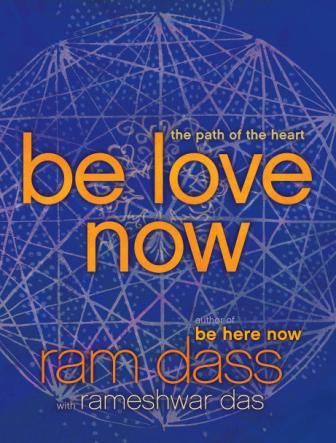
Be Love Now

Published 17/12/2014 by inspiringyourspirit

be-love-now

A Meeting of the Minds and Heart

In the West it’s hard to even conceive of enlightened beings. We have much to learn about how to approach them, how to be with them, how to use them on our own journey into our heart. Cultures like that of India have customs and forms that, although perhaps not directly transferable, can show us how to be in the presence of a holy person.

As a teenager getting ready for a date, I would go to great lengths dressing, combing my hair, buying flowers, acquiring the money, planning the evening – there seemed to be no end to my preoccupation with the momentous trivia of going on a date. Only when everything was in order could I begin to open to the relationship. If my shoes were scuffed, I would spend a good part of the evening hiding them under an available chair or couch or being embarrassed or self-conscious about them. In its own way opening to the presence of a holy being, a lover for your soul, demands that same kind of psychological preparation.

When I first traveled around India and saw holy beings, I treated these meetings rather casually and just enjoyed being with whomever I happened to be with at whatever level we happened to meet. But as time went on, I began to appreciate receiving the presence of spiritual beings more deeply and having the opportunity to drink from the well of their experience. I came to understand that this transmission of living spirit involves preparation in order to be open to receive it. Slowing my mind down enough to be in the moment in “Indian time” was one part of that. Opening my heart to feel their love was another.

Imagine living in India twenty-five hundred years ago. You hear about an enlightened being walking the earth called Gautama Buddha. You set out to find him to receive his teachings.

Perhaps you go to Sarnath, where he delivered his first sermon in the Deer Park. You talk to the newly ordained bikkhus, or monks, gathered there and ask his whereabouts. They direct you to a town to the north. You travel on foot, in a horse-drawn wagon, or by oxcart. In each village you receive another report, making you feel you are getting closer. Your anticipation mounts day by day as you move from village to village, your mind fixed on the moment when you will meet this being, sit before him, and receive his teaching.

Weeks go by, and you begin to meet people who have just been with the Buddha. Their eyes are alight, their hearts open. They emanate a peace that speaks of the experience they’ve had. Finally you are within a day’s travel of the Buddha. Your mind turns to how you will prepare yourself for this meeting. As you near your destination, you stop and bathe and wash your clothes, perhaps pick some flowers or fruit in one of the villages. As you get very close, you are so excited you are afraid that you will not be quiet enough to receive him. So you sit on a rock by a stream, collecting yourself.

Finally you approach the cave where the Buddha sits. You climb the hill to the door of the cave. It is dark inside. A small fire flickers, and in the firelight you see someone sitting in meditation. After some time, he becomes aware of your presence and motions you to enter. You enter, bow before him, and offer your fruit and flowers. You sit before him and finally raise your eyes to look into his. Time stops. Everything you have been anticipating is coming to fruition in this moment.

The universe disappears. Only his eyes exist. A flow of love, wisdom, consciousness passes between you. Perhaps a few words are said – words you take away and think upon again and again in the years to follow. Or perhaps he says nothing, and it is just his stillness, his presence, the incredible love that flows from him, the deep compassion you feel. You feel as if you were naked before his glance. He sees through you, he knows all – past, present, and future. He does not judge, but simply acknowledges how it all is. Even a moment of such compassion can be liberating.

– Ram Dass, excerpt from Be Love Now co-authored by Rameshwar Das

Love Is

Published 05/12/2014 by inspiringyourspirit

1902965_751870051522508_5116402086617443422_n

Before the birth of the physical
There was the birth of potential.
Before potential, something primal.
A Beingness. One Life, silent,
unmoving, unchanging,
The unspoken beauty of Truth,
Mother only to itself.

It has been called God, Tao,
Divine Mother,
Universal Mind.
Today it feels good to call it Love.
Or perhaps Spirit of Love,
Since Spirit implies an all-pervading
greatness
As common as one’s breath.

Love is not an emotion, or a feeling.
It is the formless and substance
permeating
The seen and the unseen;
It is the seed and womb of the
universe.
Call it what you will, it resides
Just beyond the limits of our
abilities to describe.

It has been said “God is Love.”
Thus, the heavens seek Love
Earth seeks Love
People seek Love.
This is what makes us great.

People abide on the Earth
Earth abides in the Heavens
The Heavens abide in Love.
Love abides in all.
This is what makes us One.

Make Love a part of your life, Love IS all around, Love is in every person and in everything.

Namaste with Love
Always
Mark

Wisdom of time gone by from Lao Tzu that Still Echoes Today. The Circle of Life

Published 25/09/2014 by inspiringyourspirit

Be-content-quote-16-9

Lao Tzu was a philosopher and poet of ancient China. He is best known as the reputed author of the Tao Te Ching and the founder of philosophical Taoism, but he is also revered as a deity in religious Taoism and traditional Chinese religions. Although a legendary figure, he is usually dated to around the 6th century BC and reckoned a contemporary of Confucius, but some historians contend that he actually lived during the Warring States period of the 5th or 4th century BC. A central figure in Chinese culture, Lao Tzu is claimed by both the emperors of the Tang dynasty and modern common folk of the Li family as a founder of their lineage. Throughout history, Lao Tzu’s work has been embraced by various anti-authoritarian movements.

Lao Tsu taught that all straining, all striving are not only vain but counterproductive. One should endeavor to do nothing (wu-wei). But what does this mean? It means not to literally do nothing, but to discern and follow the natural forces — to follow and shape the flow of events and not to pit oneself against the natural order of things. First and foremost to be spontaneous in ones actions.

In this sense the Taoist doctrine of wu-wei can be understood as a way of mastering circumstances by understanding their nature or principal, and then shaping ones actions in accordance with these. This understanding has also infused the approach to movement as it is developed in Tai Chi Chuan.

img03

Understanding this, Taoist philosophy followed a very interesting circle. On the one hand the Taoists, rejected the Confucian attempts to regulate life and society and counseled instead to turn away from it to a solitary contemplation of nature. On the other hand they believed that by doing so one could ultimately harness the powers of the universe. By ‘doing nothing’ one could ‘accomplish everything.’

Lao Tzu writes:

The Tao abides in non-action,
Yet nothing is left undone.
If kings and lords observed this,
The ten thousand things would develop naturally.
If they still desired to act,
They would return to the simplicity of formless substance.
Without form there is no desire.
Without desire there is tranquillity.
In this way all things would be at peace.
In this way Taoist philosophy reached out to council rulers and advise them of how to govern their domains. Thus Taoism, in a peculiar and roundabout way, became a political philosophy. The formulation follows these lines:
The Taoist sage has no ambitions, therefore he can never fail. He who never fails always succeeds. And he who always succeeds is all- powerful.
From a solitary contemplation of nature, far removed from the affairs of men, can emerge a philosophy that has, both in a critical as well a constructive sense — a direct and practical political message. Lao Tzu writes:

Why are people starving?
Because the rulers eat up the money in taxes.
Therefore the people are starving.
Why are the people rebellious?
Because the rulers interfere too much.
Therefore they are rebellious.

Why do people think so little of death?
Because the rulers demand too much of life.
Therefore the people take life lightly.

Having to live on, one knows better than to value life too much.

Namaste with Love
Always
Mark

Quietness

Published 06/06/2014 by inspiringyourspirit

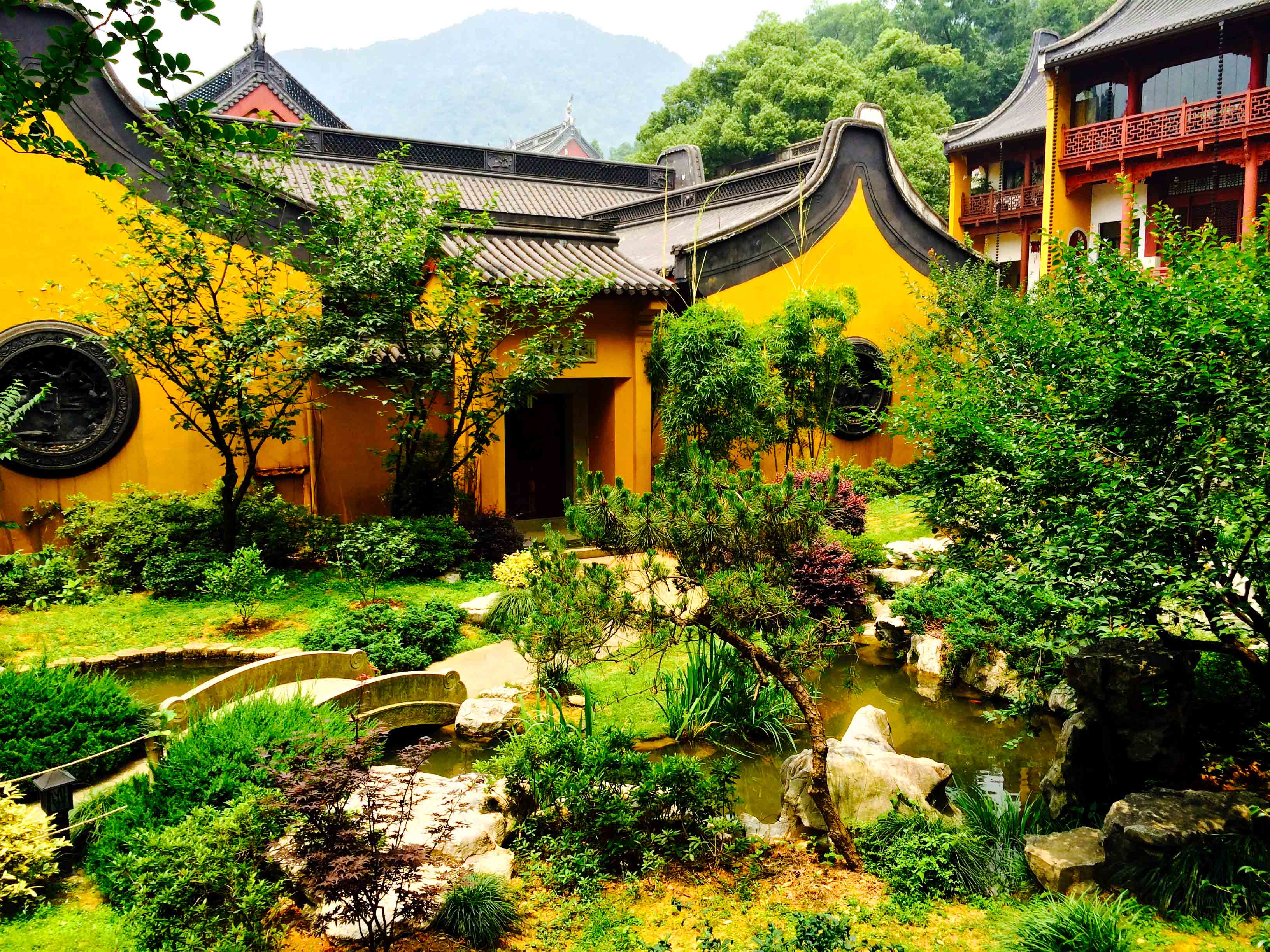
Yongfu Monastery

Quietness.

Rare perfection seems incomplete,
Yet does not decay

Rare abundance seems empty,
Yet does not fail

A rare truth seems contradictory;
Rare cleverness seems stupid;

Rare eloquence seems awkward.

As spring overcomes the cold,
And autumn overcomes the heat,
So do calm and quiet
overcome the world.

Namaste with Love
Always
Mark

Zen Needs No Translation, Only Understanding

Published 03/06/2014 by inspiringyourspirit

Zen

I love this comment from Alan Watts and quotation by a Japanese Zen Master.

Think about it for a while 🙂

Namaste with Love
‘Always’
Mark

What The Internet Is Doing To Our Brains

Published 04/05/2014 by inspiringyourspirit

I love this short video ‘What the internet is doing to our brains’. We all get caught up in it, our days are full of distractions, information comes at us from every angle from the moment we awake to the moment we go to sleep, TV, Radio, Newspapers, Smart Phones, tablets, Computers and of course the never ending stream of information and disturbances from the internet, emails, text messages, chats etc.

do something good

We have no time to take a time out, to calm our minds and to just ‘Sit’ ‘to do nothing’, ‘to reflect’, ‘to look inside’ and ‘enjoy our time with ourself’, ‘connecting with your soul’.

If you meditate, you know how powerful even 2 minutes of meditation can be for you, how these two minutes can calm your mind, take you to a place of total relaxation, away from the daily stresses and leave you fully in the ‘Present Moment’

Enjoy the video and take a moment from your day and be at one with yourself.

Namaste with Love

Always

Mark

Listen to the sound of the bell and allow your mind to return to the garden of your heart.

Published 17/11/2013 by inspiringyourspirit

My Dear Friends,

Listen to the sound of the bell and allow your mind to return to the garden of your heart and see the flowers of peace bloom.

It’s early on Sunday morning here in Shanghai, and before i head out for the day with my camera on to the streets of Shanghai I wanted to share this beautiful video with you, i’m sure some of you may of have already seen it but I’m also sure you will be happy to watch and listen to its beautiful message again.

Please sit back, put your headphones on, turn up the sound a little, relax, enjoy the peace and the miracle that happens in our world of nature.

Namaste with Love

Always

Mark

My Home Alter, What does yours look like?

Published 15/09/2013 by inspiringyourspirit

Namaste My Friends,

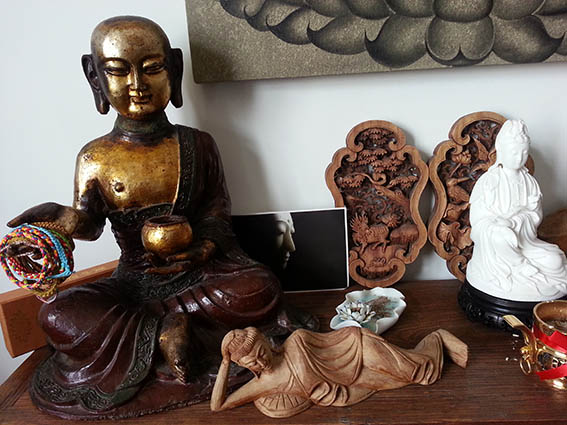
Here are some photos of my home alter, a place for me to sit, to think, to meditate, a place where I give my daily thanks for all I have in my life, where I pay my respects to my past family members, friends and spiritual guides.

I would love to hear your comments and to also see photos of your home alter, your peaceful place/s, let’s share the beauty and calm with all our friends and help raise the spiritual vibration between us all 🙂

Namaste
Mark

20130915_112446

buddha

buddha1

buddha2

Transforming Panic Into Peace: 3 Steps to Relieve Anxiety

Published 21/08/2013 by inspiringyourspirit

Meditating1

By Alex Keats

“No matter how hard the past, you can always begin again.” ~Buddha

Growing up, I was one of those people much more concerned about what you thought of me than what I thought of me.

With my focus being on how I was being perceived by those around me, it left me feeling extremely unsettled.

I was desperate to be liked and accepted.

“Be who you are and say what you feel, because those who mind don’t matter and those who matter don’t mind” was a nice idea for the fortunate, but certainly not for me.

I was convinced that Dr. Seuss was living in fantasyland!

This social anxiety spread to my work life, too. I wondered why I was never truly happy or successful. I wondered why I didn’t enjoy the rich relationships that so many around me seemed to enjoy.

Then I discovered Zen.

I read that Zen means awareness, and being with what is, as it is.

What I loved most about Zen is its utter simplicity in recognizing what is really true. Not what is partially or sometimes true, but what’s always true.

It didn’t compromise.

I liked that. I wanted that ability to recognize what was always true. That sounded like real emotional freedom to me.

Zen kept telling me truth was simple, so simple that it was often overlooked by the mind that loved to judge, condemn, compare, and resist.

Zen meant to be in alignment with reality as it actually unfolded, not as I wished it would unfold.

Simple indeed!

I saw how my mind loved to complicate things. I saw how my mind resisted so much of what was actually happening.

And I was miserable and stressed out.

I failed to see the inseparable connection between panic and peace—and how resisting one would never reveal the other.

However, as I began to incorporate what I was learning, I found that when I met the anxiety symptoms without running from or avoiding them, my experience began to change, too.

They no longer had control of me.

I had new life.

And I wanted more of it.

Here are the 3 things that dramatically reduced or eliminated the anxiety and panic I had been experiencing. Consider implementing the following and see if it brings you more peace.

1. Meet your panic and anxiety head on.

Zen is essentially about who we’re being in relation to something or someone, and this includes needless anxiety. It also includes this very moment. In fact, especially this very moment, as it shows up, and not as I wish it would show up.

Inherent in anxiety and panic attacks is the belief that it shouldn’t be happening. But this is never true.

No amount of wishing a particular moment to be different than it is can ever change that moment. Many actually think it’s a good strategy, but it rarely ever works out.

Upon closer examination, I saw that whenever I ran from anything, that thing chased me. This included thoughts and feelings.

I found that whenever I faced and embraced anything, it eventually dissolved and left my experience. I was encouraged because I knew I was onto something significant.

I walked around with a new mantra: “What I run from must chase me.”

It served as a great reminder and often snapped me back into being in alignment with what was actually occurring.

Whatever I met head on lost its power, every time. Resistance would often magically drop away. And it was palpable.

I learned that I can either live with the laws that govern me (and all of life) or I can resist them and suffer.

Seeing that I couldn’t escape the consequences of how I met anything, I began to face what was facing me. And that insight, I found, was the difference between living a life of peace versus a living a life of stress.

I began to consciously choose peace.

In fact, any challenging situation (or emotion) that arose wanted to be met by my loving attention.

Stress manifested only if I avoided the negative thoughts and feelings.

If I shined the light of gentle awareness on what wasn’t at peace within me, it had to come out of hiding and release me—because I met it.

2. Allow it to be as it is.

Notice how your mind in its infinite wisdom will tell you that any particular thought, feeling, or experience should or could be different than it presently is.

Is it ever true? Can it ever be true? As much as the mind will try to use logic and reason, it’s never true.

Things are often different than they were, but they are never different than they are!

This may seem counterintuitive, but the reality is we must first accept our present lot if we wish to experience something different in the next moment. We can’t expect to resist our current situation and simultaneously be at peace.

It won’t happen.

The essence of Zen is about being with whatever arises without offering any resistance whatsoever. It’s about being neutral emotionally so that we are in a position to respond appropriately.

Alternatively, resistance is the energy that gives life to what we don’t want.

If we simply allow our symptoms of anxiety to be as they are, we find that they don’t hang around long enough to torture us.

By taking the backward step (as they say in Zen) into this present moment, we discover that peace never left us in the first place.

It just seemed that way.

Allow your anxiety to be as it is, as you look to overcome it.

3. Be compassionate with yourself.

Sure, you’ve heard it before. Be nice to yourself! Get off your back! Stop blaming yourself! The key to effective transformation—turning panic into peace—is to stop beating yourself up and to make yourself the most important person in your life.

Wouldn’t you treat someone who really needed support with kindness and compassion?

Why are you any different?

Perhaps the greatest quality of spirit that the Buddha spoke most about was compassion, not only towards oneself, but to others as well. Compassion is the great neutralizer that has a way of dissolving old wounds, as well as new ones.

The truth is you’re not to blame for your anxiety, but that doesn’t mean you aren’t responsible for it.

You aren’t “crazy” or “weak”—and you’re no less worthy a human being for experiencing it, either. Your mind may tell you different, and even sound very convincing, but is it really true?

No, it isn’t. Not even a little bit.

Work with yourself, not against yourself, if you truly desire to transform your panic into peace. It’s all in how you relate to your current condition. Self-condemnation only gets you more of what you don’t want.

The truth is, you are much more than any thought or feeling that arises. Within you is the power to transform your panic into peace.

As the Buddha said, “Be a light unto yourself.”

Transcending anything never involves rejection, but it always involves acceptance.

About Alex Keats

Alex Keats suffered from extreme anxiety for over five years and now helps people overcome it in all its forms. He is the author of “Born To Be Happy” and “The Dance of Imperfection.” To learn why you stay anxious, and to find out what mistakes to avoid, visit http://www.cure-anxiety-now.com.
Naikan

Published 12/08/2013 by inspiringyourspirit

mindfulness-1


Imagine yourself enclosed by a small space within traditional Japanese screens. In complete silence and isolation you examine in minute detail your entire life, especially important relationships like mother, father and siblings within the boundaries of the three strategic Naikan questions. Gradually over seven days of silence and deep introspection interrupted only by the Naikan therapist entering your space, bowing giving you food and drink and asking the three questions to the portion of your life you have been examining, piece by steady piece the meditator dismantles the ego that have hovered like dark clouds blocking the blue sky. Like awakening from a dream the meditator opens his/her eyes to the light of day. This is Naikan.

Naikan( From the Japanese Nai = Inner Kan= looking) is a therapy developed in Japan by Yoshimoto Ishin (1916 -1988). It was adapted from a Jodo Shinshu Buddhist practice of a meditation of deep introspection and self examination. Although the basic structure remains the same it has been further developed to be used in modern therapeutic settings.

There is emerging a palpable curiosity towards the Eastern and Buddhist psychology. With the emergence of the now evidenced based “Mindfulness” therapies (Acceptance and Commitment Therapy, Mindfulness Based Cognitive Therapies etc) Naikan stands to be re-examined with energetic curiosity.

I must add a note of caution here. It is easy to confine the Mindfulness based therapies, of which Naikan belongs, to the therapist’s clinic. This would be a huge mistake. Naikan is essentially a way of life for everyone who wishes to live a more fulfilling and happy life.

Naikan is essentially a method of deep introspection. It is a way of examining one’s life from a different angle by asking strategic questions and arriving at a deep appreciation of life the way it is. The big mistake most people make with Mindfulness based processes is to expect the process to eliminate life’s problems. This is not the aim. After all, none of us are immune from life’s struggles or to put it in plain language: “shit happens”. What Naikan does is to help us look at life’s sufferings from a different angle – one of deep gratitude. It does this by radically placing us in front of our self-centeredness. When we do this a new energy begins to flow and we become better equipped to face life’s issues.


Naikan does this by asking three strategic questions:


 What have I received from person (or event) x?

 What have I given to person (or event) x?

 What troubles and difficulties have I caused to person (or event) x?


In Naikan we examine our entire life in minute detail from the time we were born to the present moment. We focus primarily or relationships rather than events as we are formed by our early childhood relationships and relationships in general. It is a Naikan principle that our mental health is based almost entirely upon how we relate with one another and our environment.


In Classical Naikan the client spends an intense seven day period in meditation on one’s entire life guided at regular intervals by the Naikan therapist. There are shorter versions of this process to suit the client’s schedule. It is often said that one of the “down sides” of Naikan is its intense seven day meditation. However, we must ask ourselves, what is seven days in what often has been a lifetime of struggle with certain issues?

Ideally Naikan is done with a “Naikan Guide” or therapist. However it can also be performed by oneself on a regular basis.

Gratitude in Naikan

The concept of “gratitude” plays a crucial part in Naikan. In Chinese the word for gratitude is “gan ji gan en”. The English word “gratitude” does not do justice to the Chinese words which convey a different concept. In our daily speech we can say we are “thankful” for something but still inwardly hold resentment or grudges. I can say “thank you” to someone for something even if that someone has annoyed me greatly. I do it out of politeness. The Gratitude in Naikan goes far beyond the concept of thankfulness. It is a realization of the “gift” of life and a sense of deep contentment with the way things “are”. . . an acceptance of the “is-ness” in all things. When we have this sense of deep gratitude we are free. Many say after Naikan they experience a feeling like a ton of bricks lifted off their shoulders. This is a happiness which goes beyond what “happens” to us.

Personal Responsibility

Naikan is a therapy and process that places responsibility squarely upon the individual challenged with their issues. Throughout the Naikan process the therapist will not give “advice” but guide the client to take responsibility for their own healing. In this process there is tremendous empowerment.


Much more

There is much more to Naikan than these few words can give justice to. Like all Mindfulness studies – they need to be experienced rather than didactically analyzed.

Awakened

Published 03/08/2013 by inspiringyourspirit

720551


If only I could make a living out of Buddhism, or do I already?

When the Buddha walked the earth many asked him if he were a god. “No”, he replied. “Are you a spirit?” “No”, he replied. “I am Awakened.” Being awakened is the opposite of being asleep. When we are asleep we are in the world of dream and nightmare. One is strange and the other is frightening. Neither of which are real. That is the life that most live on a daily basis. It is a strange world because it rarely conforms to our hopes and desires. Frightening because we are living in fear of violence and losing what “happiness” we think we have. This is a very unsatisfactory way of living and creates huge problems for society. Depression is now one of the world’s major illnesses.

When we are awake we are alive. We are able to see life as a gift. Everyone likes a gift. I have watched many children at Christmas time receive gifts from their parents or relatives with huge smiles on their faces and lots of laughter and joy. Even when we try to be subdued with a:”Oh, really, you shouldn’t have done that” we nonetheless receive the gift with a smile on our face.

Rarely do we see life as a gift. We most often see it as a struggle and as a threat. We fight it – sometimes literally with great violence. We do not see it as a gift because we are asleep. When we are awake we are alive. When we live out our life as a gift to be given we are truly alive and living life to the fullest. That is how life is meant to be lived.

So many people are trying to make a living desiring to earn more and more in the fear that life will not have enough for them. They do not know the secret to true abundance. Abundance comes from our gift. This is the gift of life which is within each and everyone of us. When we find it we become livened and awake. When we find it the universe opens itself us to us.

The gift is within each of us. There is no need to criticize others for your unhappiness or lack of abundance when you already have it within you. It is only ignorance and ego that prevents you from discovering it as it hides under layers of masks.

Our Buddhist practice teaches us how to remove the masks of illusion. It teaches us to take responsibility for our own lives with a new set of skills for skillful living. Many think Buddhism is a religion. It is not. It is a life education that helps us up-skill to live effectively. When we sincerely apply the teaching methods we begin to see results in our life. This Cause and Effect. So why not change career path and make a new living?

The Buddha gave us a valuable teaching to dismantle the masks, wake up out of our sleep and live life. We can indeed make a wonderful living out of Buddhism.

Namaste my friends
Mark

Meditate

Published 12/04/2013 by inspiringyourspirit

74441_590491360978760_2103158131_n

And Who Am I to Argue !

Spend some quality time alone this weekend, relax your mind, de-stress, feel the life blood and Qi energy flowing throughout your body, concentrate on your breathing and be at peace with the world 🙂

Namaste
Mark

Words of Wisdom

Published 08/11/2012 by inspiringyourspirit

Knowing others is to be clever.
Knowing yourself is to be enlightened.
Overcoming others requires force.
Overcoming yourself requires strength.

Lao Tzu

A Person of high virtue is not conscious of virtue
and therefore possesses virtue.
A person of little virtue tries to be virtuous and
therefore lacks virtue.

Lao Tzu

Those who look only at themselves see little.
Those who justify themselves are not distinguished.
Those who brag have no merit.
The work of prideful people will not endure.

Lao Tzu

When desires are restrained there will be peace,
and then all under heaven will be at rest.

Lao Tzu

Right Thought

Published 25/09/2012 by inspiringyourspirit

Right Thought

Brothers, practice Right Thought.
Right Thought consists of thought in which there is neither confusion nor distraction, neither anger or hate, neither desire nor lust. ( Vinayapitaka, Vibhanga Sutta )
Brothers, Right Thought consists of thought in which there is universal love. ( Suttapitaka, Majjhima-Nikaya, Piyajatika Sutta )

But what is Right Thought in concrete terms?
Obviously, a thought in which there is no suffering.
And what constitutes suffering, in our thought?
As the Buddha said: confusion, distraction, anger, hate, desire and lust.
We need to eliminate them.
But how?

Brothers, confusion and distraction, anger and hate, desire and lust can be overcome by practicing the Four Contemplations.

To overcome the confusion and distraction, practice the contemplation of breathing: it will clear your mind and increase the power of your concentration.
To overcome anger and hate, practice the contemplation of compassion: it will throw light on the causes of the anger and hate present in your mind and in the minds of those who have aroused them in you.
To overcome desire, practice the contemplation of impermanence: it will throw light on the beginning and end of all things.
To overcome lust, practice the contemplation of death: it will throw light on the decay of things. ( Vinayapitaka, Vibhanga Sutta )

Confusion, distraction, anger, hate, desire and lust obviously constitute negative thought.
But it is not enough to eliminate negative thought.
We must also construct positive thought.
What are positive thoughts?

Loving kindness, compassion, shared joy and non-attachment are wonderful, profound mental states.
By practicing them, you will become a source of vitality and happiness for all creatures. (Suttapitaka, Majjhima-Nikaya, Cularahulovada Sutta)

In a word Positive thought.

Right Thought therefore consists of the systematic elimination of negative thought and the systematic construction of positive thought.

Right Thought consists of the elimination of Negative thought and the construction of positive thought.